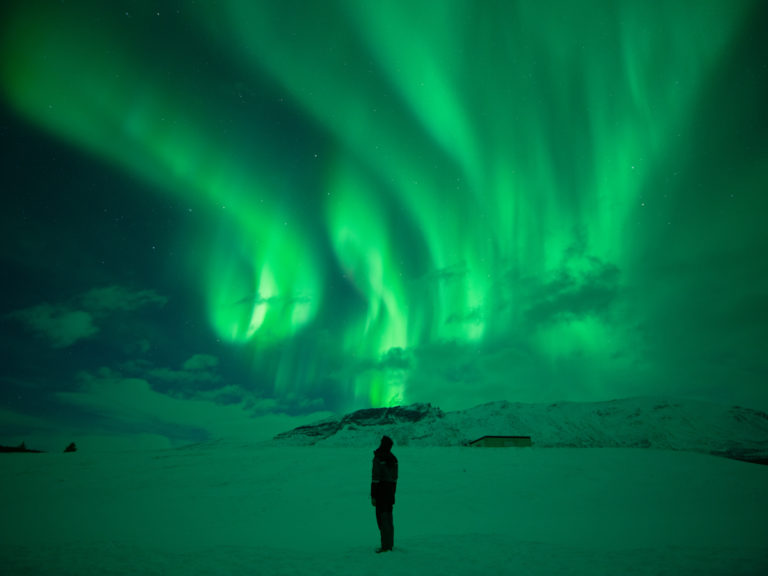
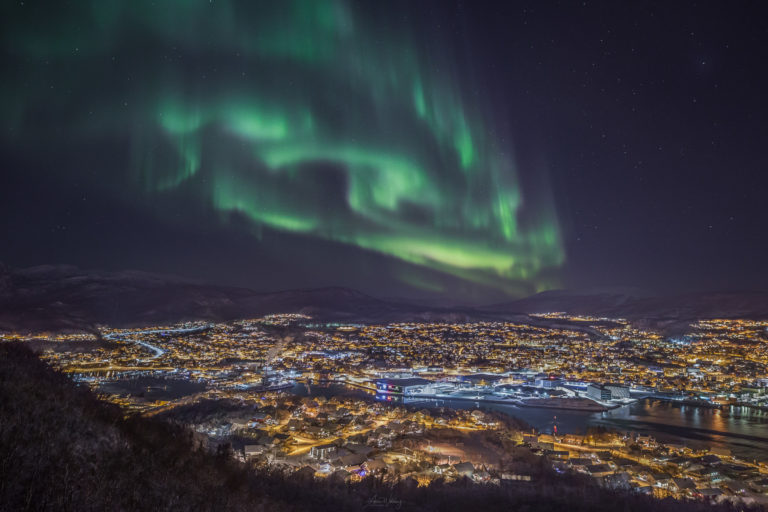
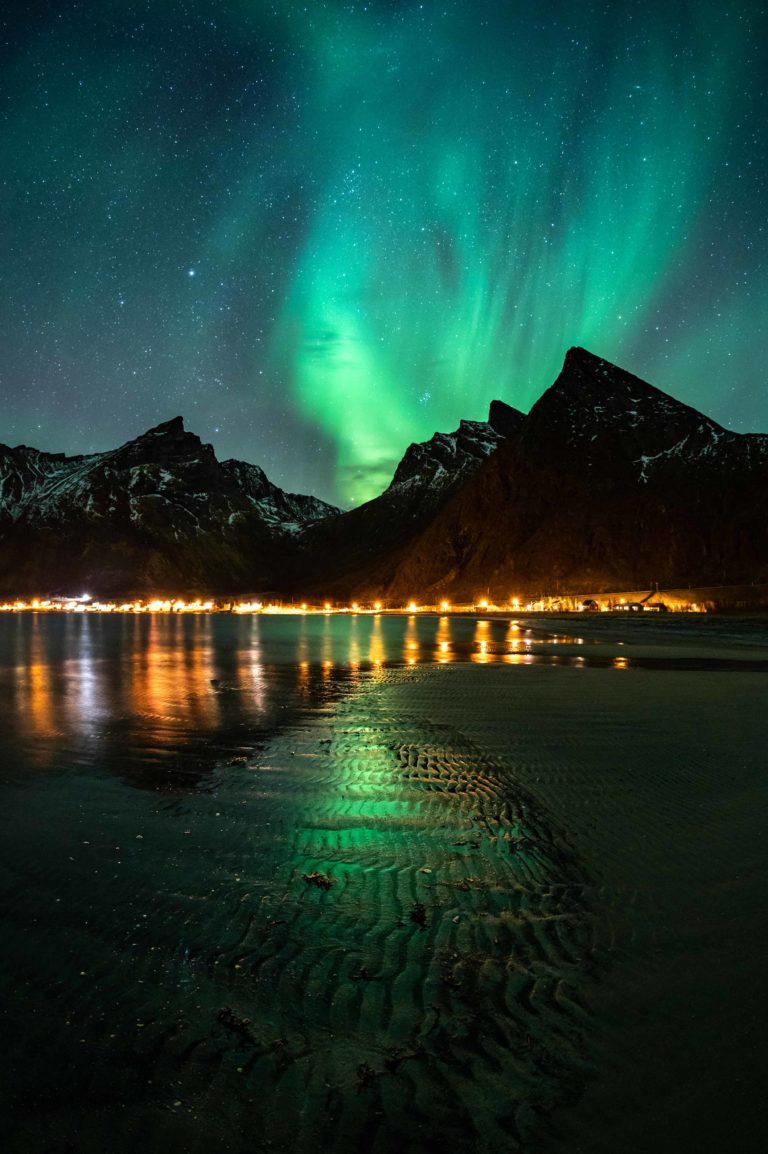

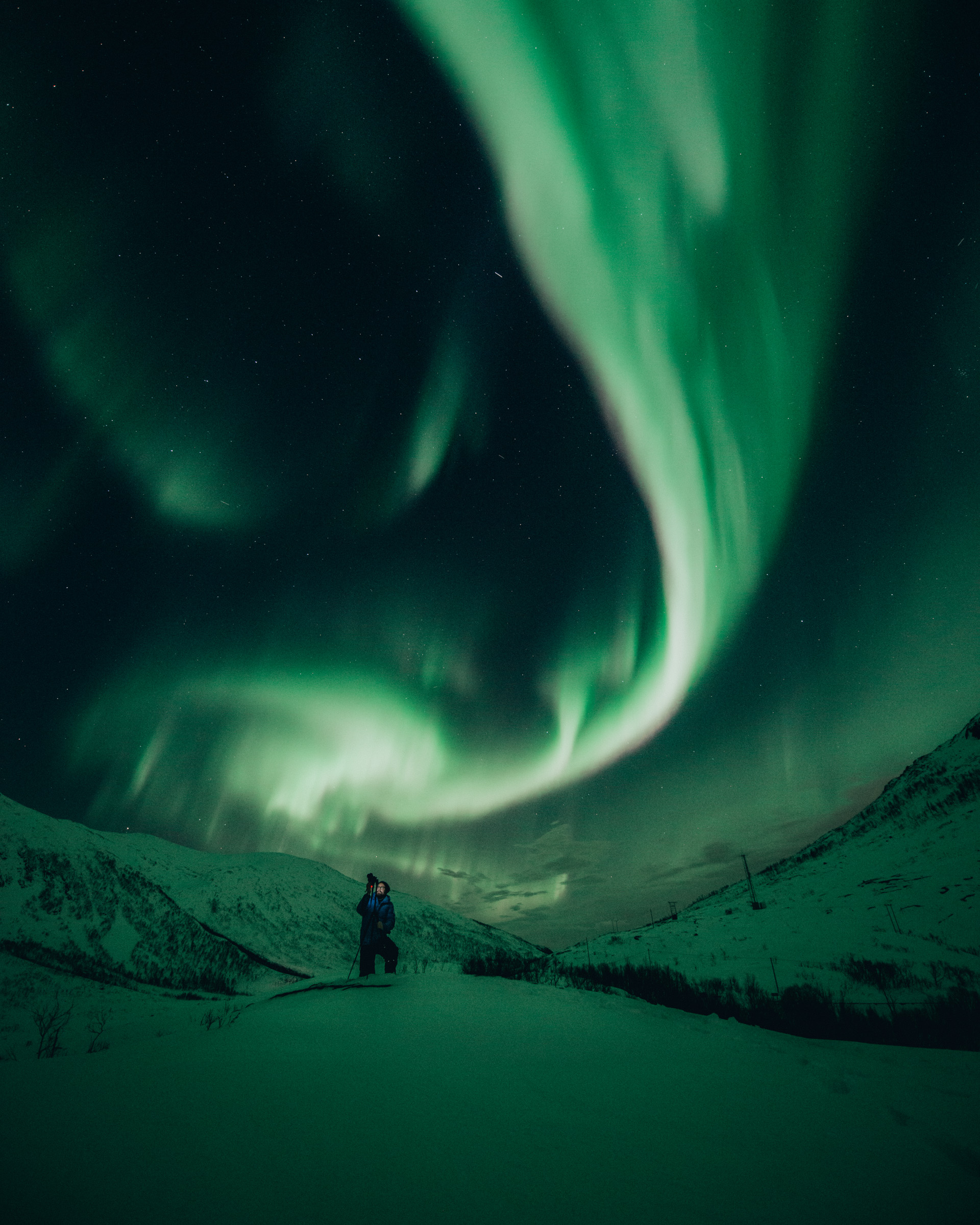
Nothing beats a Northern Lights chase by minibus or coach to maximise your chances of spotting the lights. On a cloudy night, clear skies might be found behind the next mountain or across the next fjord, and some nights only a guide with insight and experience in meteorology and space weather can find the right spot – all in search of the elusive and beautiful rays of the aurora borealis.
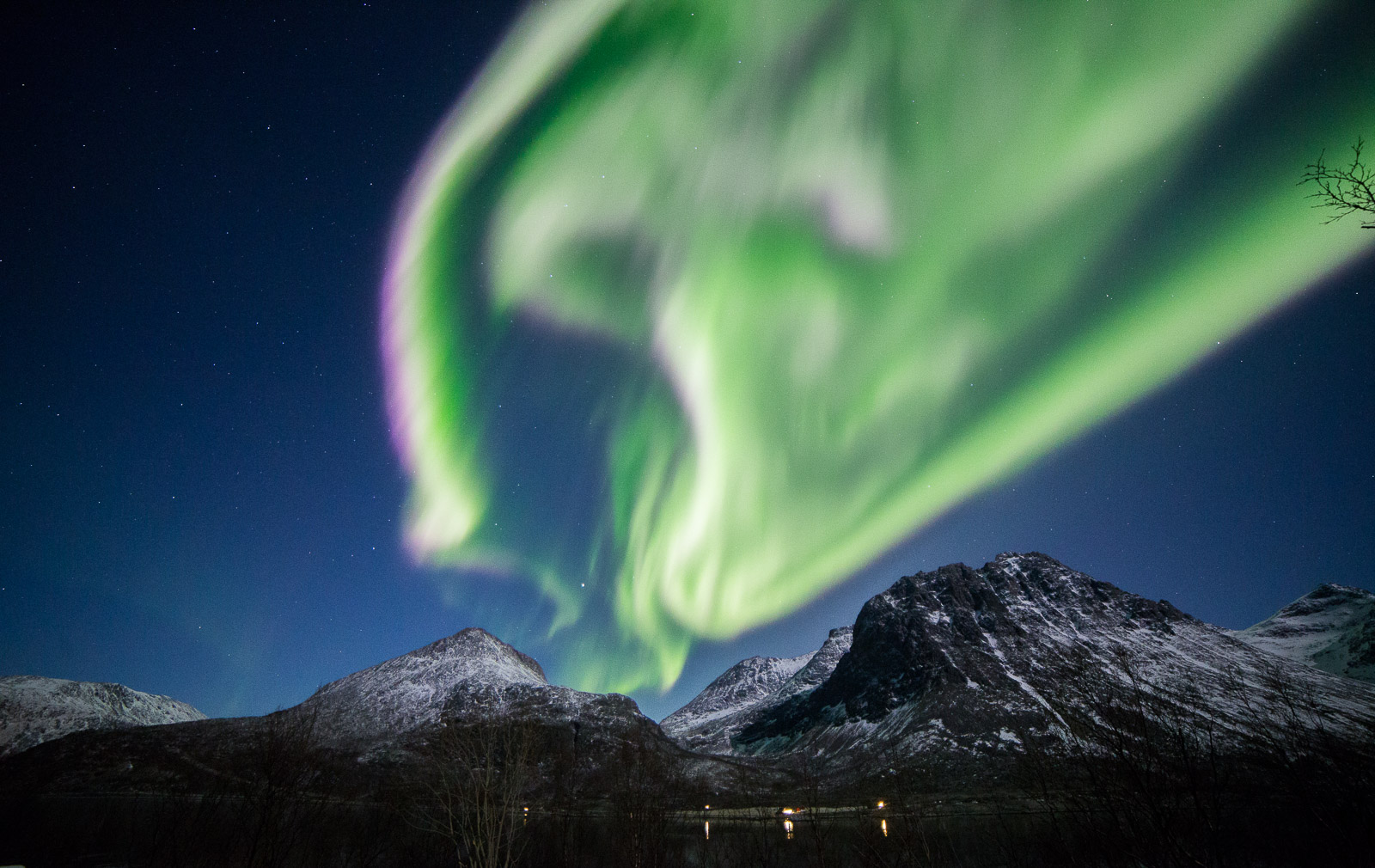
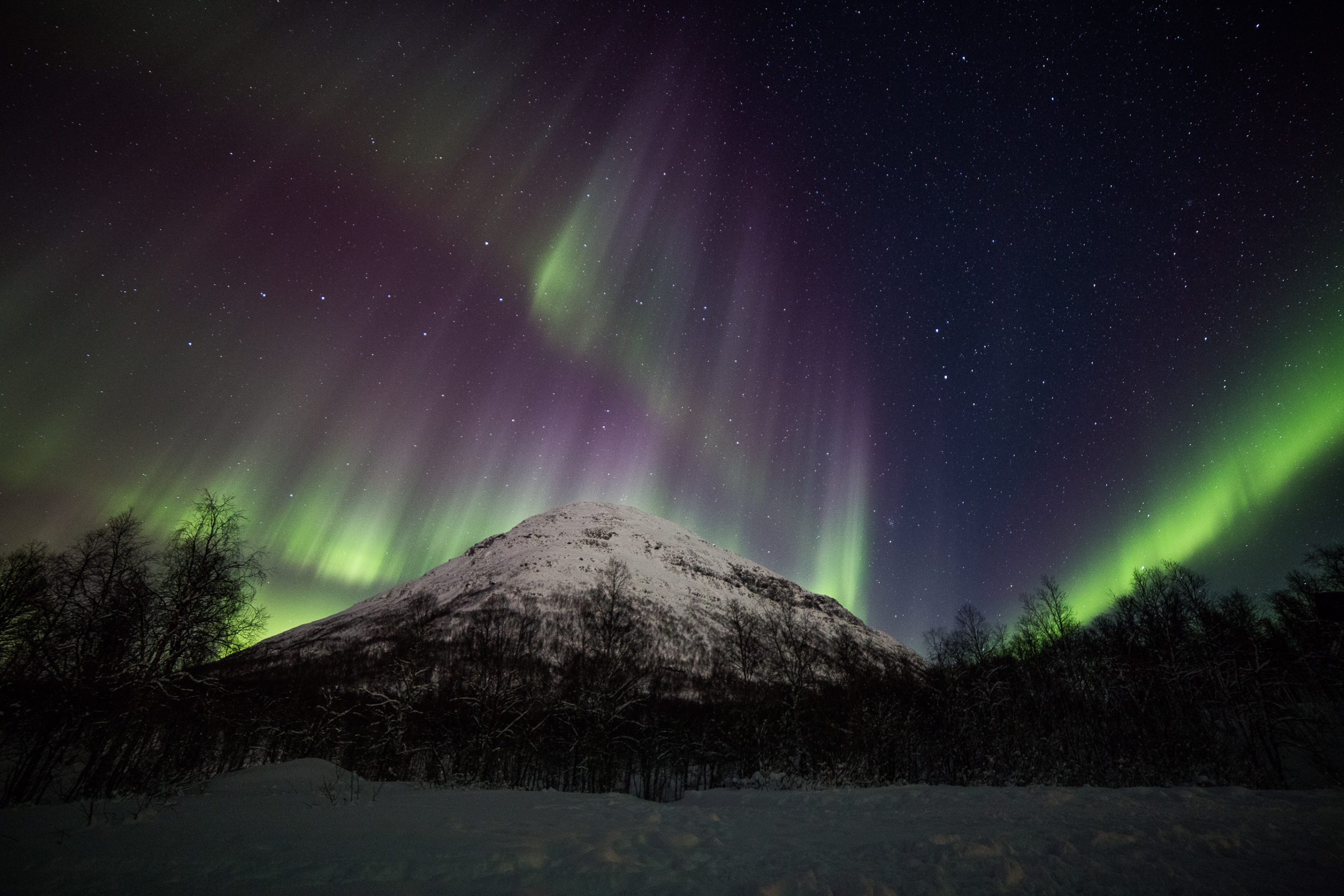
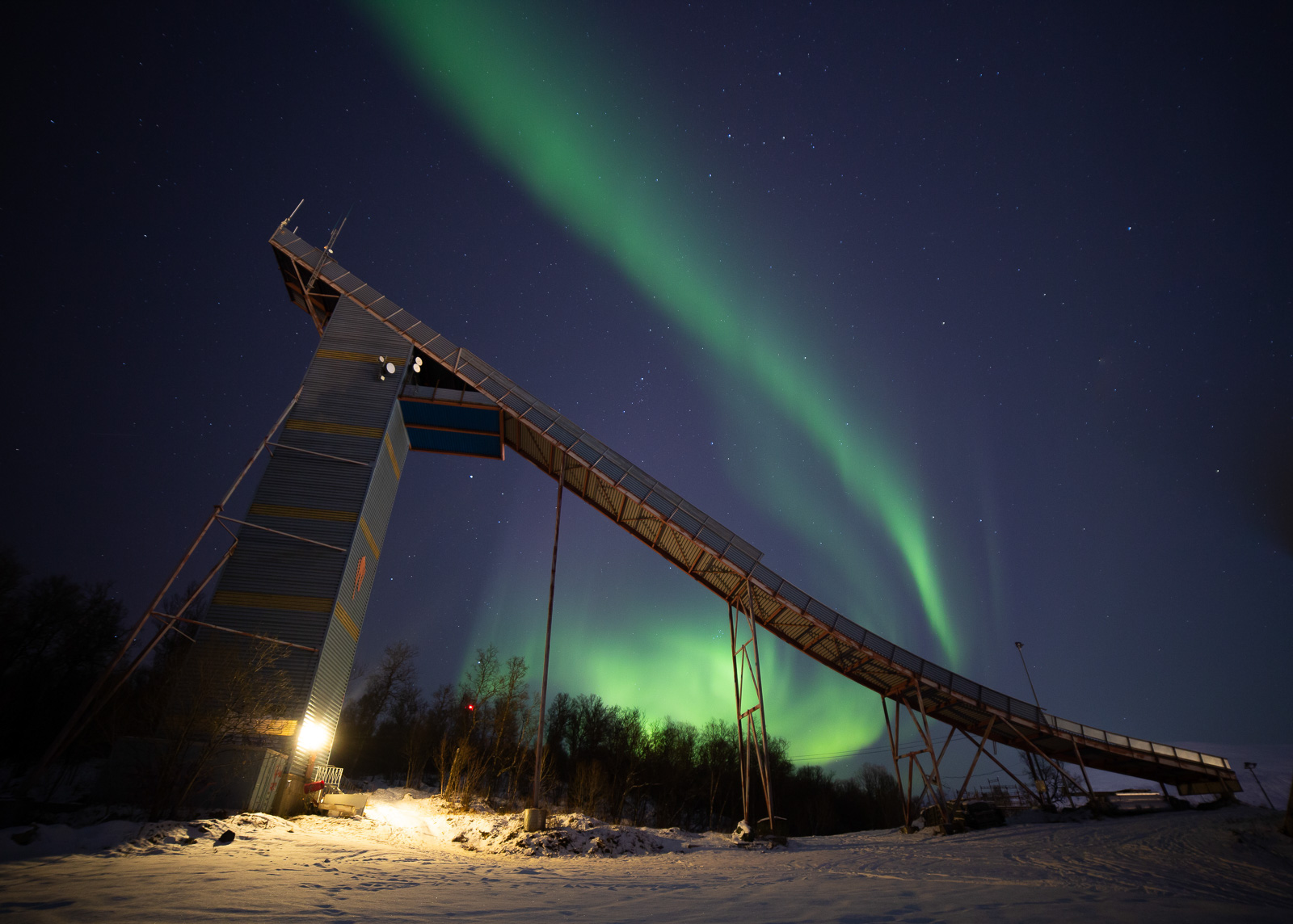

However, as more people visit hotspots like Tromsø and Lofoten in winter, road safety becomes an issue, and both the natural environment and local communities may be affected. The City of Tromsø has – in dialogue with the local hospitality industry – developed guidelines for how to conduct a Northern Lights chase responsibly. If the points below were followed, you can be confident that you were on a responsible tour. If not, a responsible visitor might feel inclined to give some constructive feedback.
Road safety in the dark
A Northern Lights chase is, by definition, a night-time activity. In winter, roads are often icy and snowy, which can pose a safety risk to guests and other road users.
Your guide and driver should:
• Follow all traffic laws and local regulations.
• Drive carefully and adjust speed according to weather, road conditions, darkness, and wildlife.
• Avoid creating danger or inconvenience for other road users.
• Respect speed limits and only overtake when it is clearly safe.
• Let local traffic pass instead of speeding up.
• Stop only in safe and legal areas.
• Ensure that guests wear reflective vests when standing or walking along the road.
Campfires leaving no traces
Thousands of campfires are made every winter in northern Norway. When the snow melts, they can leave ugly black scars in the landscape, causing lasting damage to soil and vegetation.
If your tour included a campfire, it should have been handled responsibly:
• Fires should not be lit directly on the ground, on roads, or in parking areas.
• Fires should always be made in established fire pits or raised fire pans. Even deep snow does not protect the ground, as heat will melt through and leave permanent scars.
• No living or dead wood should be collected from nature – firewood should be purchased.
• The fire should be fully extinguished with water or snow.
• All fire remains and rubbish should be removed from the site.
• The fire should be small and controlled at all times.
Parking and stopping safely
Stopping should be done in a way that does not create danger for guests or other vehicles and does not disturb local communities or other visitors on tour.
A responsible tour operator should:
• Use only designated parking and stopping areas.
• Never stop in the road or on the roadside.
• Not use hazard lights as an excuse to stop for photos.
• Avoid parking on private property.
• Coordinate with other tour vehicles to avoid congestion.
• Show respectful behaviour towards other guides and companies.
Responsible behaviour in nature and around communities
If your tour did not leave litter, did not disturb wildlife or local communities, and did not reduce the experience for other visitors, your experience was better for everyone.
You can expect that your guide:
• Leaves nature exactly as it was found.
• Ensures that all litter is taken away.
• Informs guests about drone restrictions.
• Respects local communities and avoids disturbing residents.
• Provides solutions for toilet use – nature should not be used as a toilet.
• Encourages respectful behaviour, especially regarding photos of locals and private homes.
• Keeps noise levels low in residential areas.
• Carries basic safety equipment such as warm drinks, snacks, and thermal blankets.
• Does not use motorised vehicles in protected natural areas.
• Does not allow feeding of reindeer.
Inviting visitors to sustainable tours
Northern Norway is one of the best places in the world – together with other regions under the Northern Lights oval – to observe the aurora. Although the Northern Lights have always existed, they could not be properly photographed until the arrival of digital cameras in the 1990s. From around 2010, visitor numbers started to increase rapidly. Tromsø has become a major hotspot, along with places such as Lofoten and Alta. At times, this growth has caused friction with local communities, between guides and companies, and increased pressure on the natural environment.
Public authorities such as municipalities, counties, road, tax and labour authorities, together with tourist boards and most tour operators, are now coordinating their efforts to pave the way for more sustainable tourism. This article invites visitors to be part of that effort.
About sustainable Northern Lights chases
Problems arise when large numbers of Northern Lights tours create traffic hazards, leave traces in nature, and disrupt daily life in small and vulnerable communities.
By working together – tour operators, local communities and public authorities – to establish clear guidelines and promote responsible tourism. We also believe that visitors can contribute by choosing tour experiences that respect nature, the environment and local communities.
First of all, enjoy the tour and the experience. Most importantly, follow the instructions given by your guide – this helps ensure a safe, smooth and responsible tour for everyone.
No – you should absolutely go on a Northern Lights tour. The aurora is one of the most fascinating natural phenomena in the world. The main responsibility for making Northern Lights tourism sustainable lies with local operators and authorities.
That said, it certainly helps when visitors also stay informed and make conscious choices. Today’s travellers are increasingly interested in contributing positively to the places they visit.
Guidelines and laws are not the same thing, and not all recommended practices are legally regulated. For example, there is currently no general ban on making campfires in winter in Norway. We therefore recommend giving friendly and constructive feedback to the company you booked the tour with.
Traffic conditions and relationships with local communities can be complex, and as a visitor you may not always have full insight. For that reason, we suggest raising your feedback in the form of questions rather than statements – asking rather than assuming.
The City of Tromsø – Tromsø kommune – worked out the rules in co-operation with the local hospitality industry, Visit Tromsø, the Tromsø Guide Association, the neighbouring municipalities Lyngen, Storfjord, Balsfjord and Karlsøy and public bodies like The Norwegian Labour Inspection Authority, The Norwegian Tax Administration, The Norwegian Public Roads Administration, the Police, NAV – the Norwegian Labour and Welfare Administration and the county of Troms. The private company Rissa is also involved because of their project on campfires.