
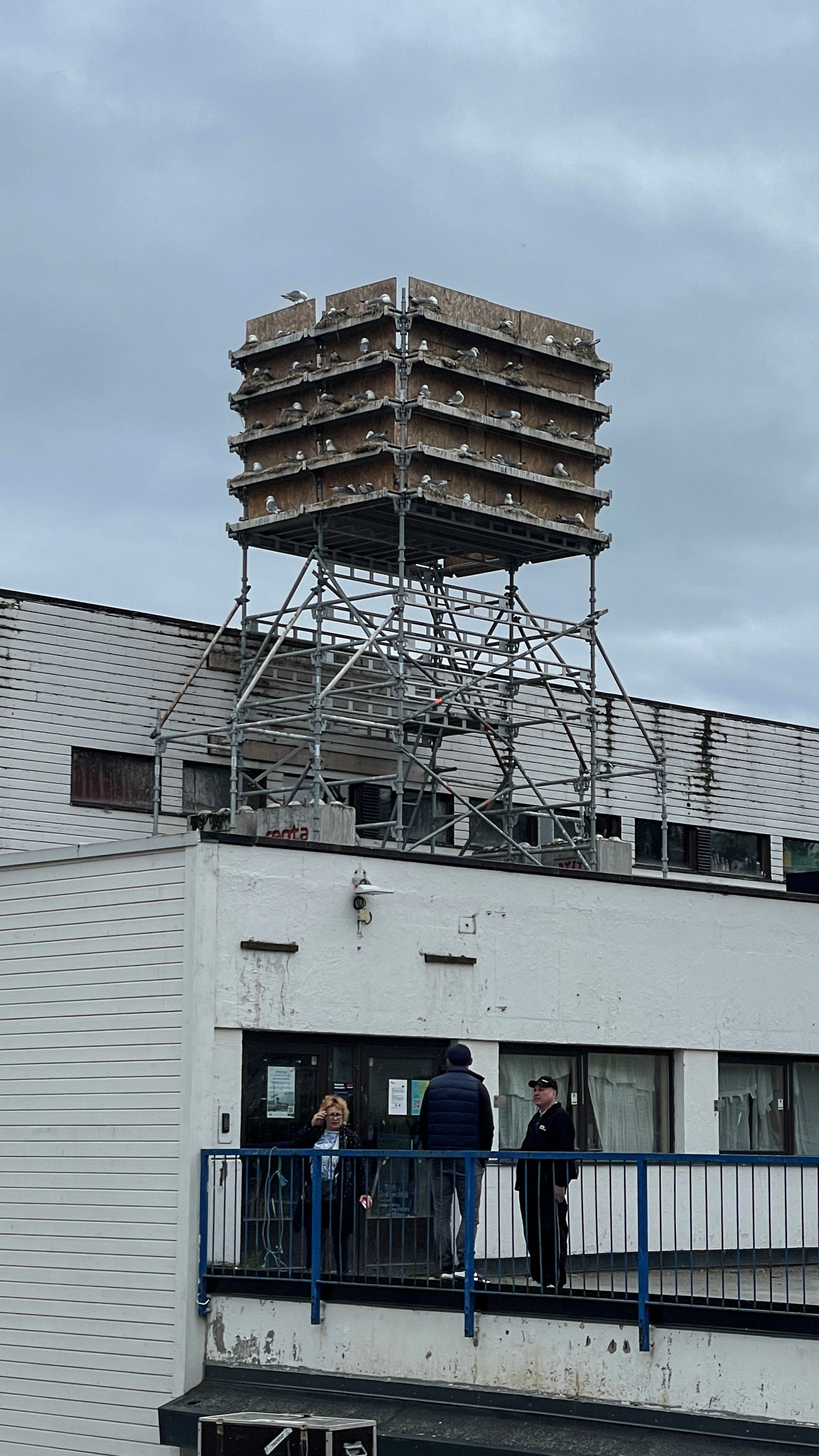
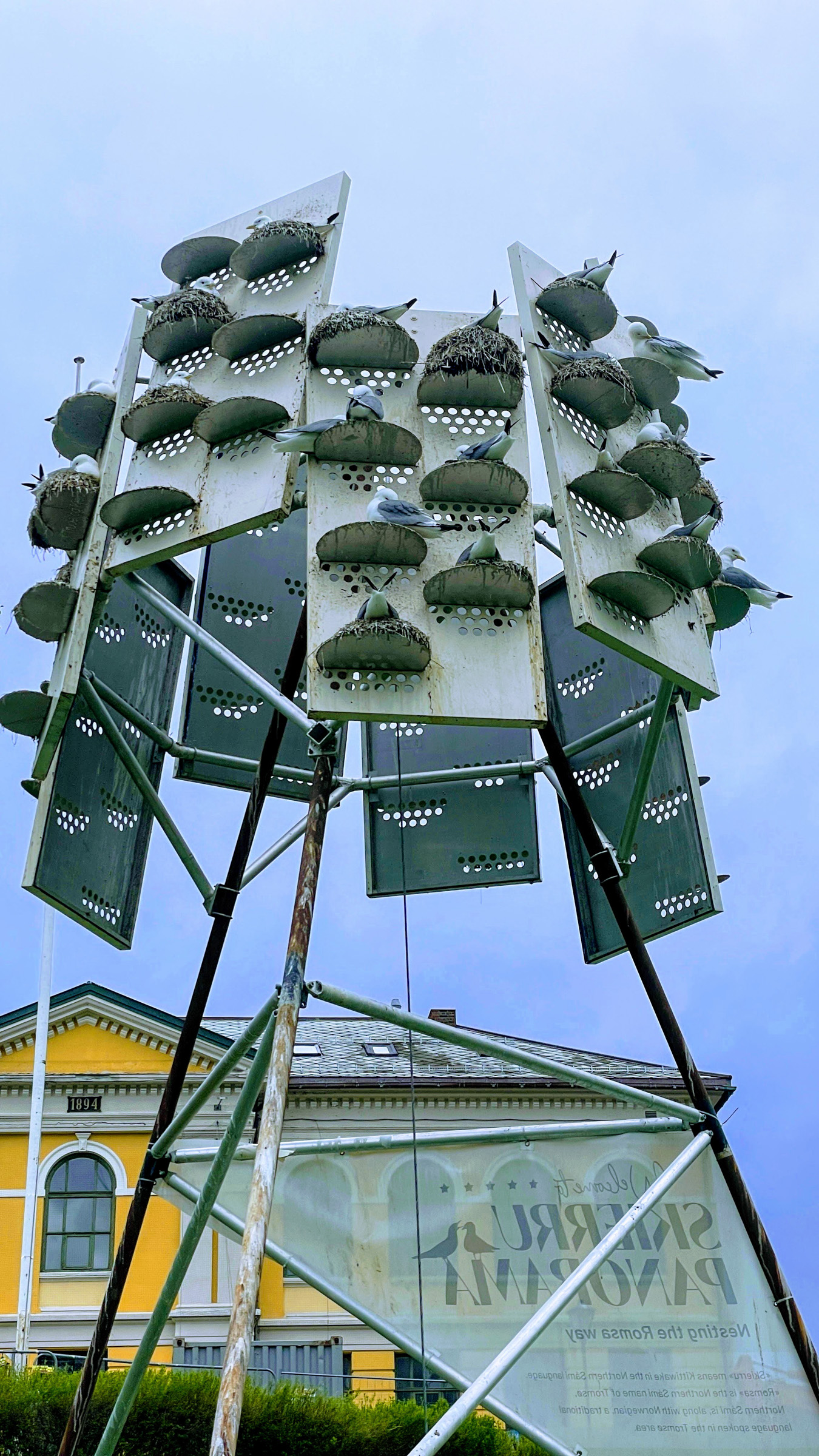
In Tromsø, you can see little seagulls – kittiwakes – nest on sleek, slimline modern structures. At first glance, it’s easy to assume that these so-called kittiwake hotels are simply a way of turning wildlife into a tourist attraction.
There is, however, more to the story; a complex drama involving dropping bird populations, a rocky relationship between wildlife and people, city planning and innovative architecture – all against a backdrop of climate change, the nature crisis and the state of our planet. Nothing less.
The kittiwakes left the coast and moved to town
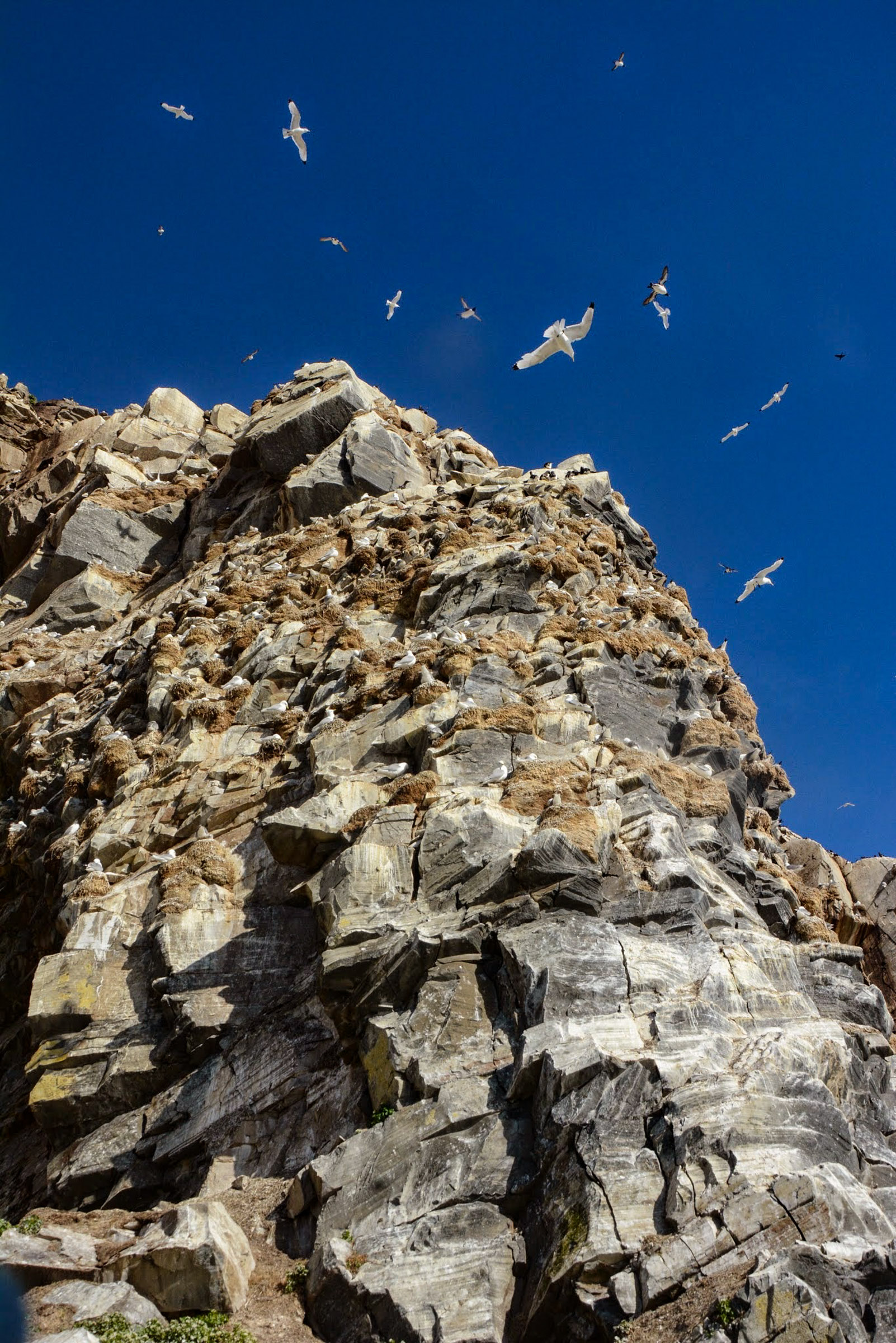
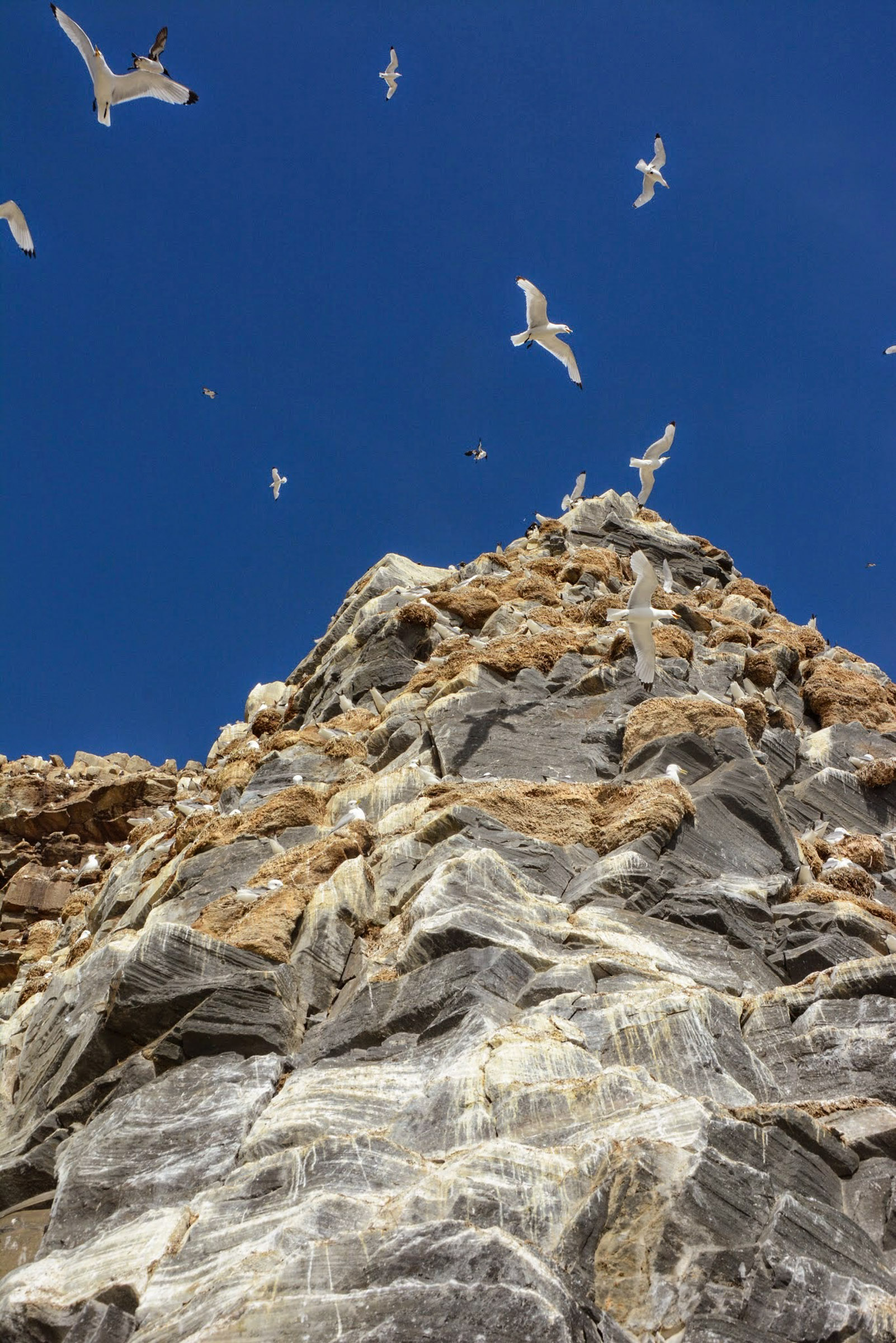
In Norway, kittiwakes were until recently nesting in big colonies along the coast, primarily in the northernmost reaches. Around 150 000 couples were nesting at the Syltefjordstauran bird cliff near Båtsfjord. Hornøya, Sværholtklubben, Hjelmsøyastauran and Røst used to have tens of thousands. Not a single pair was nesting in Tromsø, though.
The first kittiwakes were observed in Tromsø only in 2015, nesting on an industrial facility near the southern tip of the Tromsø island. Other locations got nesting seagulls long before, notably Newcastle-upon-Tyne in the UK already in the 1940s the wharf in the city of Vardø and the fishing community of Røst. However, until then, most kittiwakes had been found in colonies along the outermost coast.
Bird colonies go extinct
In the same year, 2015, Tone Kristin Reiersen visited the bird colony at Bleiksøya in the Vesterålen islands. In the 1990s, some 6000 pairs had been counted – but Tove found that the colony had no nesting kittiwakes at all. A colony had simply gone extinct. At Syltefjordstauran – once the biggest of them all – it is now very quiet in spring and summer. The same goes for the other big colonies. The total population in the North Atlantic is but a fraction of what it was just a few decades ago. So, some serious changes have taken place.
Why did kittiwakes become urbanites?
Why does a seabird leave colonies along the ocean and move to town? The reasons for this are not totally clear – but there are some theories.
The most important factor may be rising sea temperatures. Kittiwakes don’t dive underwater, they snatch their prey from the surface. If herring and capelin – the most important sources of food – start swimming deeper down, the kittiwakes can’t reach them. Or maybe the shoals of herring and capelin migrate further north – a phenomenon seen by many fish species along the coast.
More predators – white-tailed eagles, ravens and crows – may also be a contributing factor. The effects of commercial fishing are more debated – fish stocks are closely monitored and fishing strictly regulated. However, the data are inconclusive – and more research is underway. Ocean warming and lack of food cause long-term breeding failure, meaning no new generations are recruited and populations become unviable.
Urban kittiwakes find new food sources
The Tromsø kittiwakes don’t fish on the open sea anymore. Instead, the experts believe they have found a new food source. In the big fjord systems near town, there is more fish than before. This is explained by an earlier spring – causing an increased outflow of nutrient-rich freshwater into the fjords. Hence, increasing temperatures both forced the kittiwakes to relocate – but also provided new food sources.
Contrary to popular belief, garbage is not a food source, but they used fly around fishing boats hoping for some . They are too small to pose a threat to your hot dog – kittiwakes are strict pescatarians and insist on fresh fish only.
Relationship status: It’s complicated
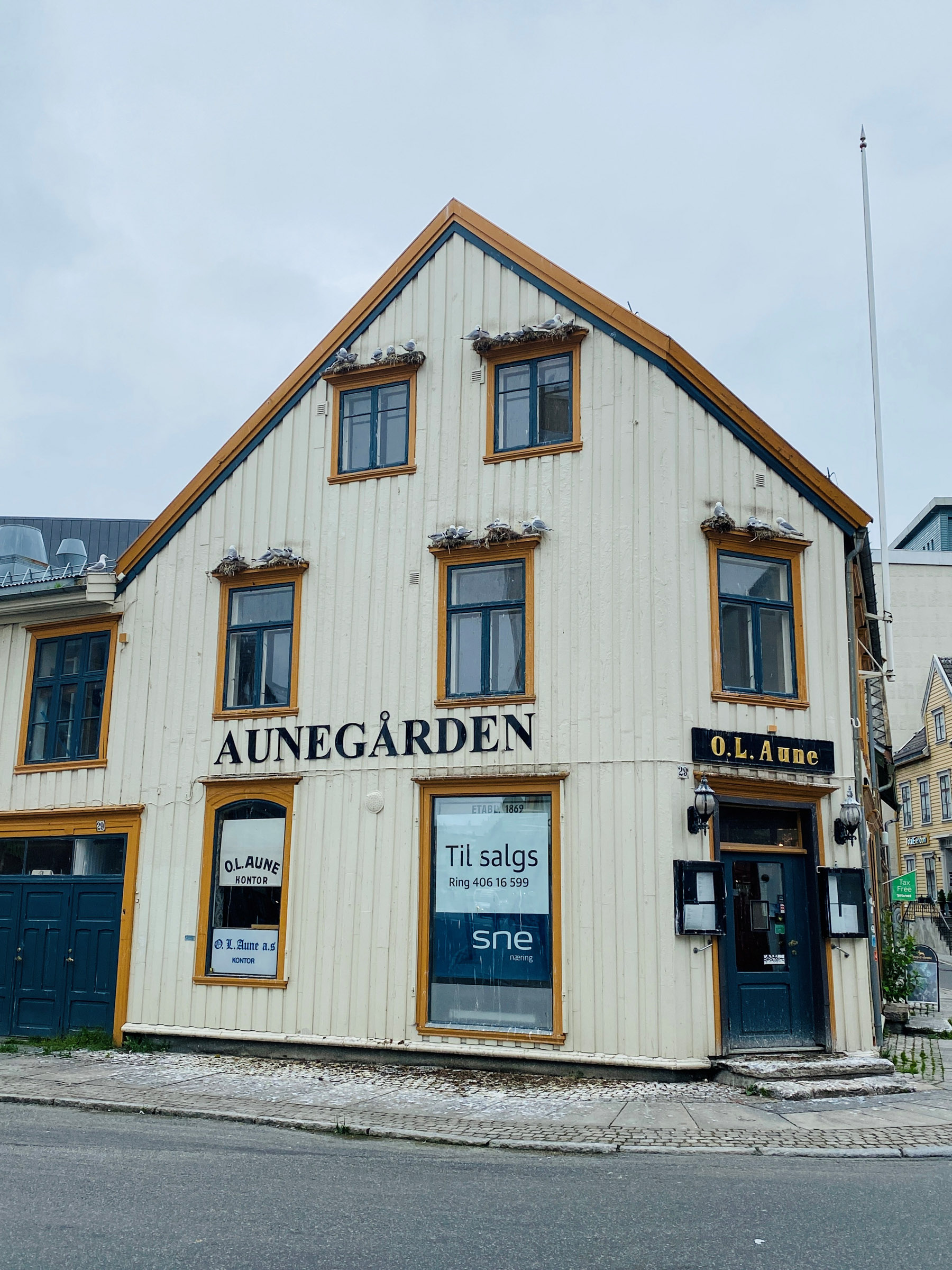
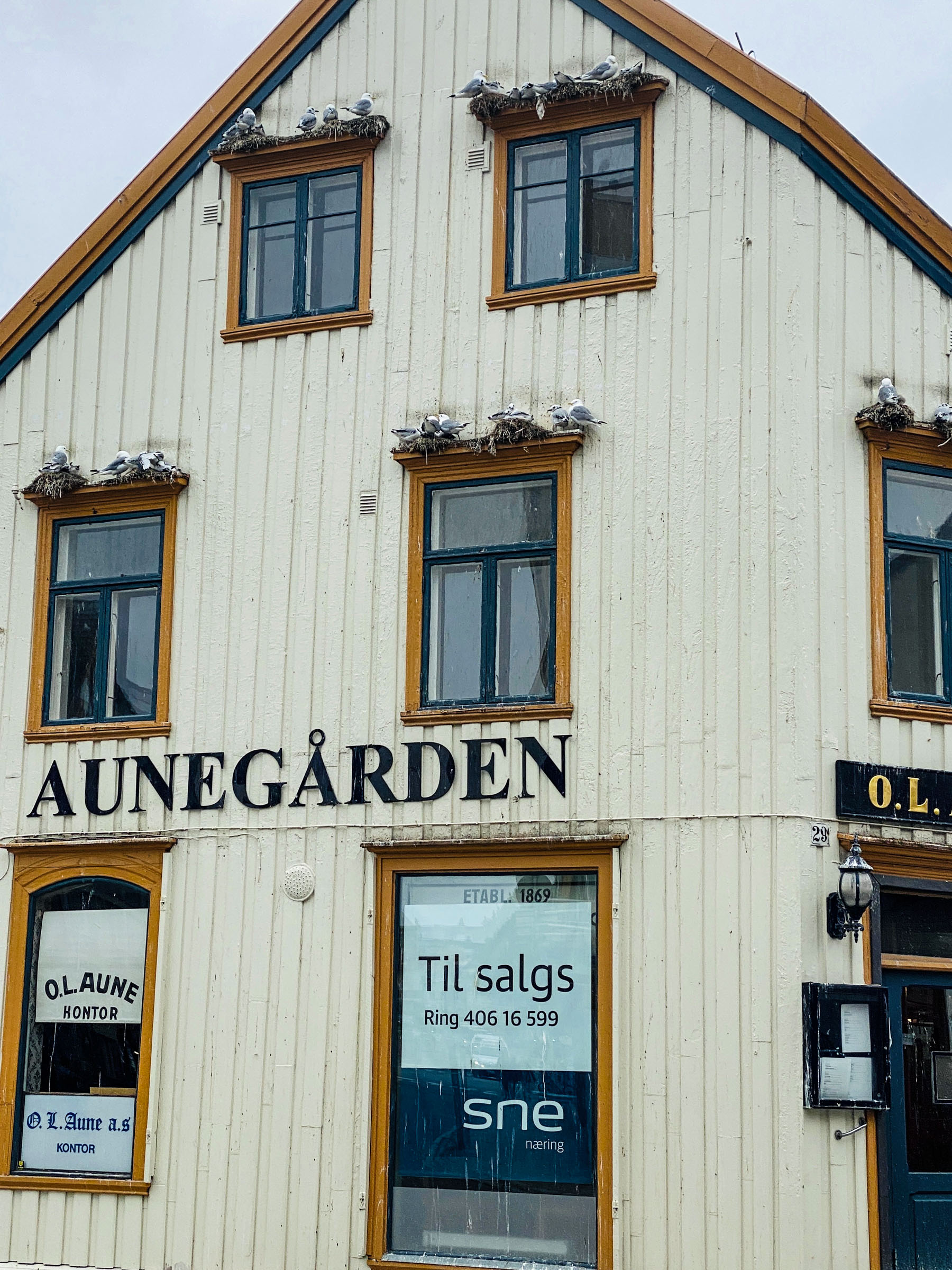
Around 2020, Tromsø had been invaded by the kittiwakes. A sociable colony bird, they were on roofs, snow guards along the roofs being a favourite, walls, on window sills – anywhere with easy sea access and protection against predators. Window lintels on historic houses were also popular, with kittiwakes keeping a high sound level and leaving streaks down windowpanes and historic panelling. Office workers couldn’t open their windows for months, and city centre residents were kept awake all night.
When NAV – the welfare agency – hired a crane to clear away the nests from their dominant downtown building, they were reported to the police for wildlife crime and habitat destruction. The local comment sections bristled with indignation, and the little seagull seemed to have few friends. And at the same time, the kittiwake was red-listed as an endangered species – as the traditional bird colonies up north were emptying fast.
New ideas around cohabitation were developed
Both the city and the Tromsøites had been caught off guard by someone even louder than ourselves. However – the experts were already thinking. Tone Kristin Reiertsen and Karl-Otto Jacobsen in NINA were the first in Tromsø to consider creating new, alternative nesting locations. Artificial nesting ledges were installed on the seaward side of the bunker on the Sørjetéen – the jetty jutting out into the Tromsø Sound near the Fram Centre – in 2018. This proved unsuccessful, probably because of the distance to the nests at the Fram Centre. Kittiwakes are homebodies who don’t like to move – and none of them moved in.
Newcastle experiences were brought north
In 2019, a visit to Durham University introduced them to Professor Helen Wilson’s work in nearby Newcastle, where a kittiwake tower had already been built in the 1990s. The idea of a “scaffold hotel” on wheels was developed and presented to the City of Tromsø. Why movable? Because if you shift them just a little each year, the birds will follow without really noticing. Over a few years, you end up with kittiwakes nesting where they cause far fewer problems.
Learning to deal with kittiwakes
In 2022, the city was about to restore its old museum from 1894. The classical windowsills and ledges here had of course been irresistible to our feathered friends, and work was brought to a halt. Also, the nearby Fram Centre – with various institutions working with environmental issues – had turned into a mini-birdcliff. And by now, nest destructions were not an option. What could be done? The City team looking after municipal buildings had to let it simmer a bit – new ideas were called for – and the ideas from Tone Kristin Reiertsen and Karl-Otto Jacobsen at NINA were taken on board.
A monument to the nature crisis?
Lawrence Malstaff – a Belgian artist comfortably fluent in the Tromsø dialect – wanted to turn the Sørjetéen into a new home for the kittiwakes by building a structure and feeding them fish offal – intended both as habitat and as a monument to the nature crisis. Like almost everyone in Tromsø, he didn’t know kittiwakes only eat fresh fish. Again, the jetty was too far away from the buildings with the nests.
Similar – but much more expensive – miscalculations were made in Berlevåg on the Barents Coast, where a bigger construction – also an art project – was totally ignored by the kittiwakes.
Hotels on the move
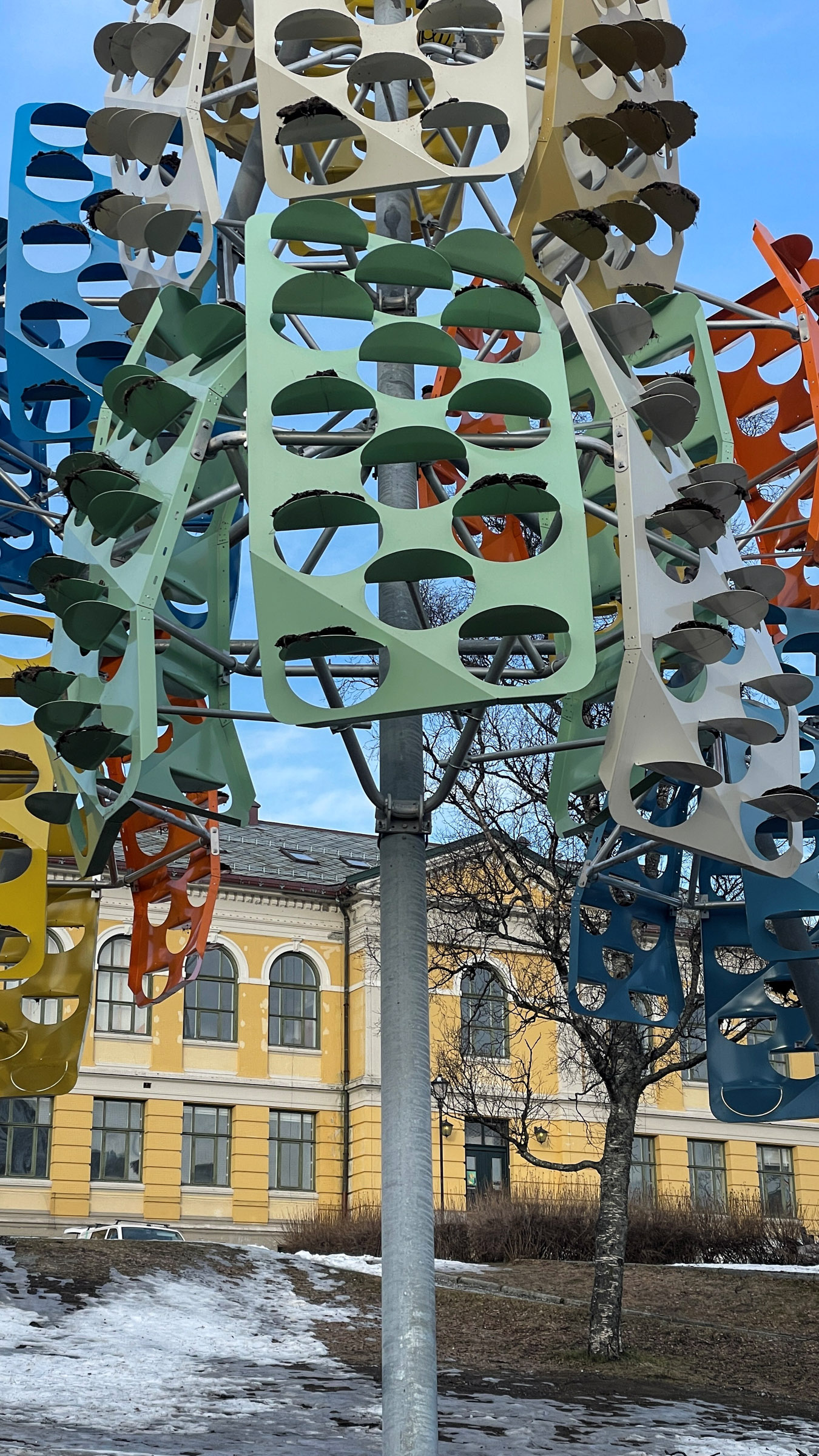
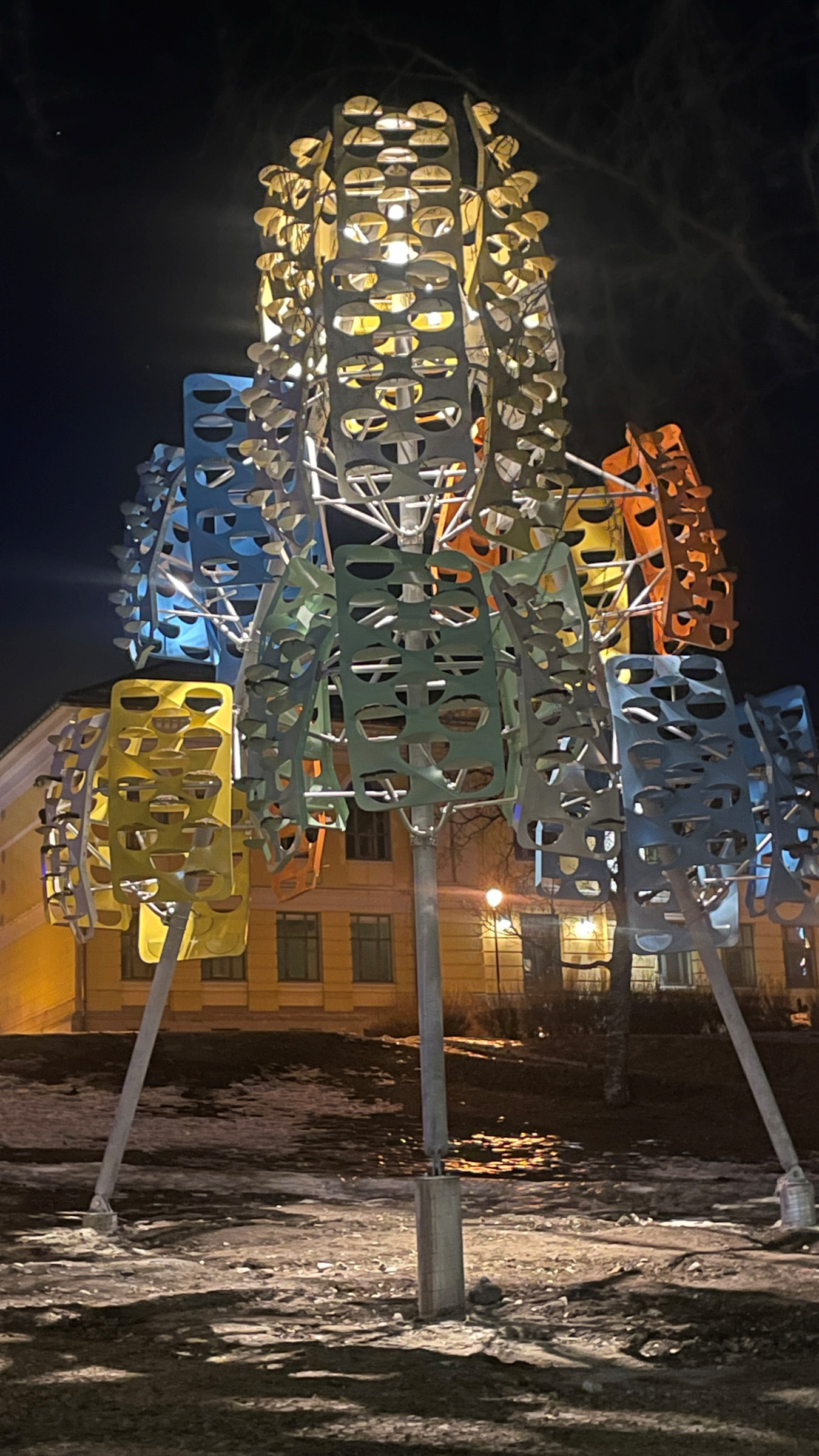
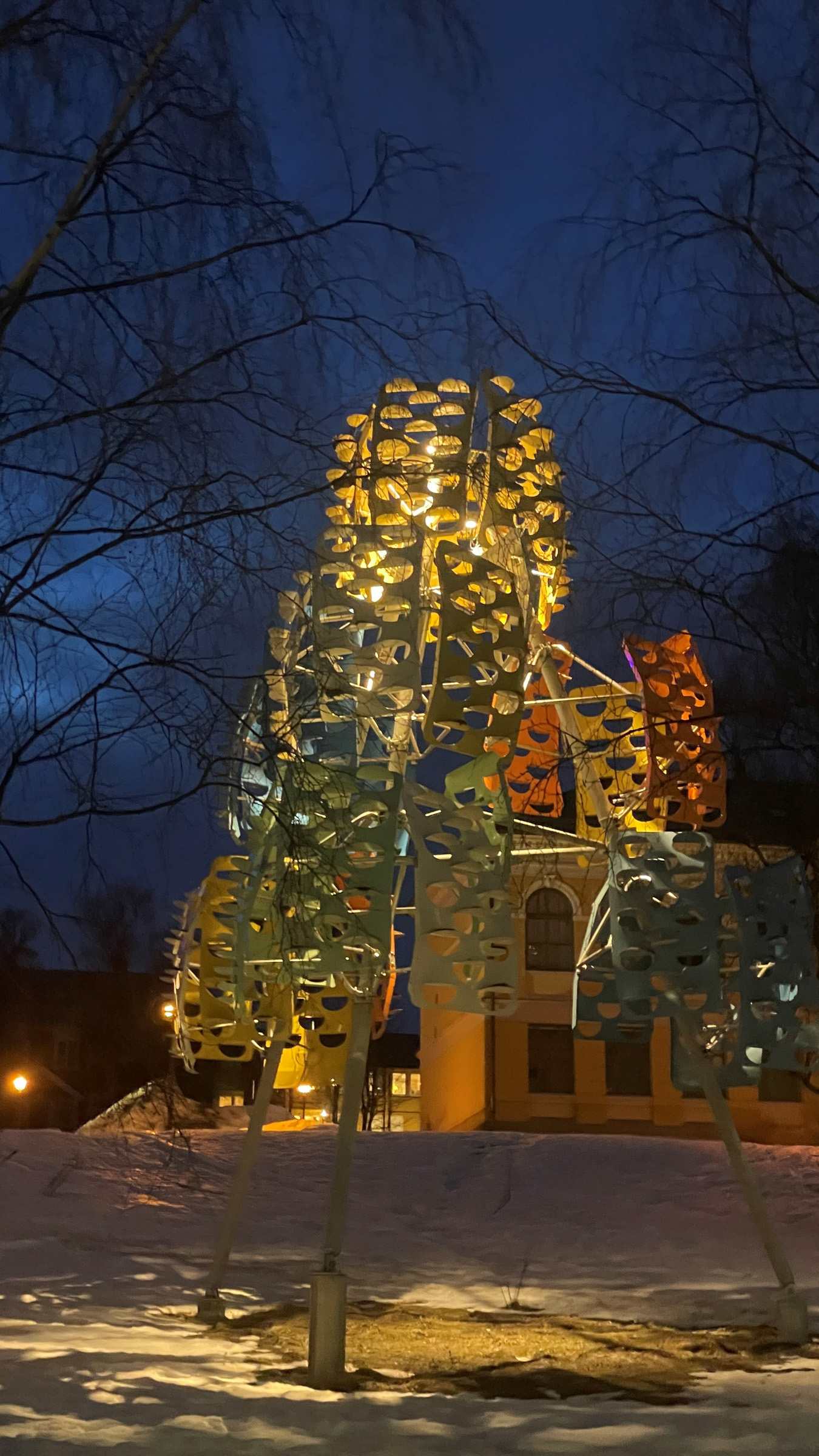
Lawrence – with the help of Tromsø architect Kjeld Nash – then ran with the idea developed at NINA, creating movable “Kittiwake hotels”. Tall, lightweight constructions – with lots of perfectly sized ledges where the kittiwakes can nest over several years.
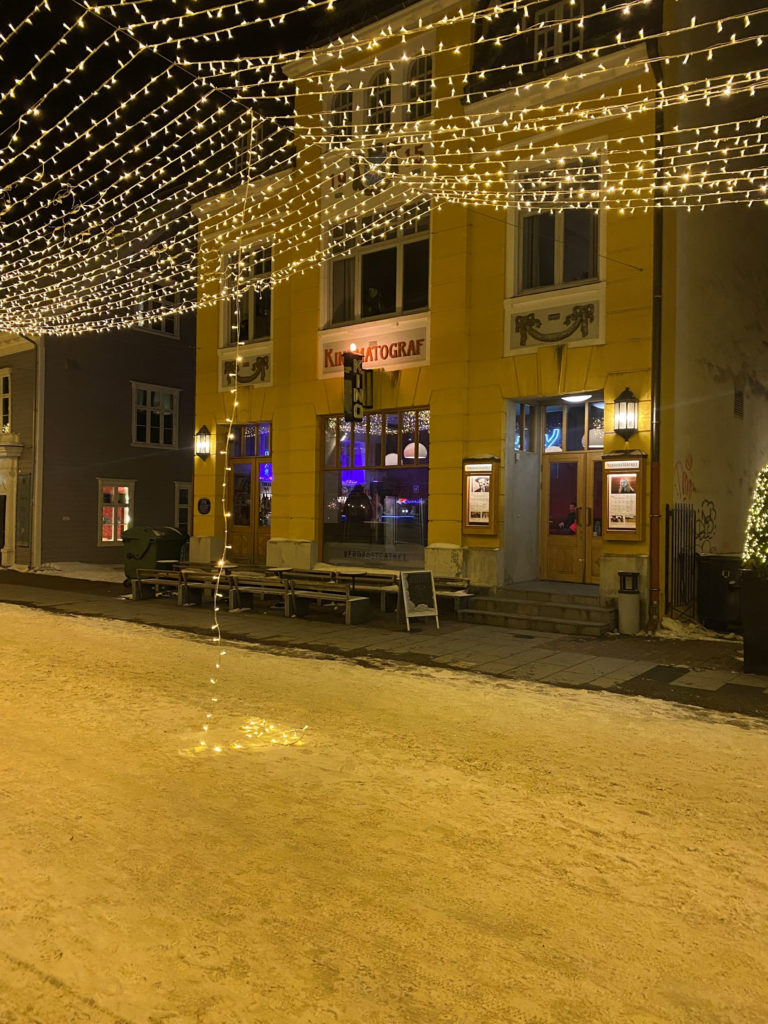
They were placed on the lawn in front of the County Hall (Troms Fylkeskommune) and in the park below the old museum – both immediately south of the city centre. The newest one even comes in multiple colours.. Visitors going between Polaria, the Ølhallen beer hall and the other attractions in the area can photograph the beautiful birds – and in the depths of winter – before the nesting season – they are lit. All in all – they are visually attractive and add interest to your walk. And most importantly, the kittiwakes have started nesting here.
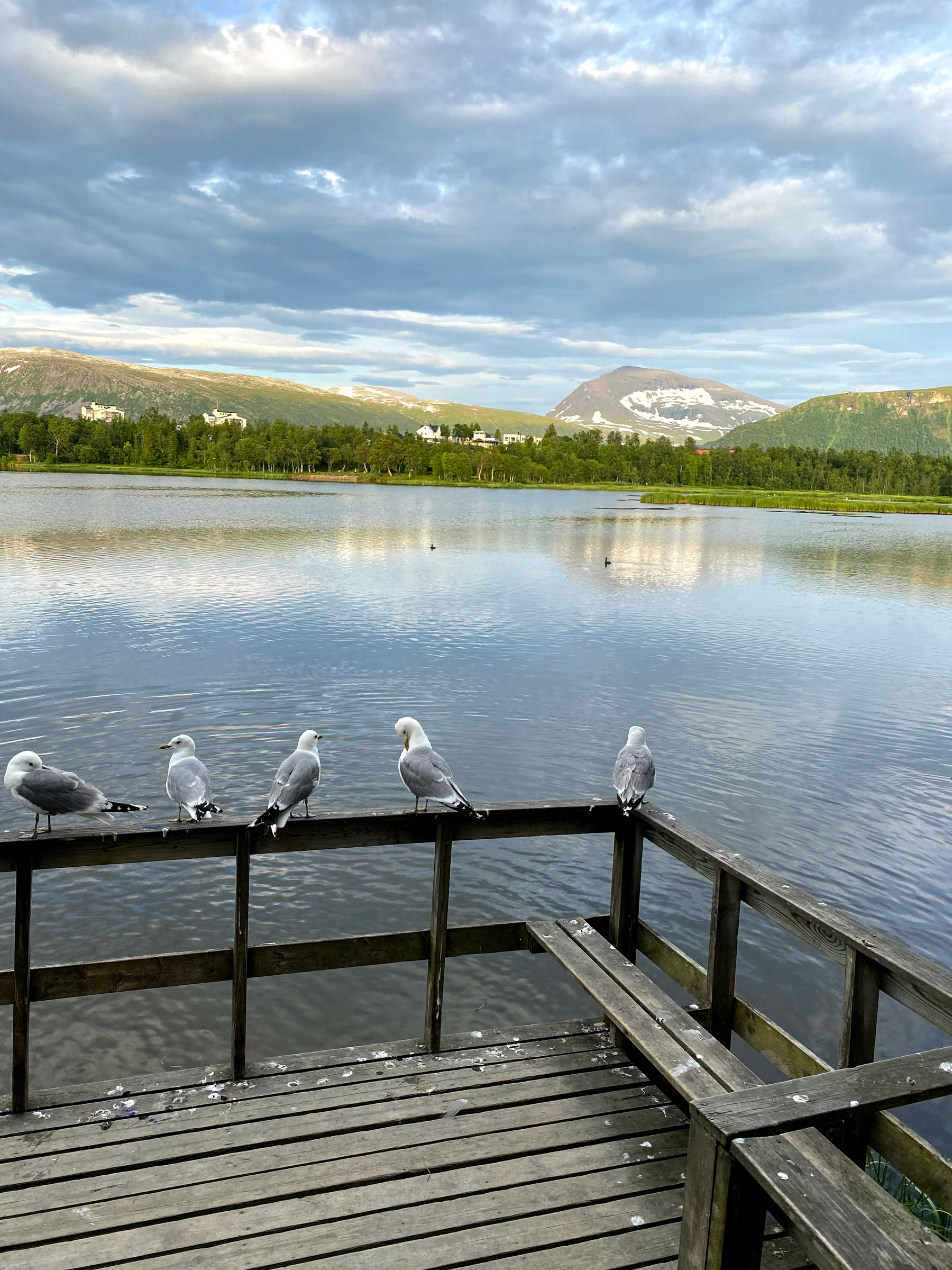
Kittiwalks take us around town with a bird perspective
Occasionally, there are kittiwalks organised to see them. I, however, went along with a small group of local enthusiasts in early April. They are volunteers to monitor the kittiwakes – and with an app we went from one location to the other. Led by Delphin Ruché, we started in the northern end of the city and went around by bike. Every single kittiwake nest in town is found on the app, and we were taught how to register the kittiwake activity. Have the kittiwakes returned or not? Any successful nesting means there is someone on the nest – the parents take turns in brooding.
Habitats have been discretely destroyed
It turned out to be rather sad; owners of houses had done their best to cover up all ledges with sloped metal flashings. Bird spikes were used a lot a few years ago but were widely criticized for harming the birds. I hadn’t noticed all the discreet sloped metal flashings before, but they have apparently been efficient – one nest after the other had been turned uninhabitable. We were told that the dialogue with property companies hadn’t proven successful – everyone just wanted to get rid of the nests.
We ended up at the kittiwake hotels in the city centre’s southern end. They had started to fill up, but with less seagulls than before. I was impressed with the knowledge and the dedication of the little group but also saddened by the declining number of nests.
Is the problem solved?
The situation for the kittiwakes is worsening every year. Very few kittiwakes nest in the densest areas of the city centre – spikes and metal make almost all the good spots inaccessible.
The kittiwake hotels have a lower occupancy than one hoped for. However, kittiwakes live for many years. Given time, they may be convinced that the hotels are a good solution. We shouldn’t give up hopes. Especially as bird experts, city planners, architects and the public gain more knowledge about the kittiwakes.
It’s an attitude thing
This is also an attitude thing. How much space do we want to give wildlife in our immediate surroundings – especially in urban areas. “I come from a small island where we lived rather peacefully with the seagulls” Tove Kristin Reiersen says “and I was surprised by the aggression city folks in Tromsø displayed against the seagulls”.
However, the attitudes are changing. A parallel are insect hotels in gardens – we are concerned about the insects disappearing and make insect hotels and plant wildflowers. And are willing to live with wasps. We also install nest boxes and feed birds – because we are aware of the nature crisis. Noisy birds with a well-functioning plumbing system we seem to accept more readily than before.
Kittiwake hotels is a new architecture genre
The learning by doing experience in Tromsø and other northern locations has given birth to a new type of architecture- bird hotels. In April 2026, Kjeld Nash was in the jury of an architectural competition for new kittiwake hotels. The winner of the competition included recycling a floating salmon pen, providing immediate access to the sea, distance to human viewers and protection from predators. Another contestant places the seagull hotels in a nifty position between the columns carrying the Tromsø bridge.
How can you help the kittiwakes?
The most important contribution from a visitor is to love the kittiwakes. Go to the seagull hotels, take some photographs and study these noisy, sociable creatures in their homes. Keep a few metres away – and don’t walk under the constructions to avoid droppings. The sheer interest shown by concerned locals and visitors alike is crucial to preserving the last remnants of a once large population of kittiwakes in our region.
…and then the seagulls that were always here…
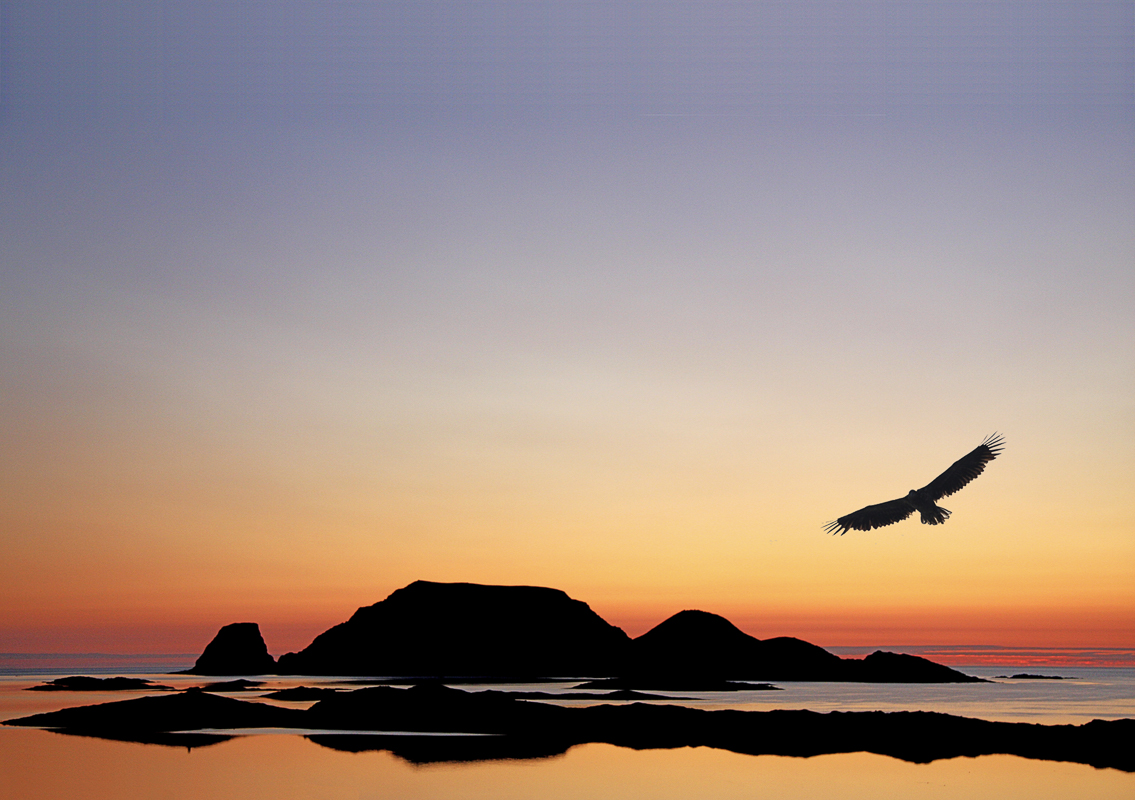
If the kittiwakes are new, there were always seagulls in Tromsø. Grown-up Tromsøites remember heavily laden fishing boats lying so deep in the water that the sea nearly reached the gunwale -with swarms of seagulls around. Busy fish factories lined the seafront – with flocks of seagulls scouting for the next tidbit from the roof. These days, fish offal can’t be released into the sea – and it also has a value as salmon fodder. Garbage handling is also a closed-in affair without any access for the seagulls.
Before the advent of the kittiwakes, two species of seagulls were present in downtown Tromsø in significant numbers. Then there are a few others observed occasionally.
- The common gull (Larus canus ) is with us from the end of winter to the end of summer. They are rather small and eat earthworms and other small species – but are no strangers to raiding platters in outdoor cafés and al fresco barbecue tables.
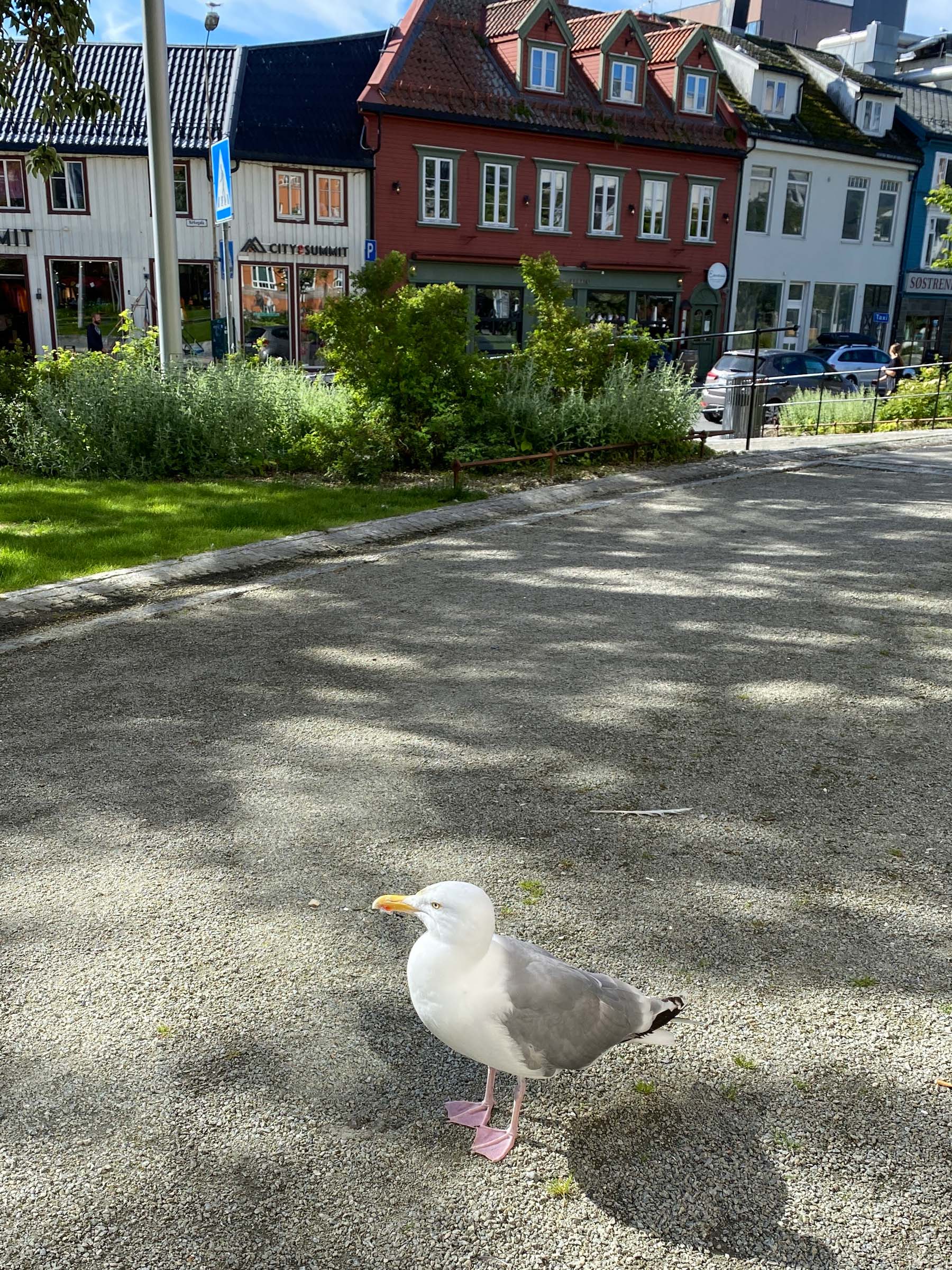
- The herring gull (Larus argentatus) is a bigger and altogether more aggressive predator. They are the most likely to snatch your hot dog and represent a constant danger to any barbecue party. Chicks of the common gull can also be on the menu, as can the city’s park pigeons.
- The great black-backed gull (Larus marinus) is represented in smaller numbers and is not often observed in downtown Tromsø. However, there is a group on the roof of the hospital, some 3 km north of the city centre. Chances are, you will not see them in Tromsø.
- The Arctic tern (Sterna paradisaea) is not strictly a seagull, but a near relative. Arrived from its long trek from Antarctica, it nests around the island of Tromsø and elsewhere. It can be very aggressive in the nesting season – dive-bombing your head to chase you away from their camouflaged chicks in their nests hidden in the ground vegetation. You are, however, more likely to meet it on a beach walk on the island of Tromsø.
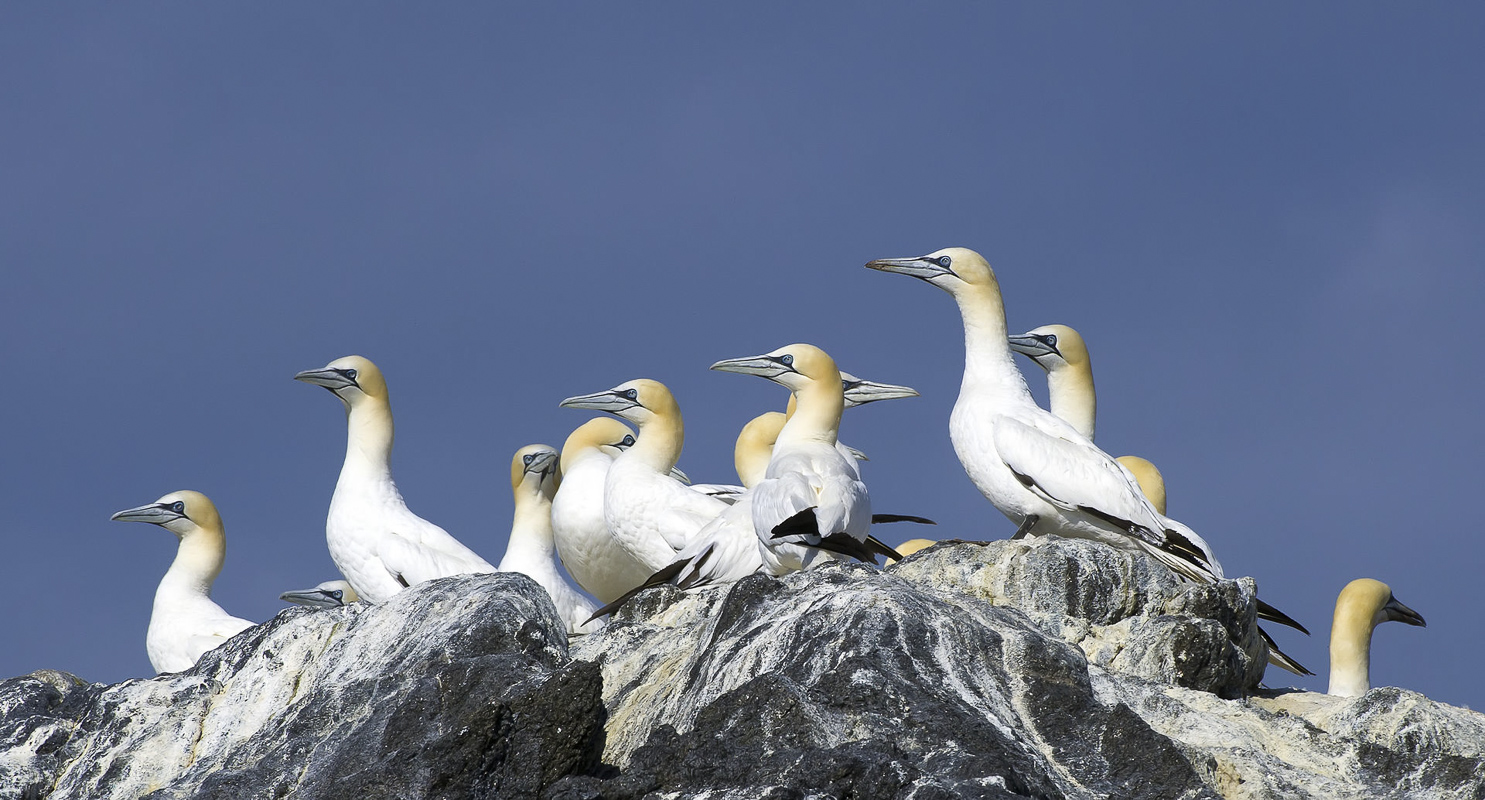
Living with seagulls in town
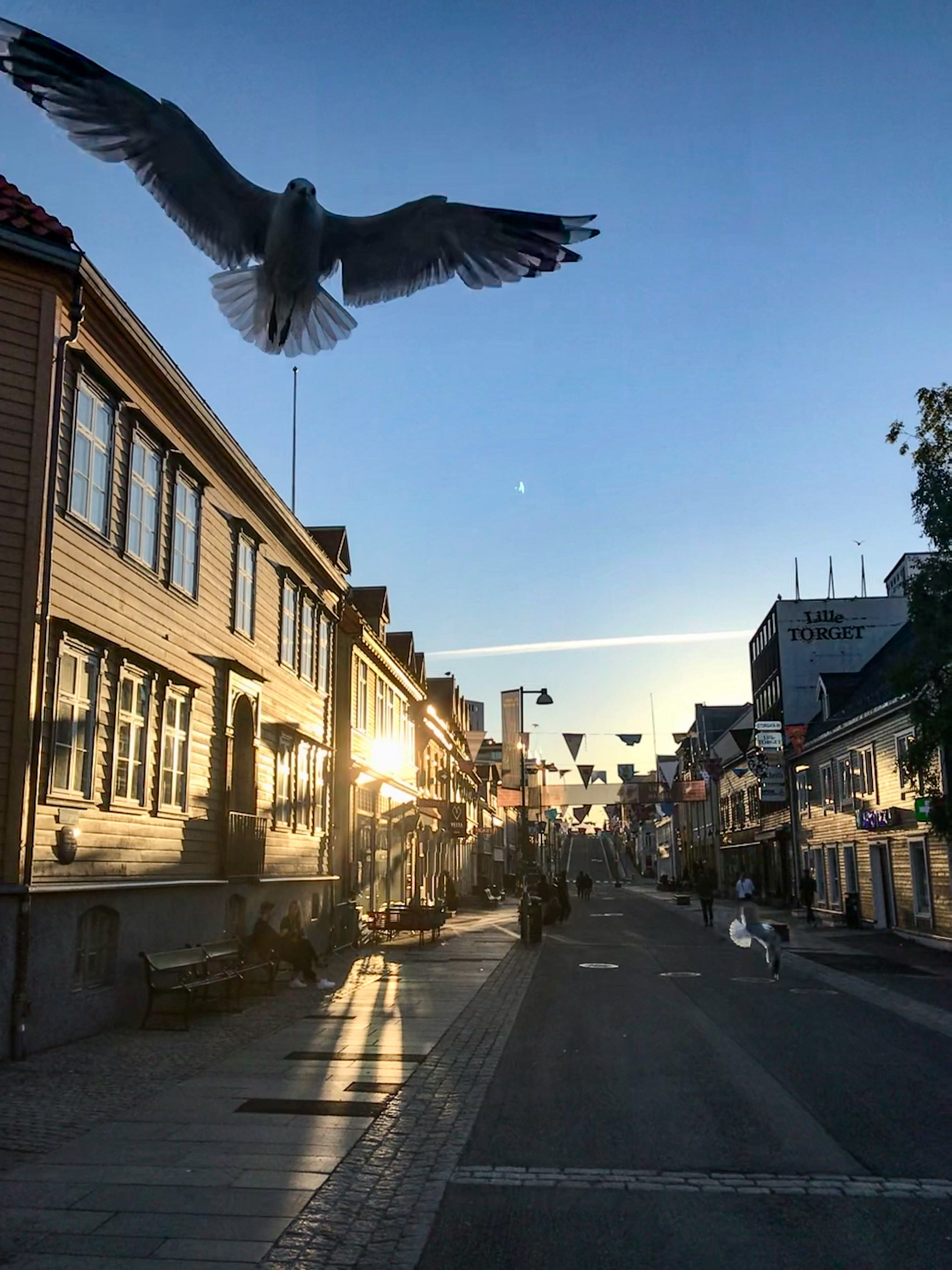
The kittiwakes are not a problem for city walkers – local or visiting. You hardly see them outside the kittiwake hotels. However, common gulls and herring gulls are found everywhere in town from March to the early Autumn. They gather on rooftops on March, in April they copulate shamelessly on light poles – even on a Sunday. Brooding and hatching in May-June involve keeping unsuspecting by passers at bay with swooping attacks. When the chicks start walking about in July, they display a total lack of manners. Locals are ambiguous, rolling their eyes at the noise and droppings – but if a chick is caught in the rooftop snow guards – someone will invariably call the fire brigade.
Moments of harmony and conflict at a sausage stand
Siri Lier runs the Raketten (“The Space Rocket”)– a bar and hot dog stand housed in a kiosk from 1919 at Tromsø’s main square – attracting queues of visitors and locals.
This involved living with seagulls. In the Tromsø version of gang-related crime, herring gulls keep an eye on the handing out of sausages from the surrounding buildings. Before you know it, a hit-and-run attack from the air has ruined your meal. Siri warns her guests to cover up the food, to be aware of the smallest person in the group – notably a child or a petite woman, to sit under a roof and to walk close to a wall when wandering about.
Siri has also been following generations of seagulls in the same family. Sparrows inhabit the nearby birch trees, and she feeds a group of 14 crows every day. Over time, their feathers have started to shine, and their gentle croaks suggest they like Siri. She can of course burst into a “bad gull” scolding to a particularly cheeky herring gull. But there is lots of love and no hate. As she says with a wink – who doesn’t like a good sausage?
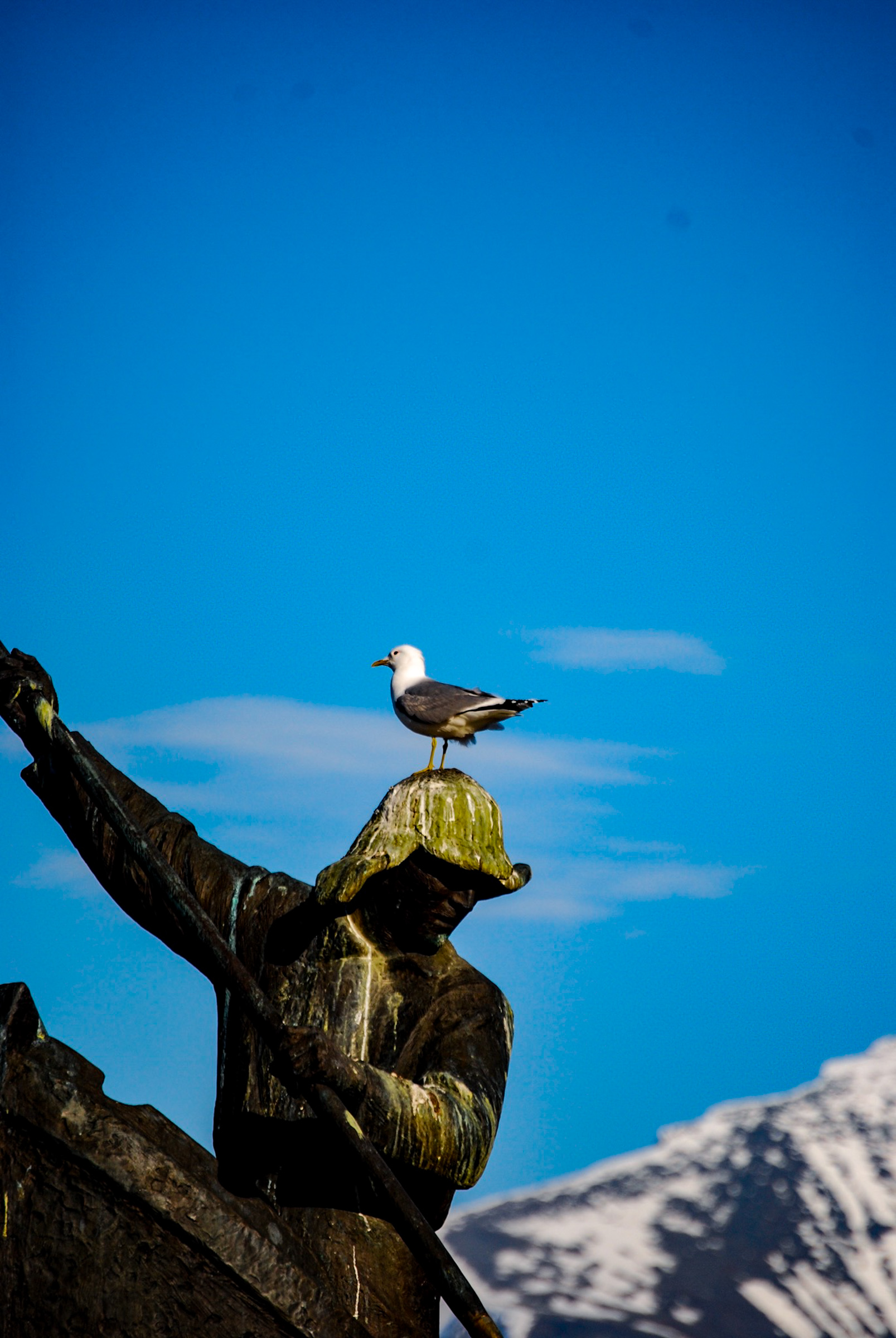
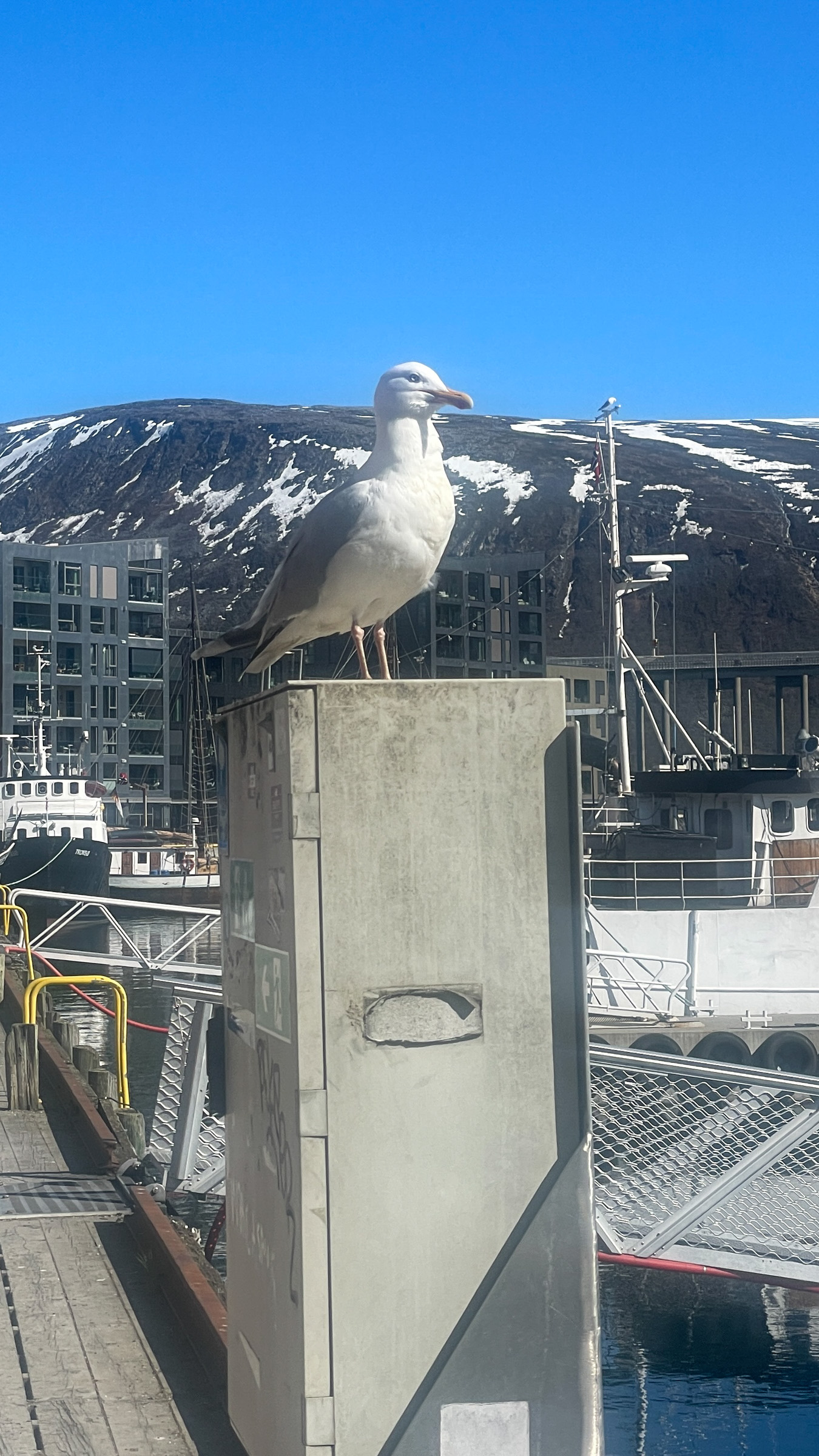

About seagulls and kittiwakes in Tromsø
A kittiwake hotel is a purpose-built nesting structure designed to give black-legged kittiwake a place to breed away from buildings in the city centre.
They help reduce conflict between birds and people by offering alternative nesting sites, while supporting a species in decline.
Yes. Kittiwakes are a protected species in Norway, and their declining population makes conservation measures increasingly important.
You can spot them on buildings in the city centre, at designated kittiwake hotels, and in nearby coastal areas during the breeding season.
Black-legged kittiwake nest in Tromsø because buildings offer safe ledges similar to natural cliffs. Changes in ocean conditions, linked to rising sea temperatures, have made feeding less reliable, pushing some birds to seek new nesting sites in urban areas.
The main gull species in Tromsø are the European herring gull, Common gull and black-legged kittiwake.
About this article:
Nobody has all the answers to the urban kittiwake issue. And certainly not this article. However, I had some good talks with Tone Kristin Reiertsen, senior researcher and specialist on seabirds at the Norwegian Institute for Nature Research (NINA) in Tromsø. She directed me on to Delphin Ruché – field biologist and manager of the company Rissa Citizen Science – working with environment issues. I was also tipped off about architect Kjeld Nash, and had a chat with him, the artist Lawrence Malstaff and Robert Menzoni Lund from the city of Tromsø about hotel building. These are but a few of many people in Tromsø who are dedicated to the protection of the urban kittiwakes in Tromsø. The story is still unfolding. I was also happy to talk to Siri Lier about urban co-habitation with the other gull species in town.