
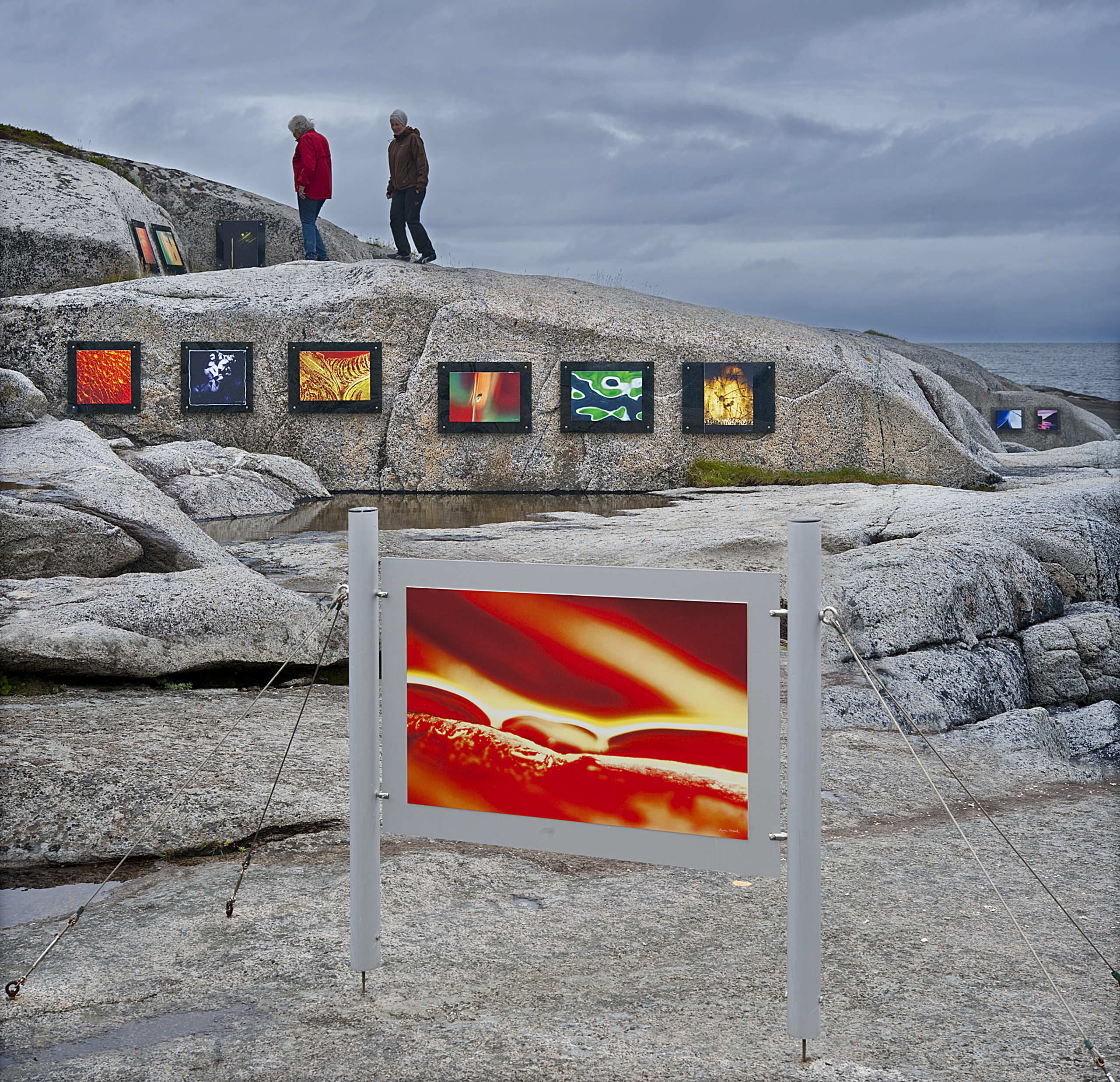
Traditionally, art has had a strong connection to urban areas, but in Northern Norway you can find thought-provoking and impressive statues and sculptures among seaweed and kelp in the rocks, on windswept reefs and right out in the open sea. This also elevates the experience of the spiritual experience; the feeling of rich culture is often enhanced outside the comfort of a classic gallery.
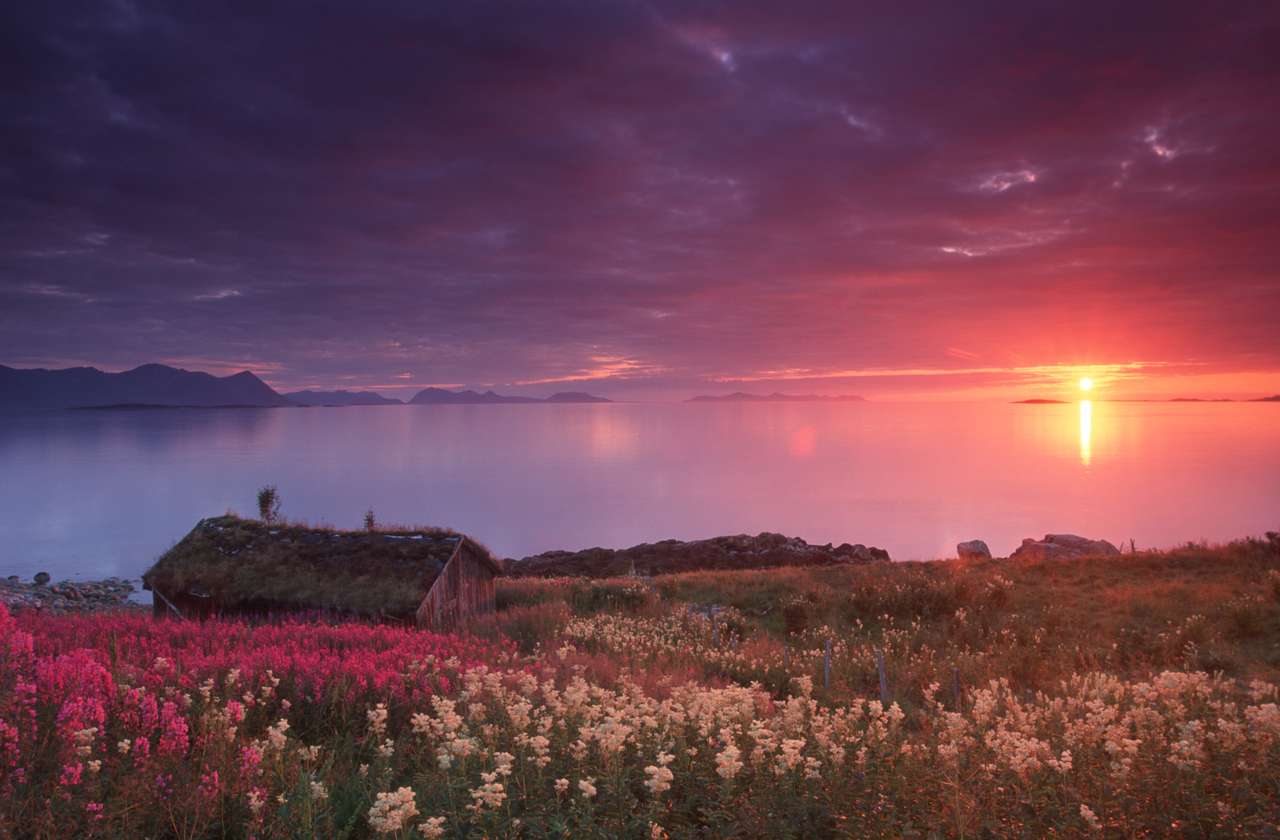
The northern part of the country is completely unique. The light is always changing; a crystal clear summer day can be transformed into an inferno of wind and rain in the blink of an eye. At the same time, the darkest winter night can, without warning, slide into a color show under the auspices of the magic of the northern lights. Join us on a road trip into the world of art among fishing villages and mountains, on the farthest plateau and in the innermost fjord arms, from south to north, where the link between the spiritual and the geographical is extremely strong. Art is often inspired by nature, and nature often contributes to enhancing the artistic experience.
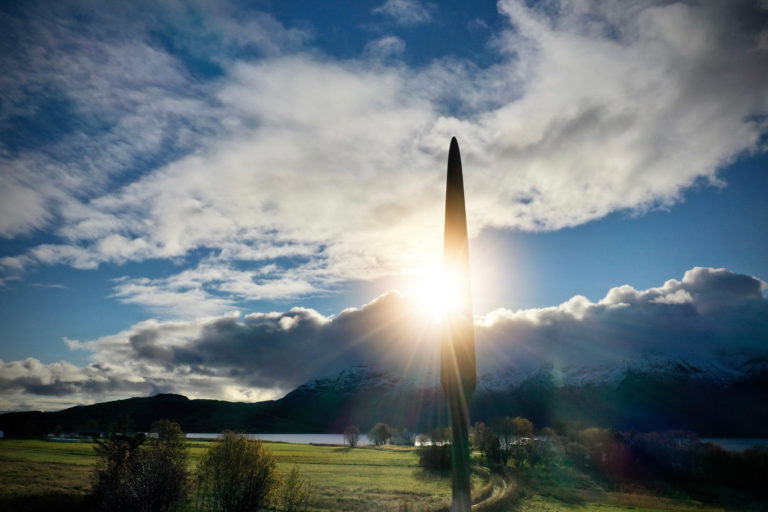
Few places are as obvious as Skulpturlandskap Nordland, which consists of a number of sculptures in natural settings throughout the county. Here, it is the harmony between the artwork and the landscape that creates an impression; internationally renowned artists such as Tony Cragg, Kjell Erik Killi Olsen and Markus Raetz are some of the artists who have been inspired by mountains and fjords and created art for reflection.
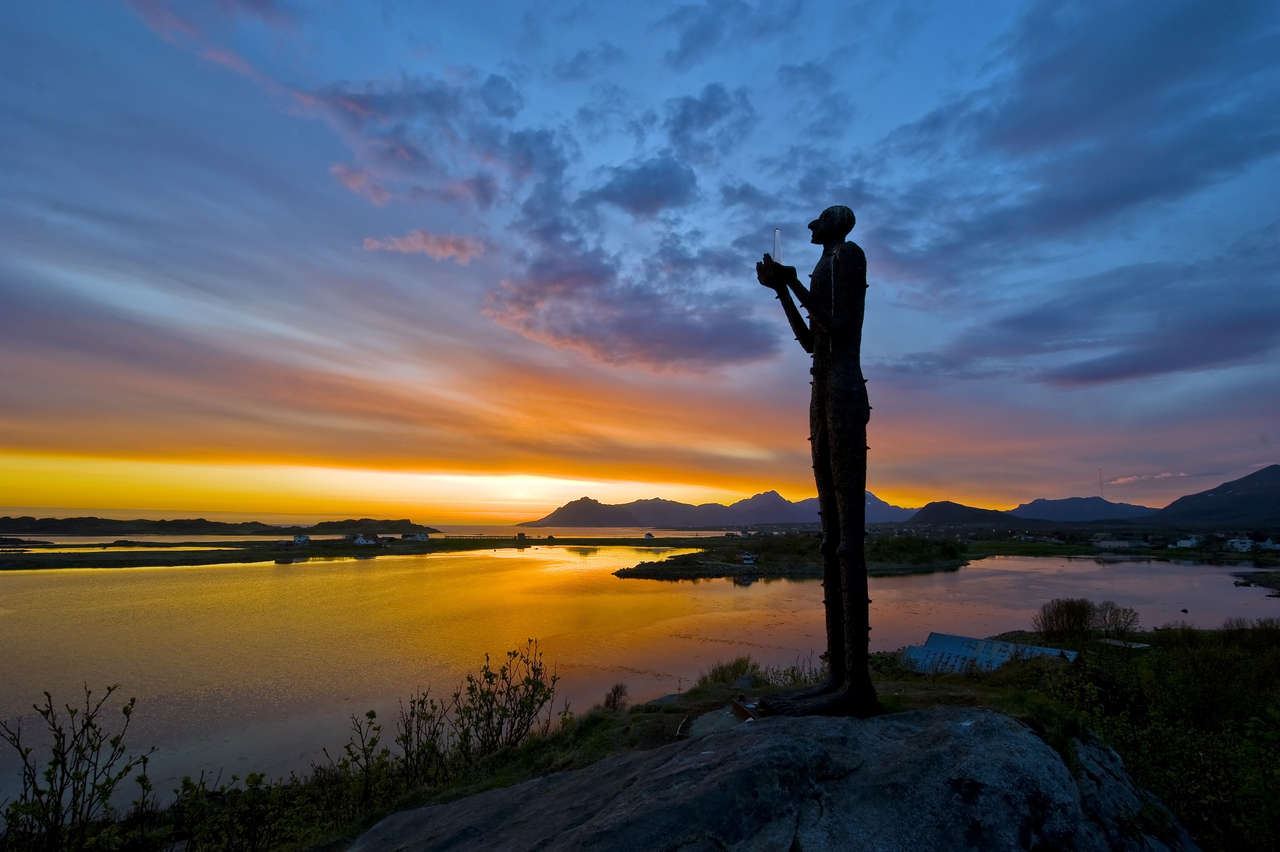
Skulpturlandskap Nordland has a broad artistic expression inspired by the idea of the American sculptor Robert Smithson’s vision of “site-specific sculpture” – that is, that it is important to take into account the context in which the artwork stands in order to understand the whole. This is not an isolated experience; in Northern Norway everything is interconnected. Several of the 34 sculptures in the county also change their appearance constantly, such as “The Sea Man” by Antony Gormley. The 10-meter-high granite man stands in the Ranfjorden at Mo i Rana, and when it is high tide, the waves splash right up to his thighs.
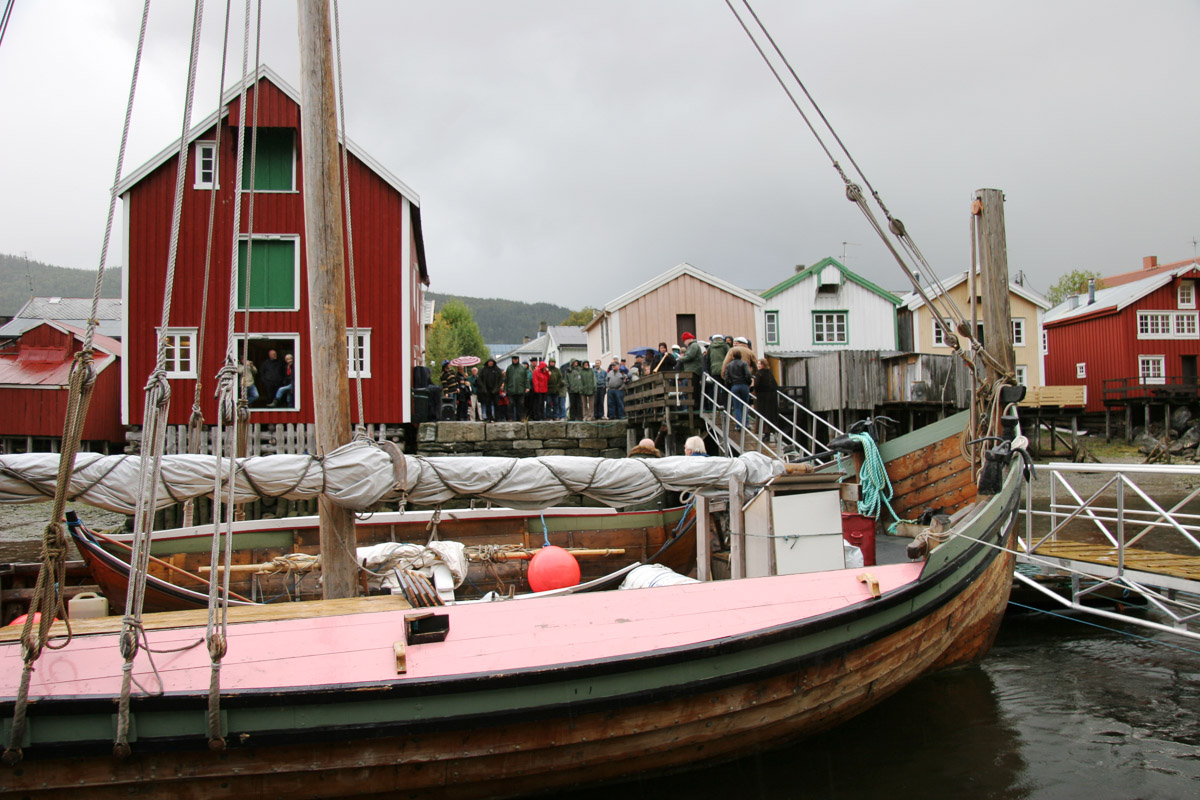
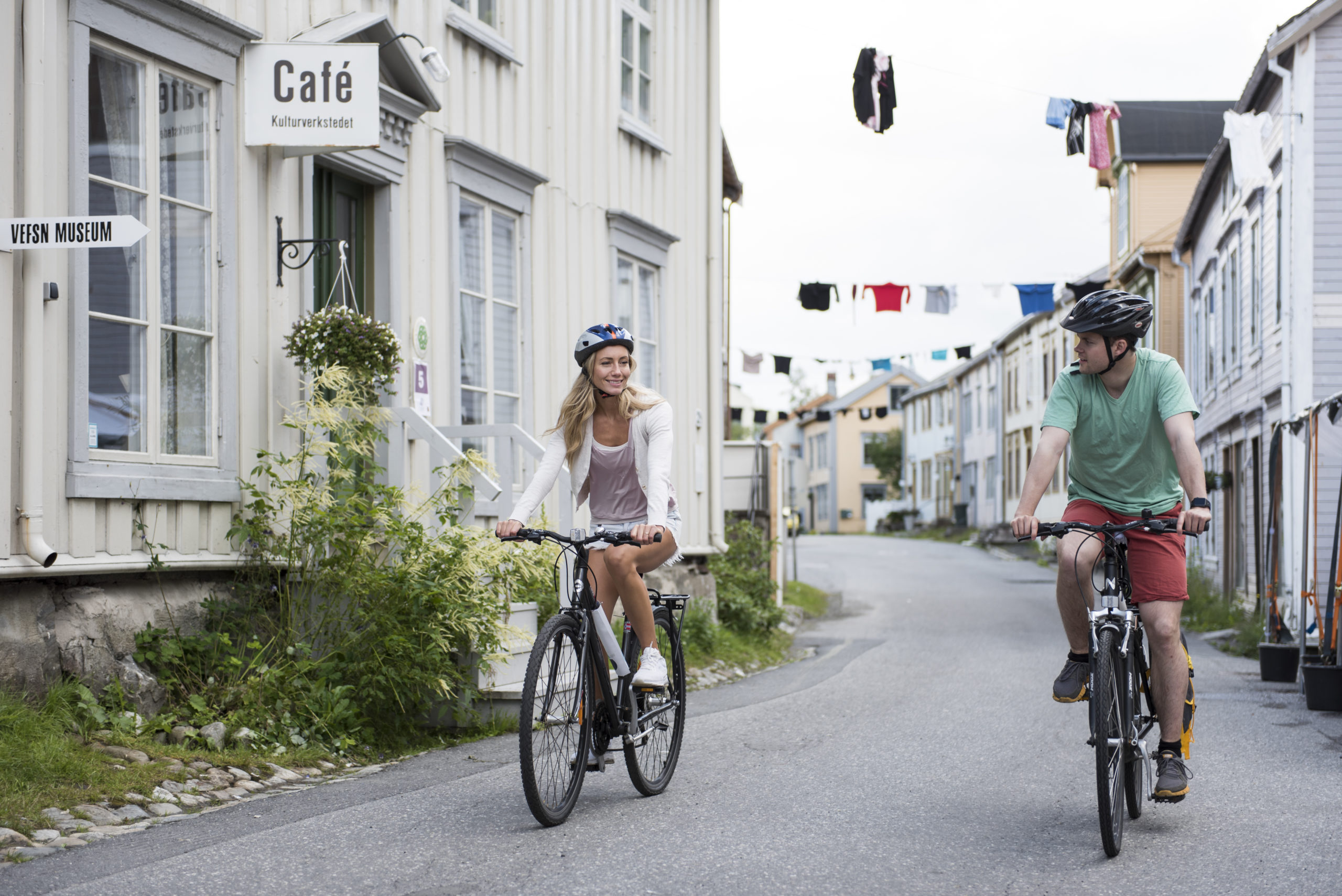
Art and culture are also about history. Galleri Stokland in Mosjøen is a charming place full of colorful energy and local creativity in an old wooden house from 1852. The house is located in the beautiful Sjøgata, which consists of a hundred houses from the 19th century. This is the largest collection of preserved wooden houses in Northern Norway – incidentally, just a few stones throw from the historic Fru Haugans, one of Northern Norway’s oldest and most venerable accommodations. Galleri Stokland is run by local artist Kristi Stokland. She has a flair for color and detail, and has a permanent exhibition with a diverse selection of images. In addition, you can experience other exciting exhibitions in the gallery and gift shop, which includes a permanent exhibition of glass art signed by Mosjøen’s own Julian Finne, glassblower at Blåst in Tromsø.
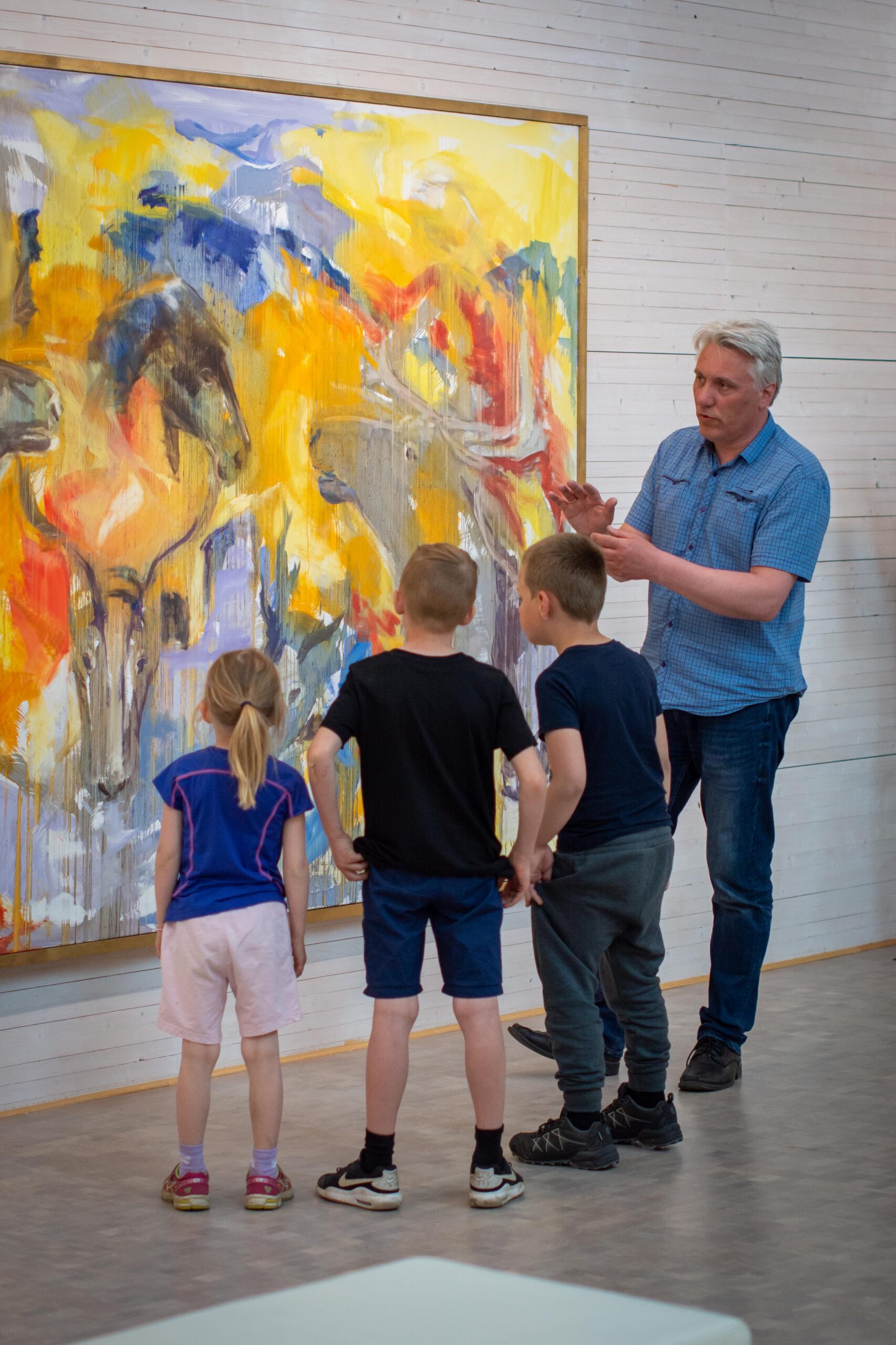
We follow the E6 north. At 66° 33′ N we cross the Arctic Circle, and right next to the road is the distinctive Arctic Circle Center – built to adapt to the nature in this increasingly harsh part of Norway. A couple of miles further north is the Adde Zetterquist Art Gallery, the next stop on our cultural light trail. Here, the life and art of Per Adde and Kajsa Zetterquist are in focus. Per Adde (1926-202) and Kajsa Zetterquist (1936-) originally came from Sweden, and established themselves here in Saltdalen in the 1960s. They built their homes and studios in a remote part of the region, where they found inspiration in the scenic surroundings. In addition, both have been involved in the fight for the rights of the Sami population, nature conservation and art policy.
The Adde Zetterquist Art Gallery is a harmonious building, and its purpose is fitting enough to convey the artist couple’s commitment to protecting both nature and culture. Since its opening in 2013, the guest gallery has invited regular rotating exhibitions by other artists, and each year the first guest exhibition will have a Sami theme – a small nod to the location in the middle of the reindeer herding area on Saltfjellet and the artists’ desire to promote this culture.
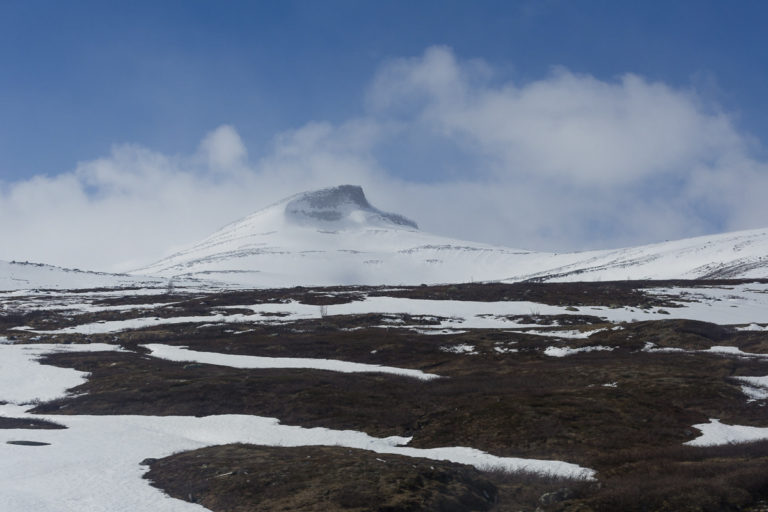
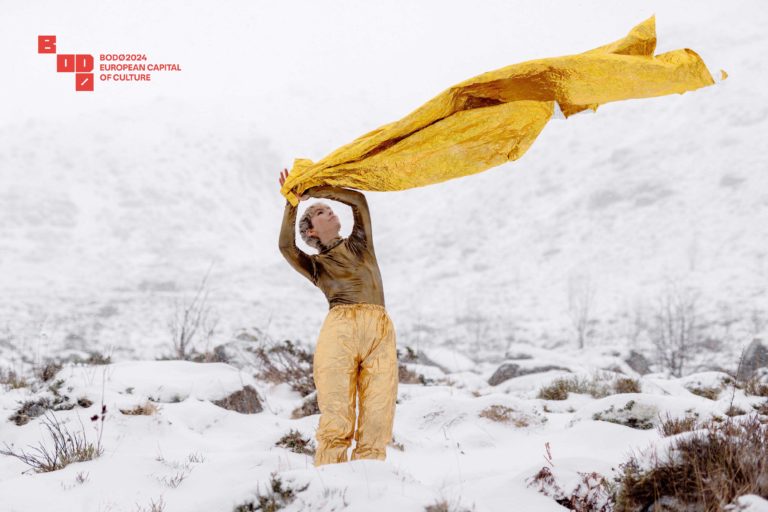
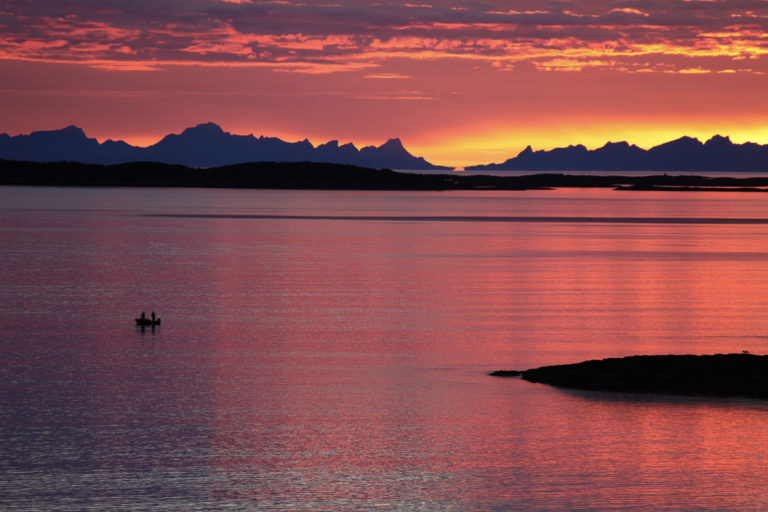
Many were probably surprised when Bodø was selected as the “European Capital of Culture” in 2024. What exactly did this windswept, small town by the ocean have to offer in an international context? Quite a lot, it would turn out. Nestled between steep mountains and the open sea to the west, Nordland’s metropolis has always been a hub for trade and travel. Cultural heritage is not something that has blossomed overnight. It is rooted in everything from Sami traditions to historic trading posts and seafaring – all visible in the cityscape.
New art museum in Nordland!
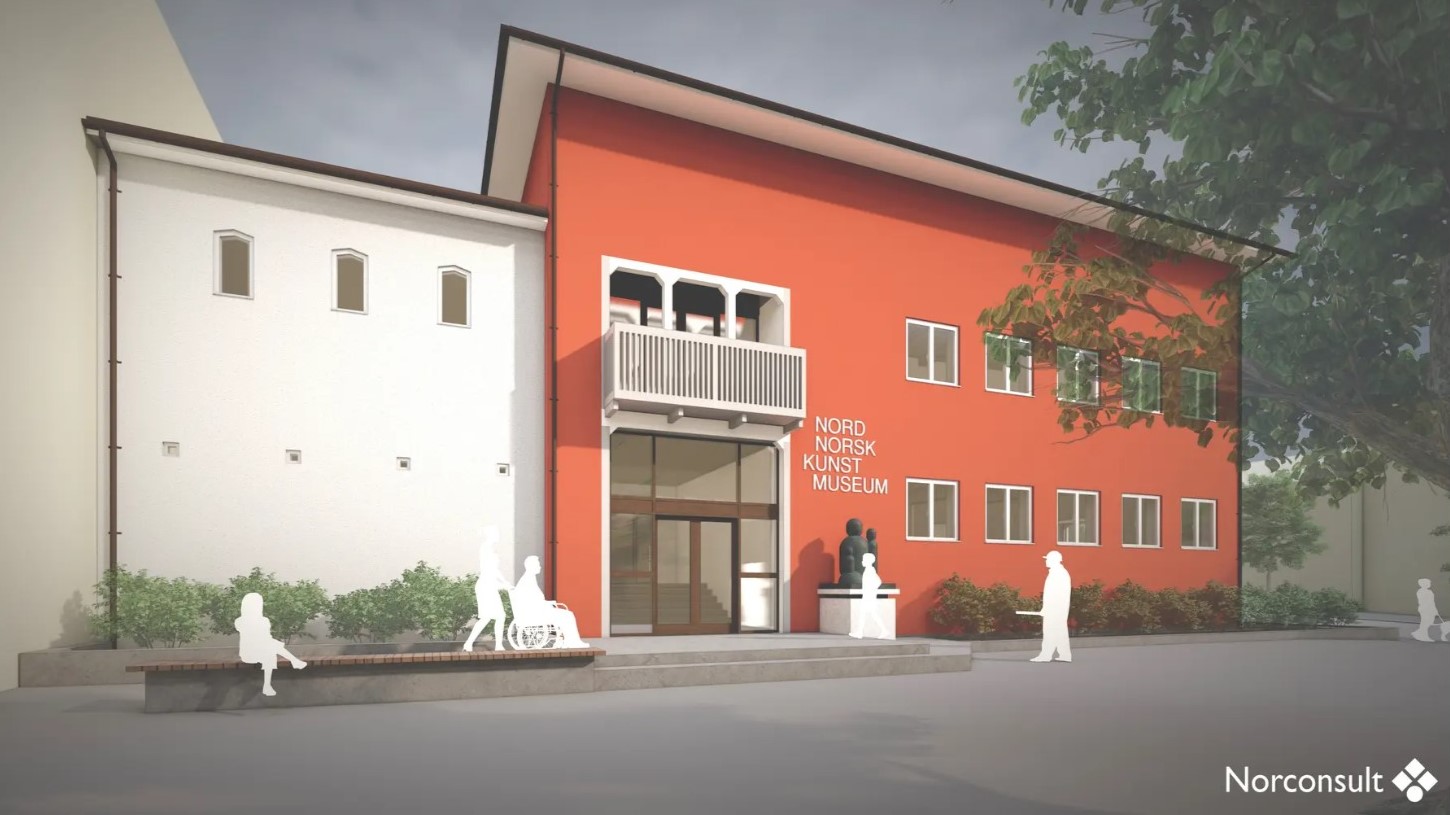
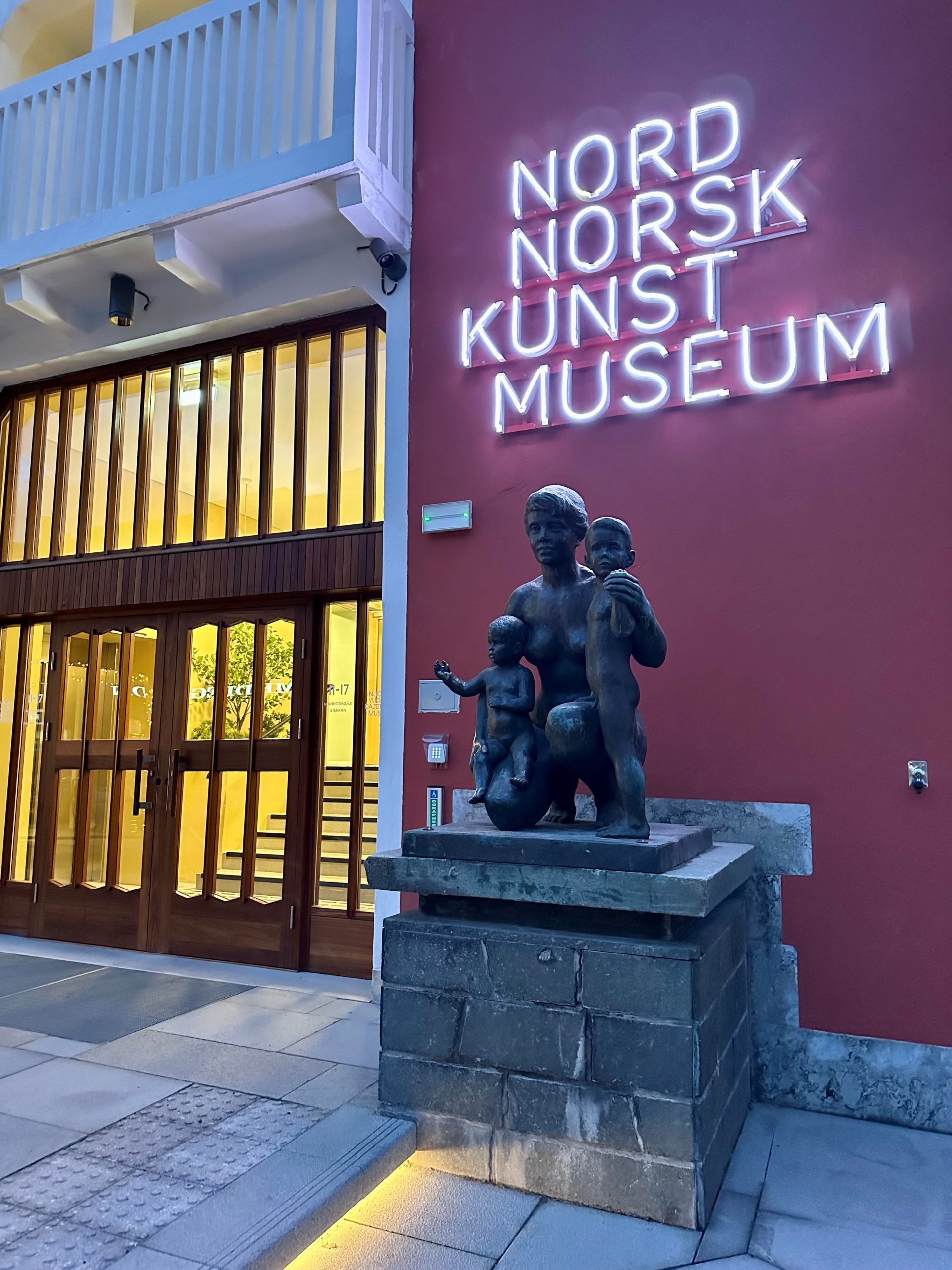
NordNorsk KunstMuseum Bodø opened on February 25, 2025, in the brand new branch in the old Savings Bank building in Bodø, and in the fall of 2025 there was a major solo exhibition with works by “The Gentleman from Vågøya”. Adelsteen Nordmanns is represented in museums, galleries and collections in Europe, the USA and Canada. Today you can experience the art collection of Adelsteen Normann Stiftelsen on the walls of Haalogatun. The collection now consists of 50 paintings and 23 pencil sketches.
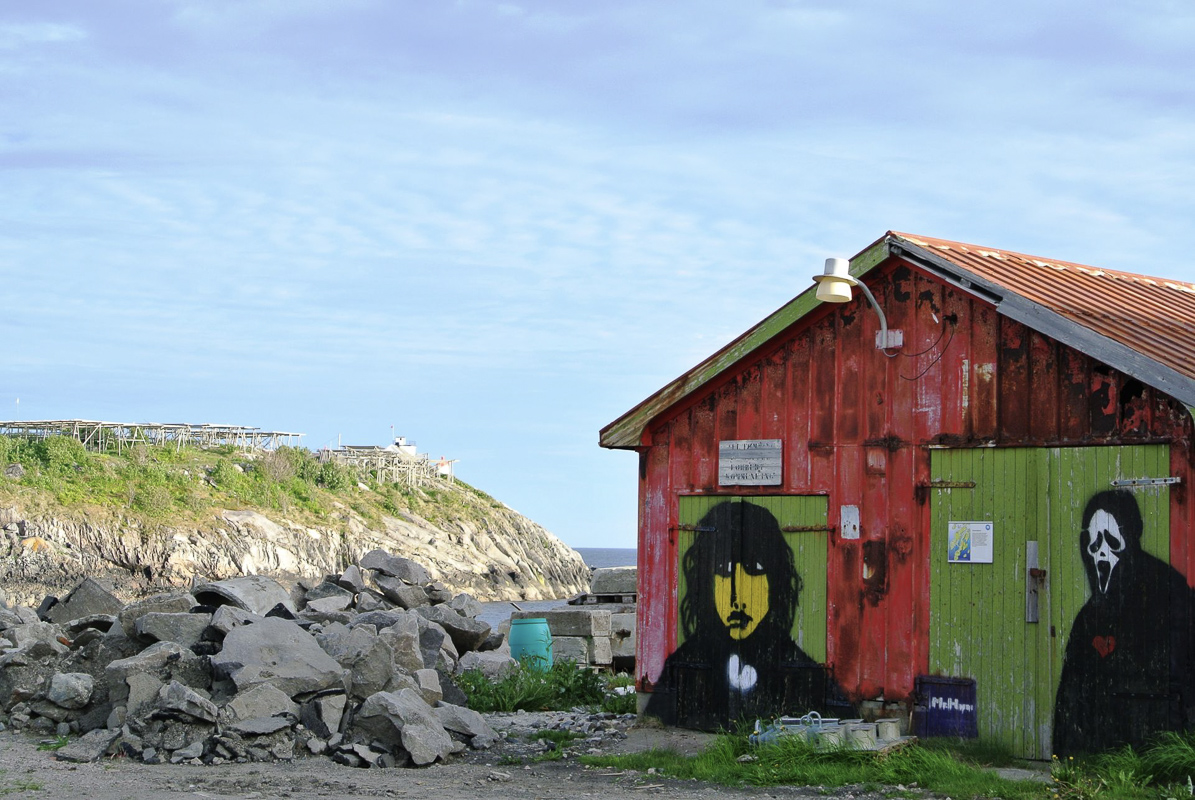
The art dissemination project NorlandiART from 2016 shows stories from and about the region seen through the eyes of artists in various locations in the city center. As a modern counterpart, international street art has found a natural place on old house walls and facades. Urban art expressions with facades as canvases provide an extra dimension in a city like Bodø, and it was especially in the wake of the street art festival UpNorth in 2016 that the city center really took on new colors. While some of the artworks have disappeared through urban development, several are still visible – including the powerful “After school” signed by Rustam Obic in Kongensgate and “Malstrøm” (inspired by Saltstraumen) in Moloveien by David de la Mano.
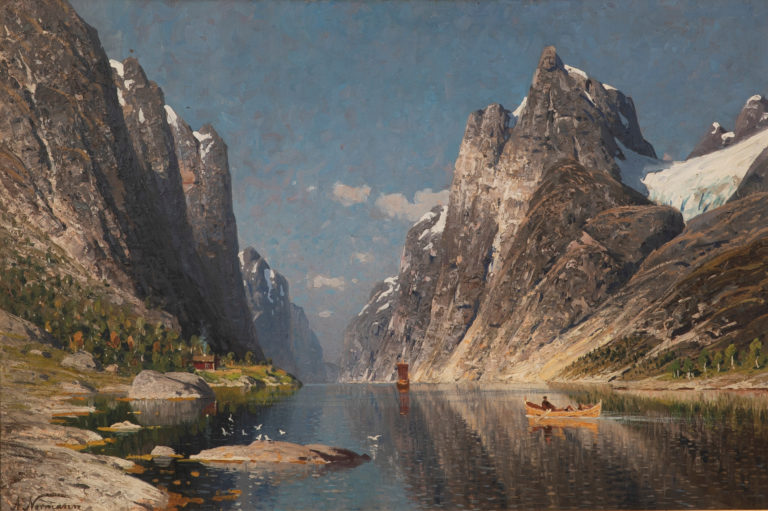
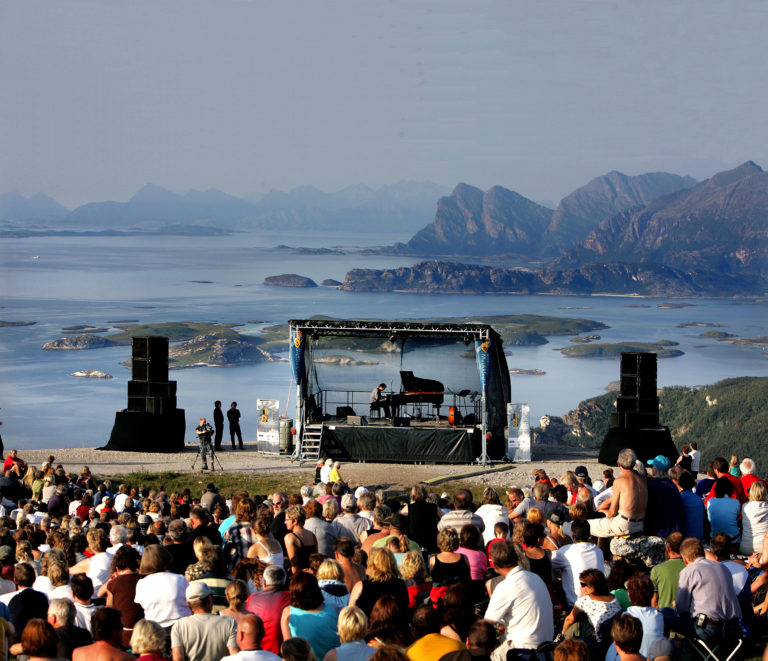
For more conventional art, a visit to Galleri Bodøgaard is a must. Northern Norway’s largest private art collection is located just outside the city center. The legacy of local artist Oscar Bodøgaard is central. Here, both the light and the landscape in the paintings are easily recognizable; the artist drew particular inspiration from the nearby and majestic Børvasstindan.

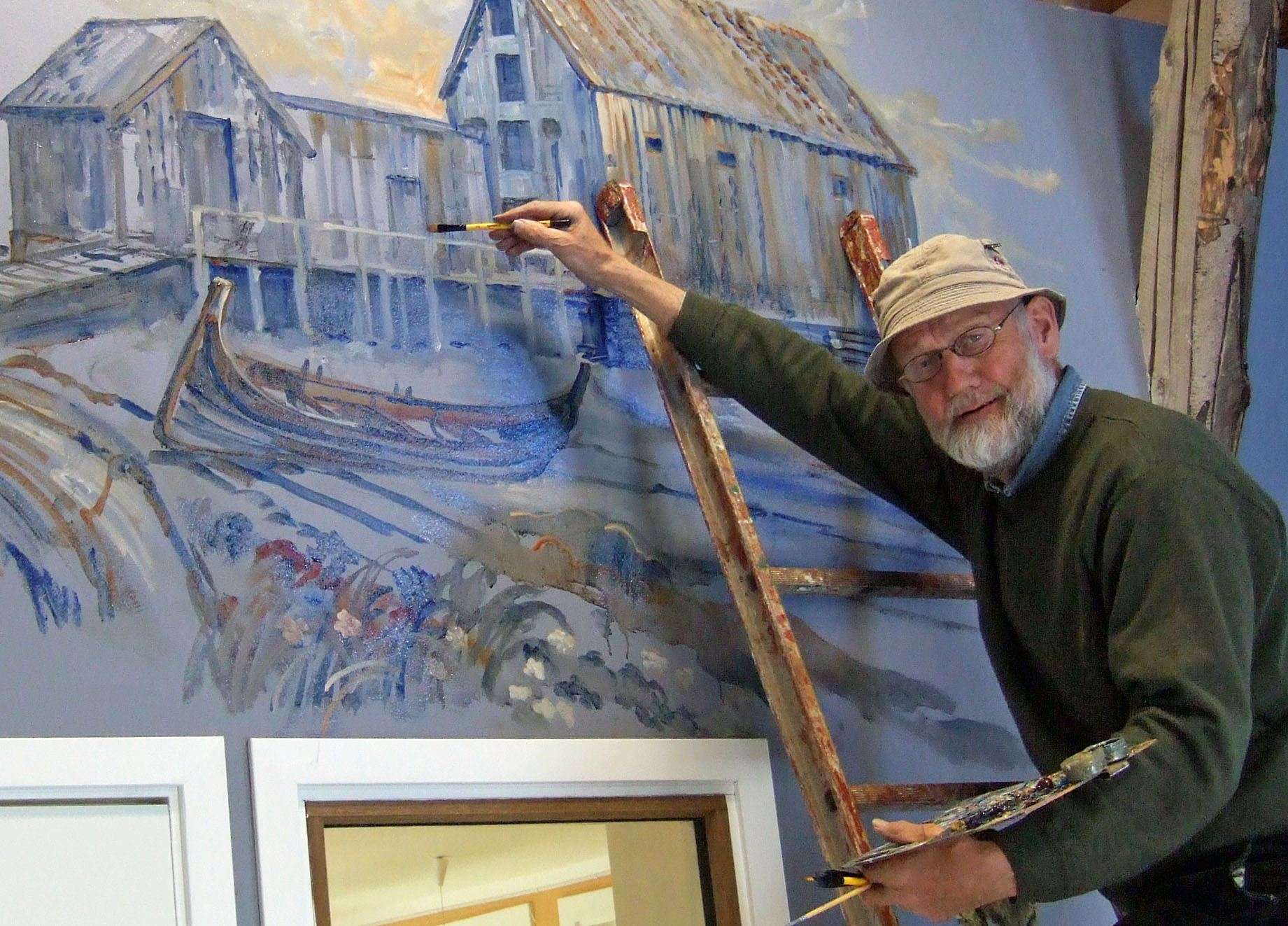
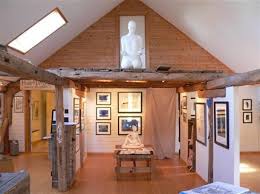
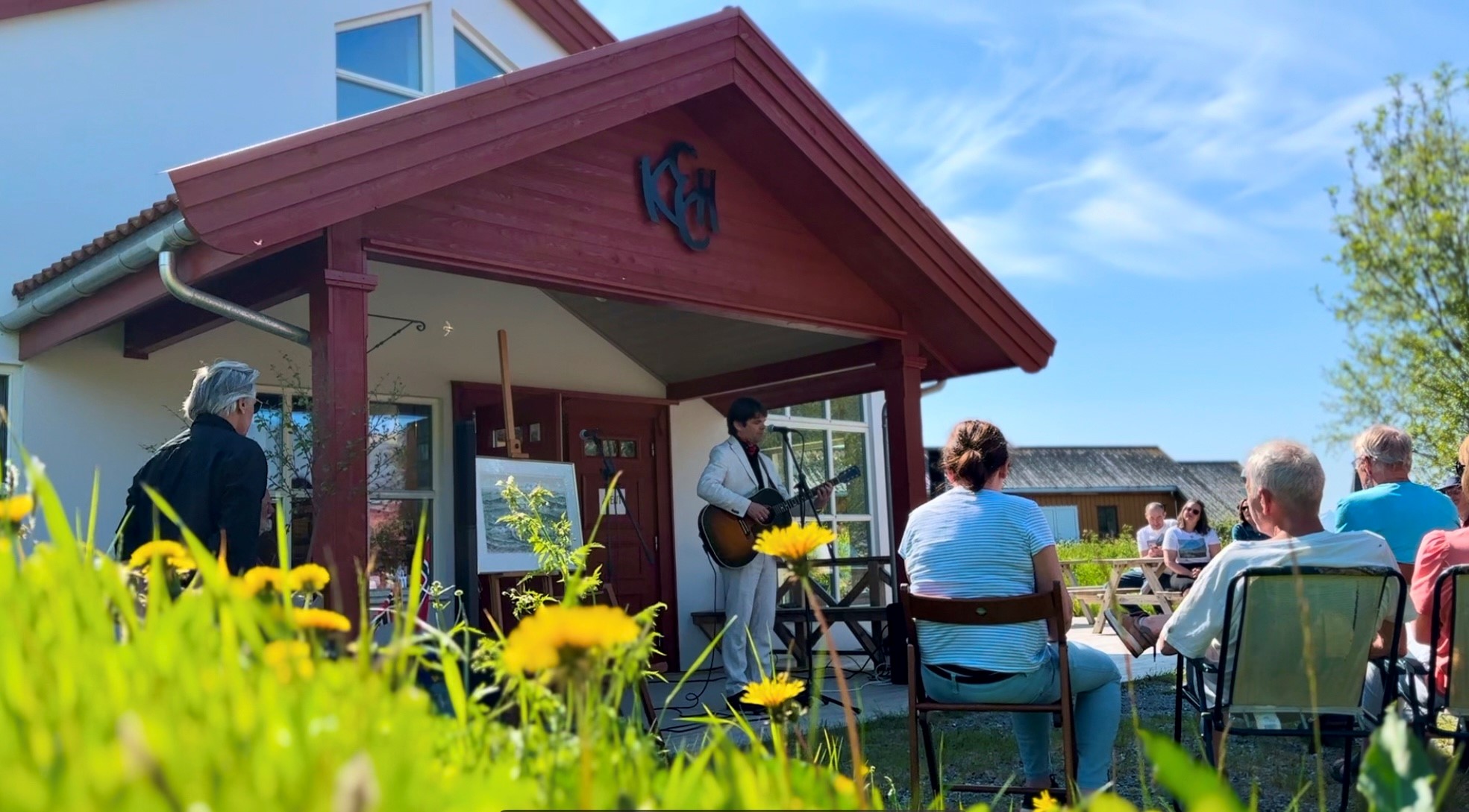
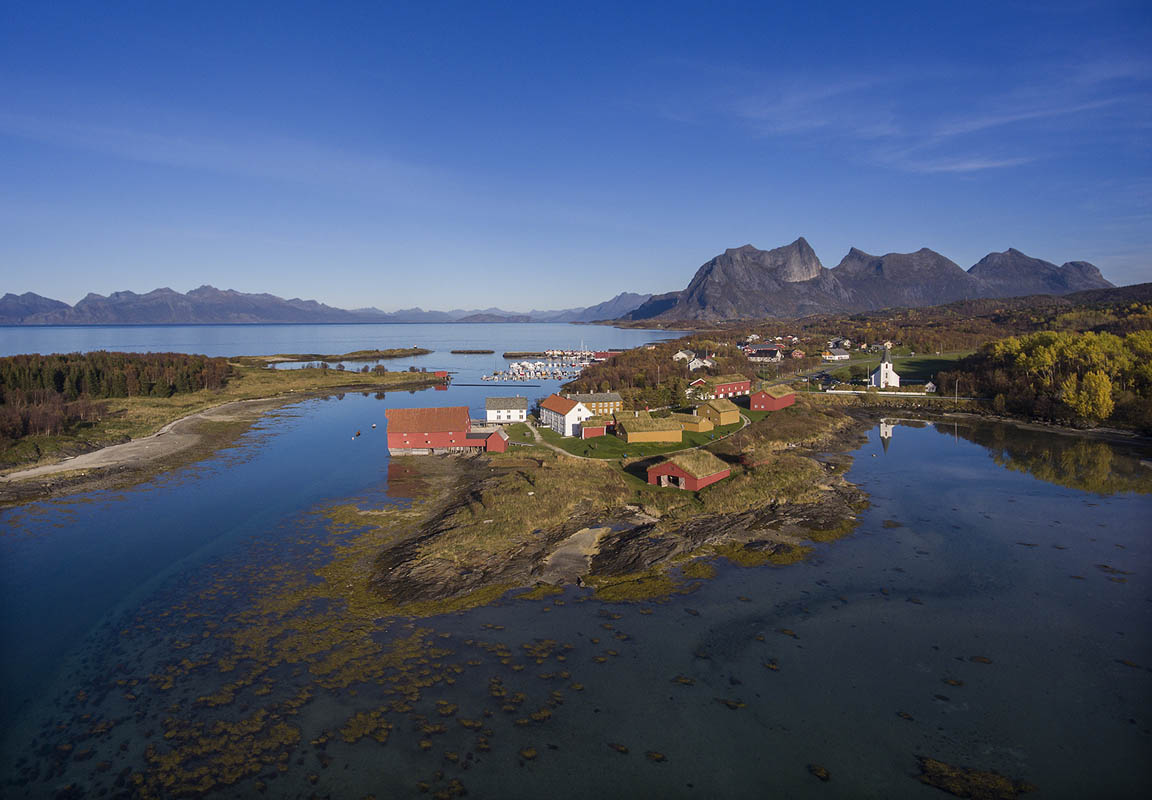
It is not far from Bodø to Kjerringøy, and an excursion to the scenic place with a ferry connection to the mainland feels like a journey to the 19th century. A visit to the Kjerringøy trading post is a mandatory part of history class; it provides an insight into the relevance of coastal culture for both value creation and regional development. In the visitor center of the trading post, several works by Nordland patriot Karl Erik Harr hang. For an even deeper insight into an artist who has truly been fascinated by the region, just walk the short way to the Karl Erik Harr Museum, which opened in 2019. Here you will find a number of Harr’s beautiful motifs from Kjerringøy, but also other places in Northern Norway – united in themes such as sea and fishing in both light and darkness. Nearby is also Galleri Zahlfjøsen.
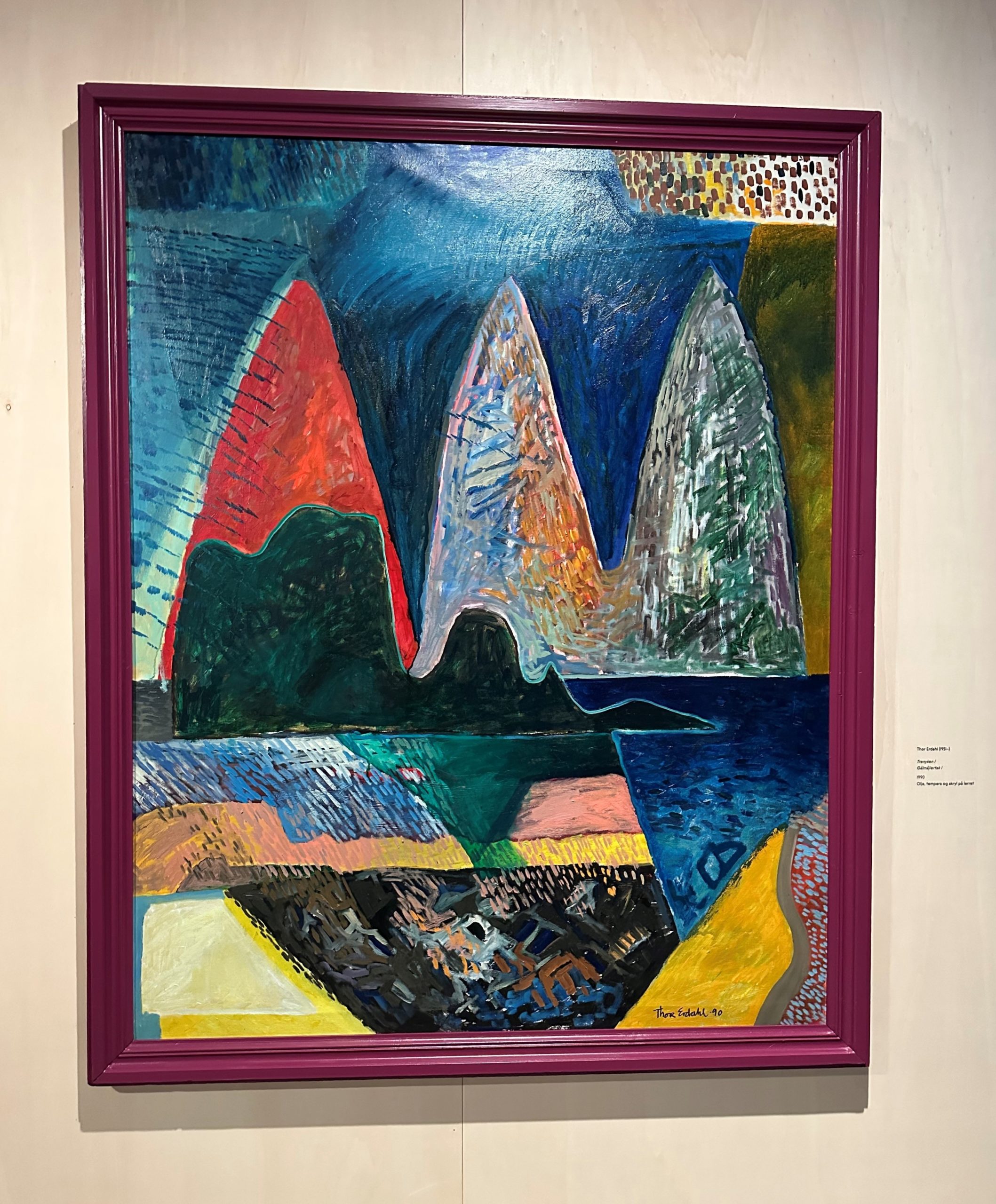
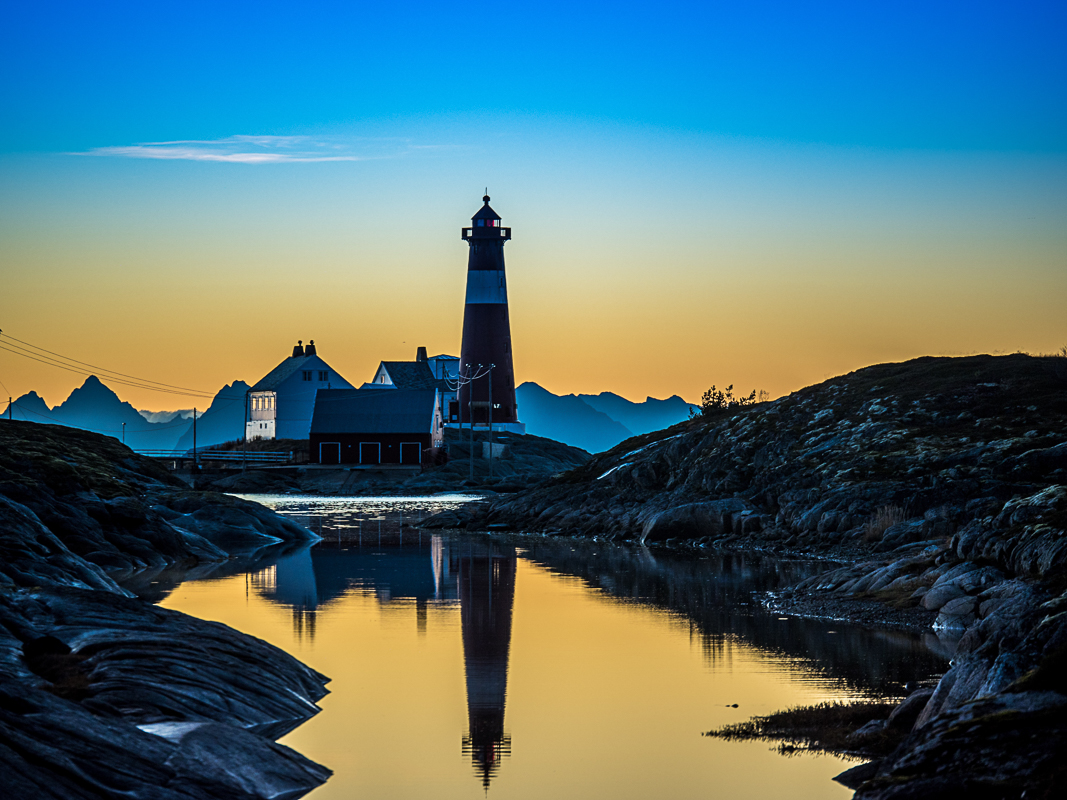
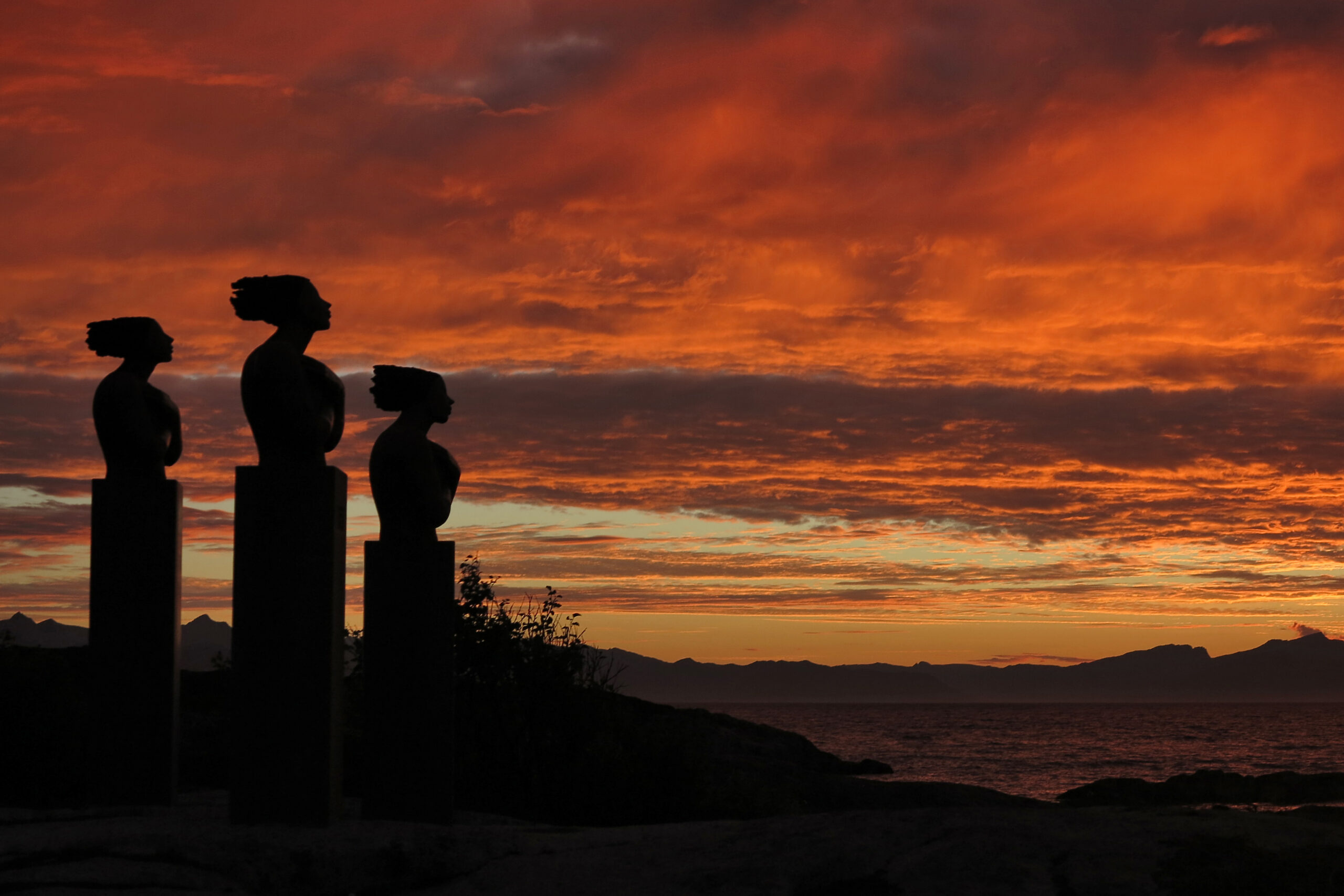
Tranøy is different from everything else. Here, at the far end of Hamarøy, there are barely 60 inhabitants. Here you will find two nostalgic hotels called Villa Tranen and Bank Paa, here are three art galleries, Tranøy lighthouse, the whaling ship “Svolværingen”, a general store, views of the Vestfjord and the Lofoten Wall and a privately established sculpture park with 18 installations of different and unique kinds; signatures such as Harald Bodøgaard, Elmgren&Dragseth, Annelise Josefsen and Calina Pandele Yttredal to name a few. Not to forget the three “Coastal Women” in stoneware by Ingun Dahlin which are at Tranøy Gallery. One of Norway’s most photographed motifs.
It is not only Norwegian artists who have found inspiration in the ever-changing nature and light of Northern Norway. Lofoten in particular has become an attractive place for international art as well. You can find a complete overview of galleries at Visit Lofoten. We continue our journey further in Lofoten, with recommendations from writer Runar Larsen at the travel magazine Vagabond Reiselyst:
Henningsvær can even boast one of the country’s leading museums for contemporary art – located in an old caviar factory! Venke Hoff has transformed a tired and disused factory premises into an arena for contemporary art and a gallery of international calibre, now known as KaviarFactory. The door handles to the white, square brick building are made by Bjarne Melgård, and the walls display art made by some of the world’s most renowned contemporary artists. The influential contemporary artist Ai Weiwei has been among the exhibitors at KaviarFactory.In 2018, Yoko Ono also had a light installation in Henningsvær Lighthouse, which Venke Hoff also owns. There is no doubt that the place has a unique appeal. The view from the gallery is very special. Through the large windows you can see straight out towards the Vestfjord where fishing trawlers simmer past. This is Lofoten in a nutshell.
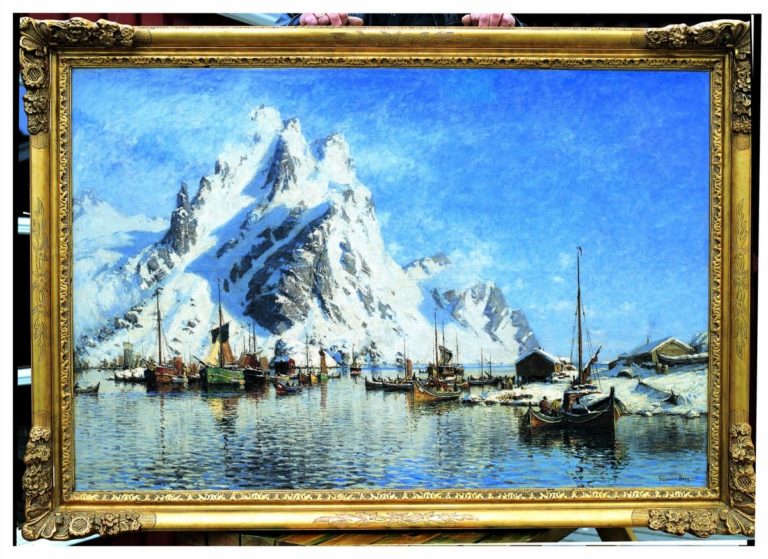
But you have more exciting culture in store for you in Henningsvær, which has been described as an “Arctic version of Venice”. Galleri Lofoten is a treasure trove of history and paintings from the golden age here in the high north at the turn of the 19th century. The history is not just on the walls; it is also presented through colorful pictures that show the very core of northern Norwegian coastal culture from the heyday of the fishing villages, with life and activity on land and water.
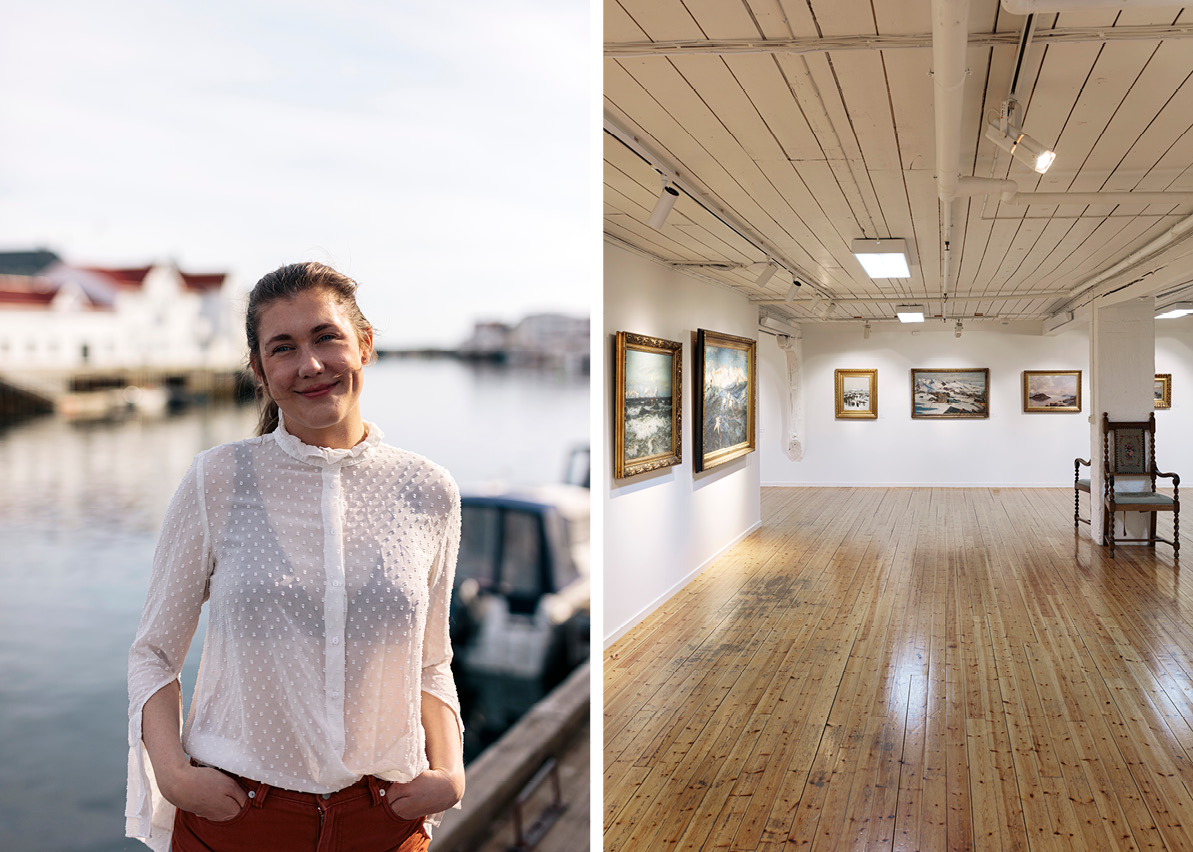
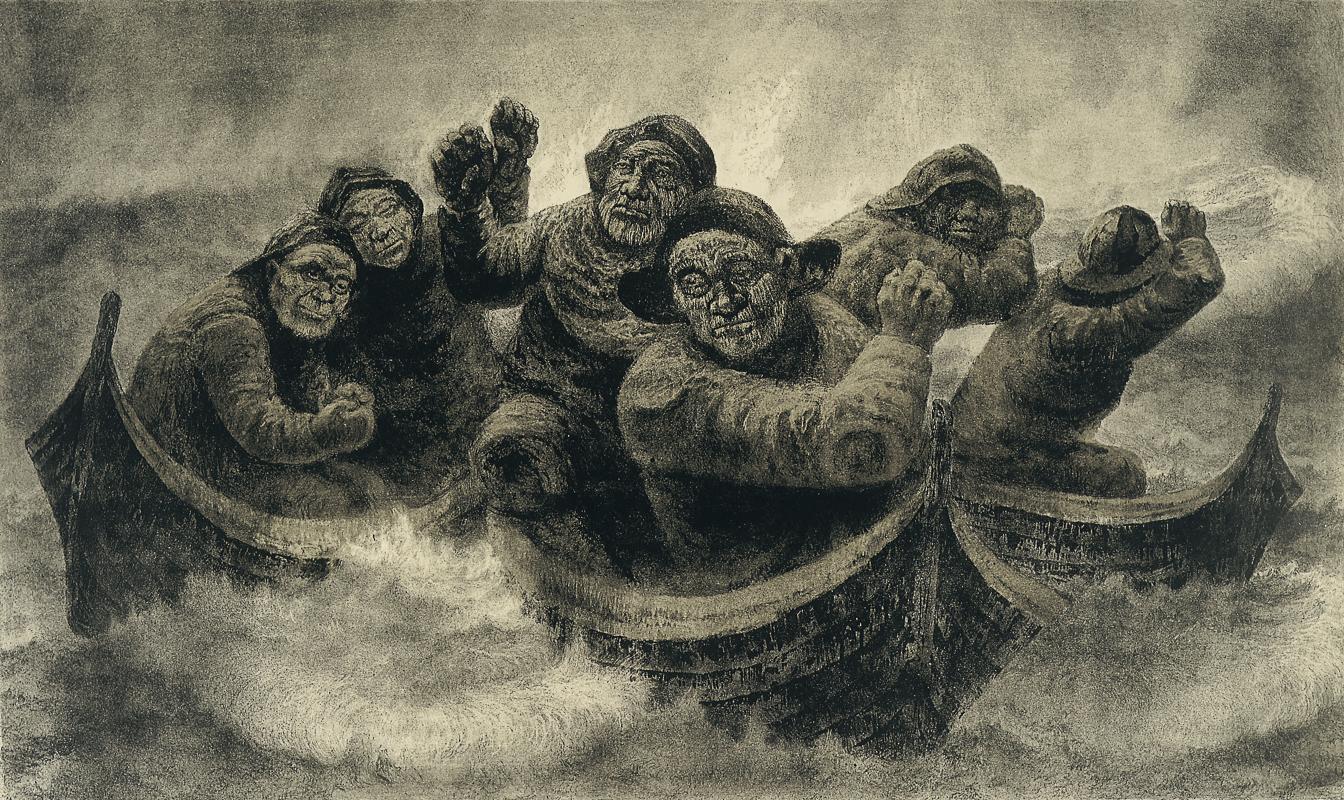
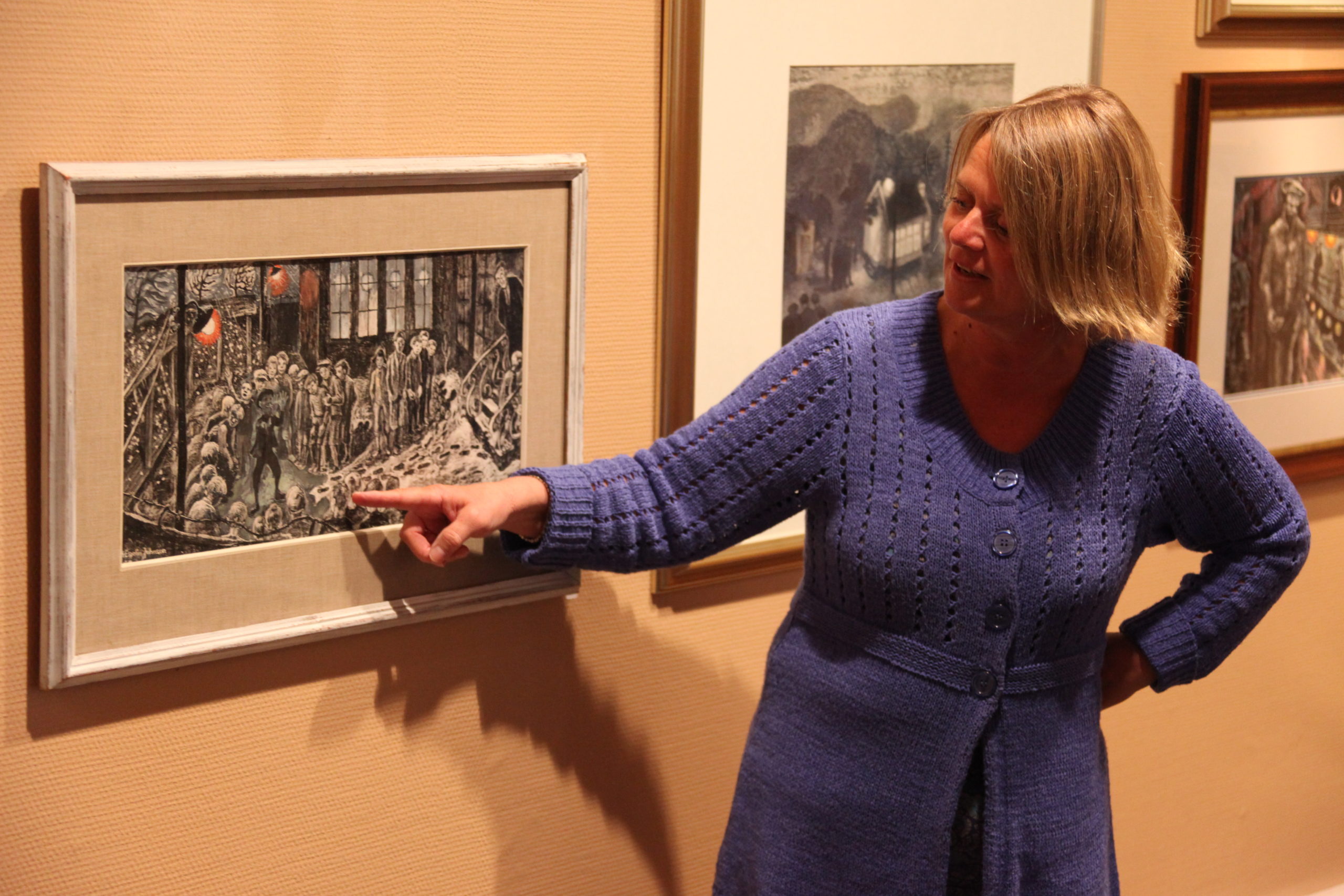
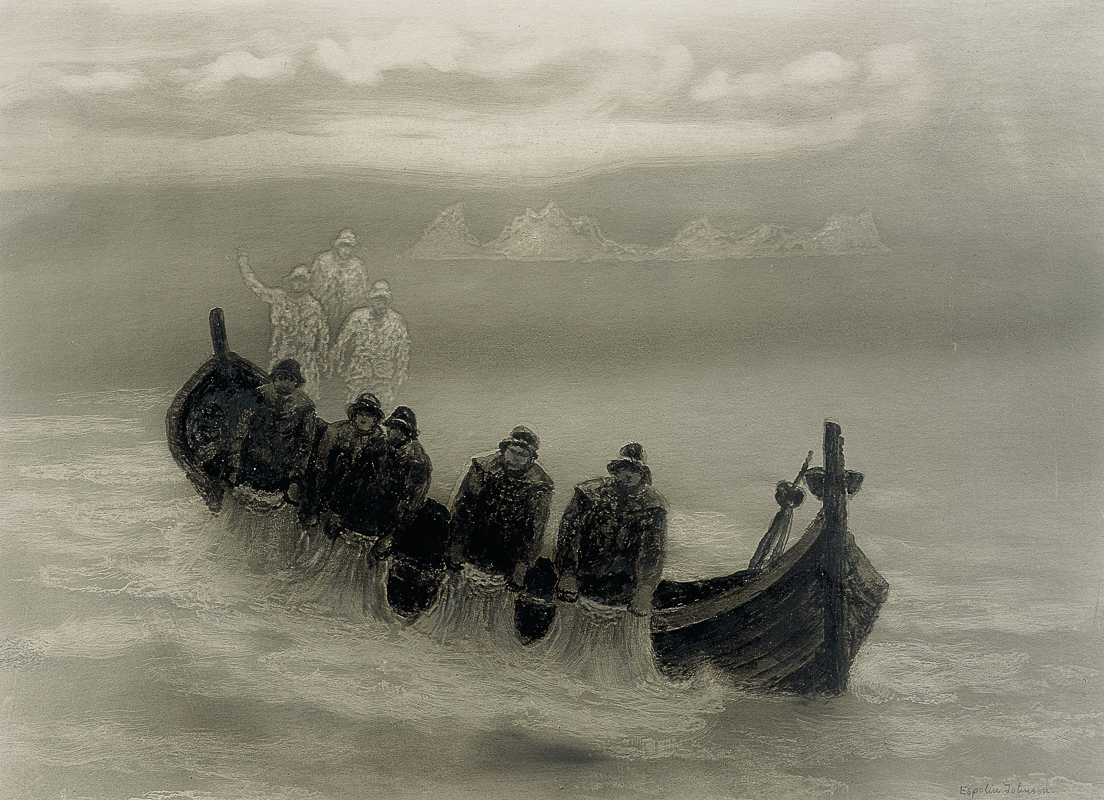
Maritime themes also characterize the style of Kaare Espolin Johanson, but the paintings at Galleri Espolin in Kabelvåg have a more dramatic expression. Here, it is toil, storm and storm that recur – often in darker colors, charged with drama and represented in a number of artworks that range from early works to his death in 1994. The sea gives, and the sea takes – that has always been the case for the people who have lived along the coast. The artist himself had Icelandic ancestry, and the gallery in Kabelvåg is designed with clear inspiration from Icelandic architecture.
Svolvær is known as the “capital of Lofoten” and is a natural starting point for exploring this archipelago. From here, it is popular to take a boat trip to the narrow fjord arm, Trollfjorden, where the mountains rise almost vertically from the fjord, while sea eagles soar above the sky. This was also the scene of a historic battle between the fishermen and the shipowners in March 1890, since immortalized as the Trollfjord Battle. In short, the conflict was about the small-boat fishermen’s resistance to modern fishing methods and steamships, which were dominated by merchants and shipowners from regions further south in Norway. The result was something of a symbolic heroic story about the fishermen against the shipowners and local identity builders, wonderfully illustrated in the artwork “Trollfjordslaget” by Gunnar Berg (1863-1893). This painting is on display at Galleri Gunnar Berg on Svinøya in the heart of Svolvær, which also has 70 other oil paintings and sketches signed by the local artist. Berg was also a keen photographer, and several of his pictures (and the camera he used) are part of the exhibition.
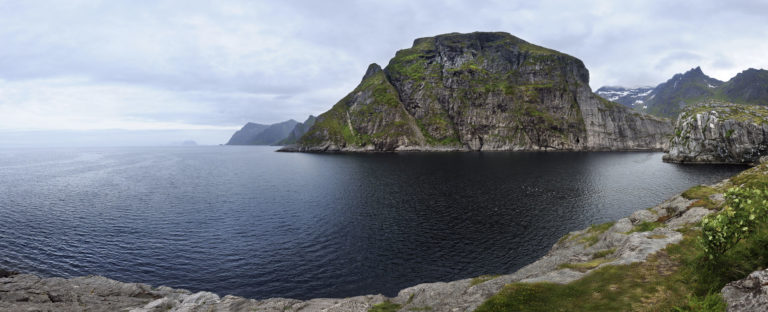
Svolvær is small in size, but big on content. Although the mountains and fjords beckon, there is no need to rush on. Galleri Dagfinn Bakke is a tribute to artist Dagfinn Bakke, known for capturing the essence of landscape and mood in a remarkable way. He was both a newspaper cartoonist and a painter, and the gallery is full of examples from his versatile career. The gallery also houses everything from sculptures to graphics signed by a large selection of other artists.
In Stamund, at the southernmost tip of Vestvågøy, Galleri 2 is a creative haven. Artist couple Scott Thoe and Vebjørg Hagene Thoe are more than a gallery; it is described as nothing less than “a portal to worlds beyond our reach, where the essence of our universe and the mysteries of space intertwine with human creativity”. While the art is a clear homage to Lofoten, it will also take you to places you have never imagined, where sky meets sea, space travel meets wildlife and art acts as a bridge between worlds. It is fitting that Vebjørg and Scott have a large international network of artists who often bring their works to Lofoten.
The Andøya National Tourist Route runs along the edge of the exciting coastal landscape on Andøya. There is much here that tries to steal the attention both on land and water, but art enthusiasts should take note of Atlier Nøss on the farm where artist Gunnar Tollefsen was born. The converted barn has been an artist-run gallery for almost 20 years, and has a large selection of paintings, sculptures, photos and artfully crafted souvenirs. Art and coziness go hand in hand, and at Galleri Uver and Betty’s tearoom in Hadsel a little further north, that combination is truly perfected. Tea, cakes and art. That is the recipe for success for the friends Elisabeth Fauske and Siv Johansen who run the slightly unconventional place on the edge of Hadsel, at the entrance to Teigandalen.
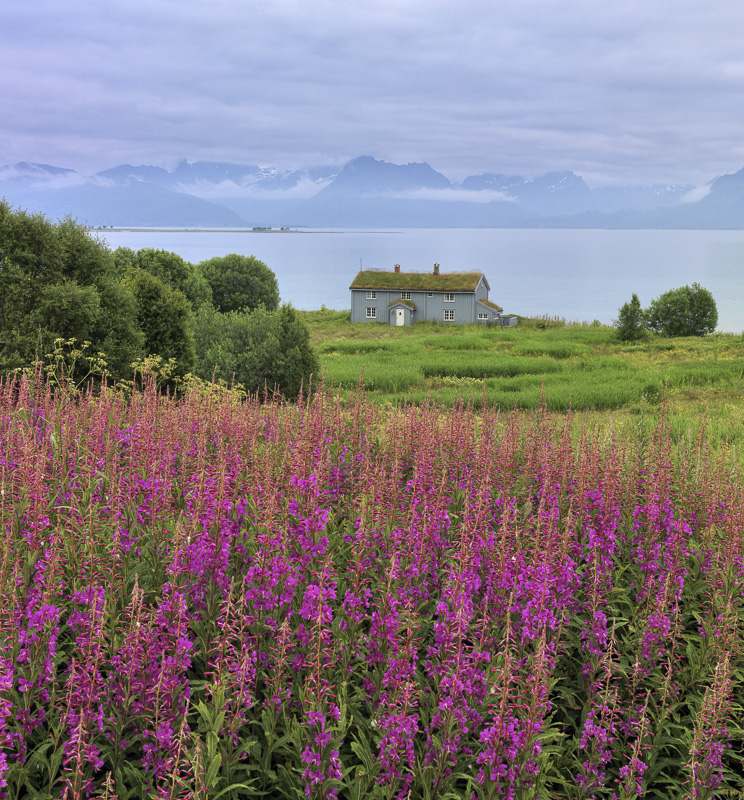
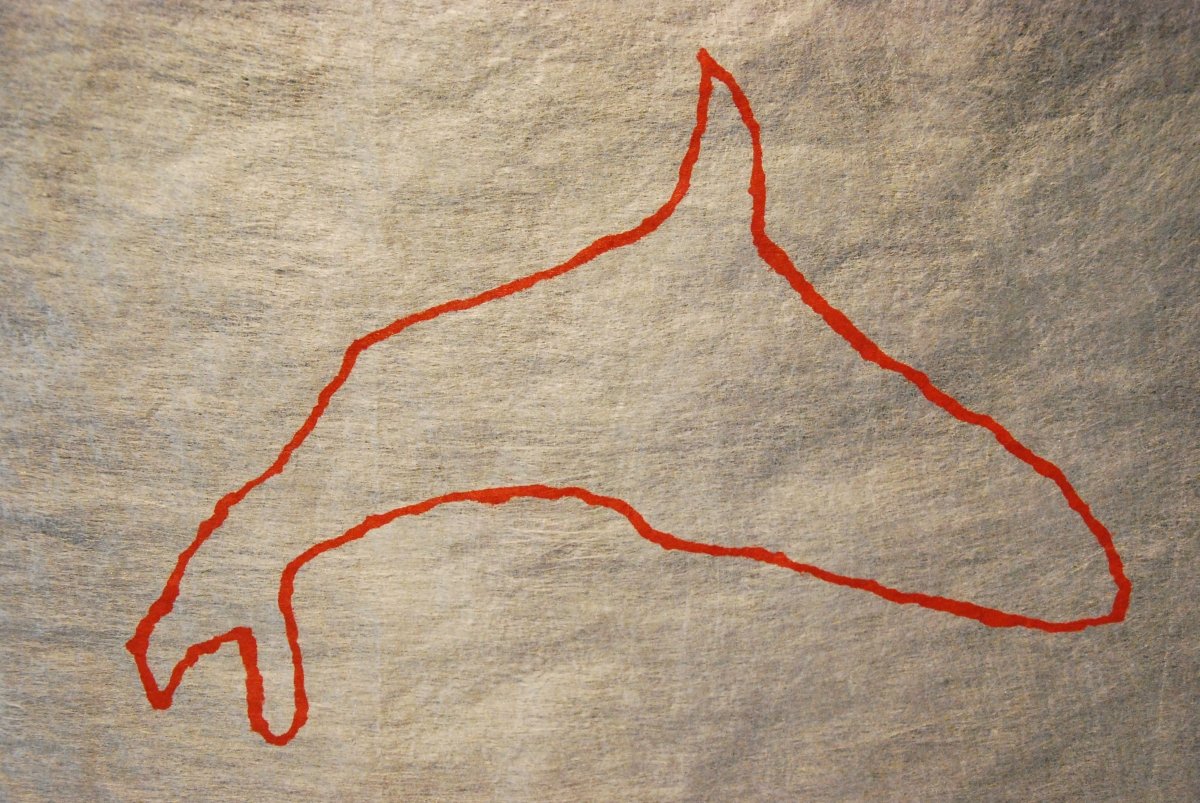
The mountains are sharp and the sea thunders against the shore here in Vesterålen. The entire old wooden house is a gallery where every room offers new impressions. The walls of the old wooden house are decorated with fragile and colorful glass art – some in large wooden frames, others organized as orioles. The shelves are filled with small, beautiful glass objects, figures and not least hearts. The fact that the place is also a tea room and bakery is exceptionally well-suited.
Narvik is one of the places in Nordland that gives stronger associations to history than nature, and Narvik War Museum is a thought-provoking history lesson. During World War II, Narvik had a strategically important role. The ice-free harbor was used to transport Swedish iron ore that the Germans used in their weapons production, and the city was occupied from 1940 until liberation. But here, where Norway is at its narrowest and war history is one of the most important attractions, there are small and charming cultural gems – such as Galleri My. The small venue on Kongensgate sells everything from lithographs and watercolors to glass art and ceramics. It also has a complete framing workshop, perfect if you have a picture that deserves to be on the wall.
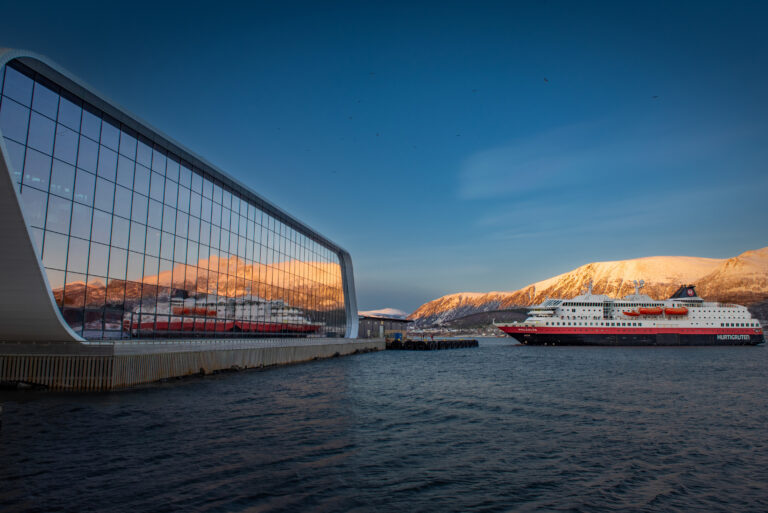
In Harstad, Galleri Nord-Norge has up to a dozen exhibitions each year, with a wide range of art forms. Although the content is exciting enough, the architecture is also an attraction. The gallery is located in the city’s old swimming pool, designed by Jan Inge Hovig – who is perhaps best known for having designed the Arctic Cathedral in Tromsø. On the opposite side of Hinnøya is Trastad Samlinger, an attraction you are unlikely to have seen before. Trastad Samlinger – National Center for Outsider Art – is a cultural history museum in pavilion 7 at what was formerly the Northern Norway Home for the Spirit. Here, visitors can experience an authentic residential and nursing ward from 1966. Trastad Gård was closed in 1991, but since 1996, Pavilion 7 at the former institution has housed the Trastad Samlinger museum. Here, the history of the institution is conveyed and the museum preserves and displays a large collection of art created by former residents. A different exhibition to think about.
Tromsø is the cosmopolitan city in Troms, and the “Paris of the North” also has a high level of both art and culture. Here you can find everything from photographs, cards and gift items by local artists in Galleri Nord, to the large North Norwegian Art Museum, which wants to provide new perspectives on life in the north through varied exhibitions. The North Norwegian Art Museum particularly highlights northern and Sami contemporary art and crafts. Tromsø is a compact city with a lot of good things, both in the form of culture, flavors and nature – cast in history, but always with an eye towards the future. Tromsø Kunstforening – Romssa Dáiddasiida is a good example. This is the leading arena for new and experimental contemporary art in the region, where there is a focus on art with local roots combined with both internationally established and new artistic practices.
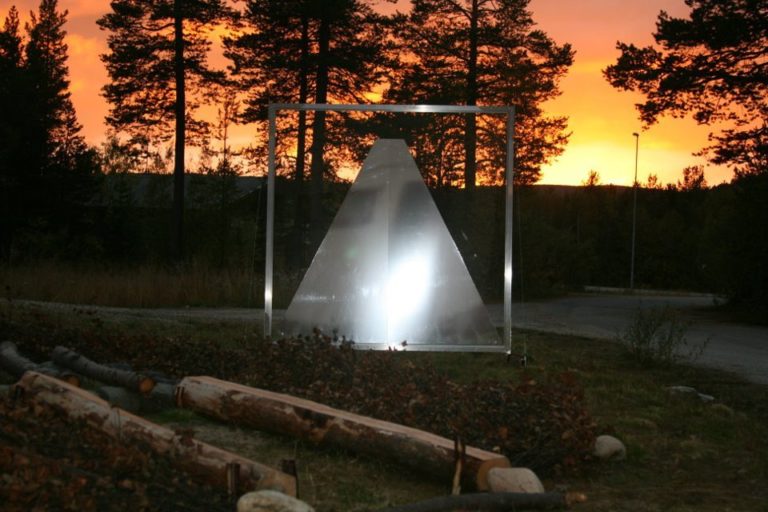
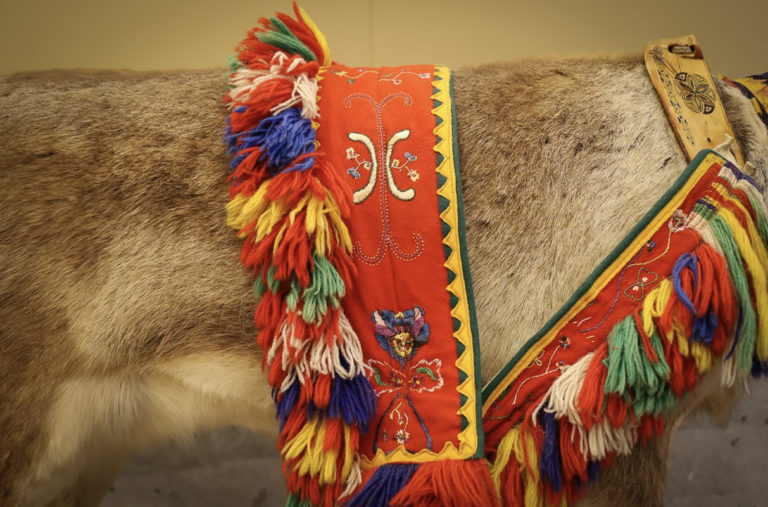
This innovative look at art and culture is also a large part of the success formula of the Sami Centre for Contemporary Art in Karasjok. SÁMI DÁIDDAGUOVDDÁŠ is considered the country’s leading arena for seeing what’s happening in Sámi art, and there’s always something new to experience here. The art center is located in a former industrial building on the outskirts of Karasjok. The art is broad; here you can find both modernist interpretations and traditional Sámi crafts – in addition to a dialogue between Sámi expression and other contemporary art from other parts of the world.
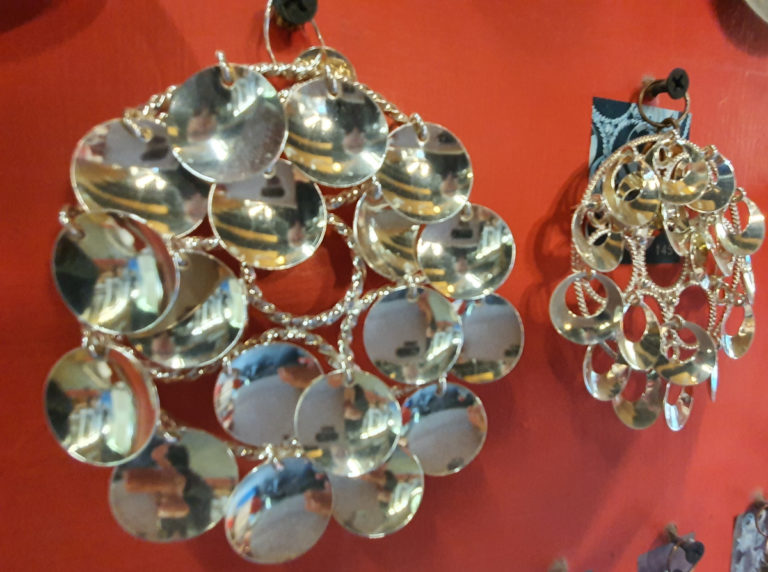
We continue on the trail of the Sami people across the Finnmarksvidda plateau. As a jewel box for traditional Sami silver and modern silver design, it is perhaps fitting that Juhl’s Silver Gallery in Kautokeino is well hidden in nature. The life’s work of the Danish-German couple Frank and Regine Juhl is about both Sami history and silver as art, and is a combination of a historical gallery and a silversmith in the middle of the plateau – yet another example of how local customs and culture have captivated creative immigrants.
Because there is something special in the air in Northern Norway, whether you are rolling in the waves aboard a boat out on the high seas, climbing to the top of steep mountains or hiking across the endless expanses in the far north. It is easy to see why this relatively sparsely populated region has so many cultural attractions.