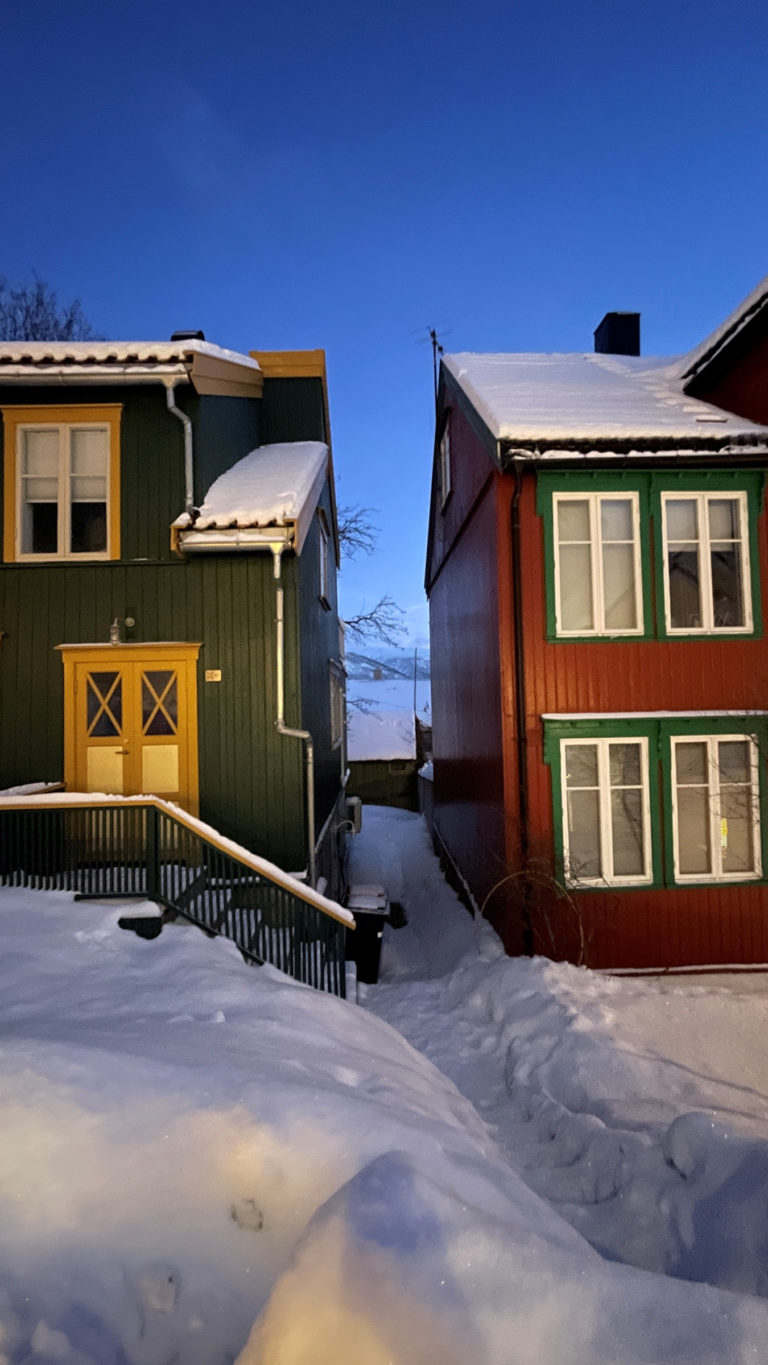
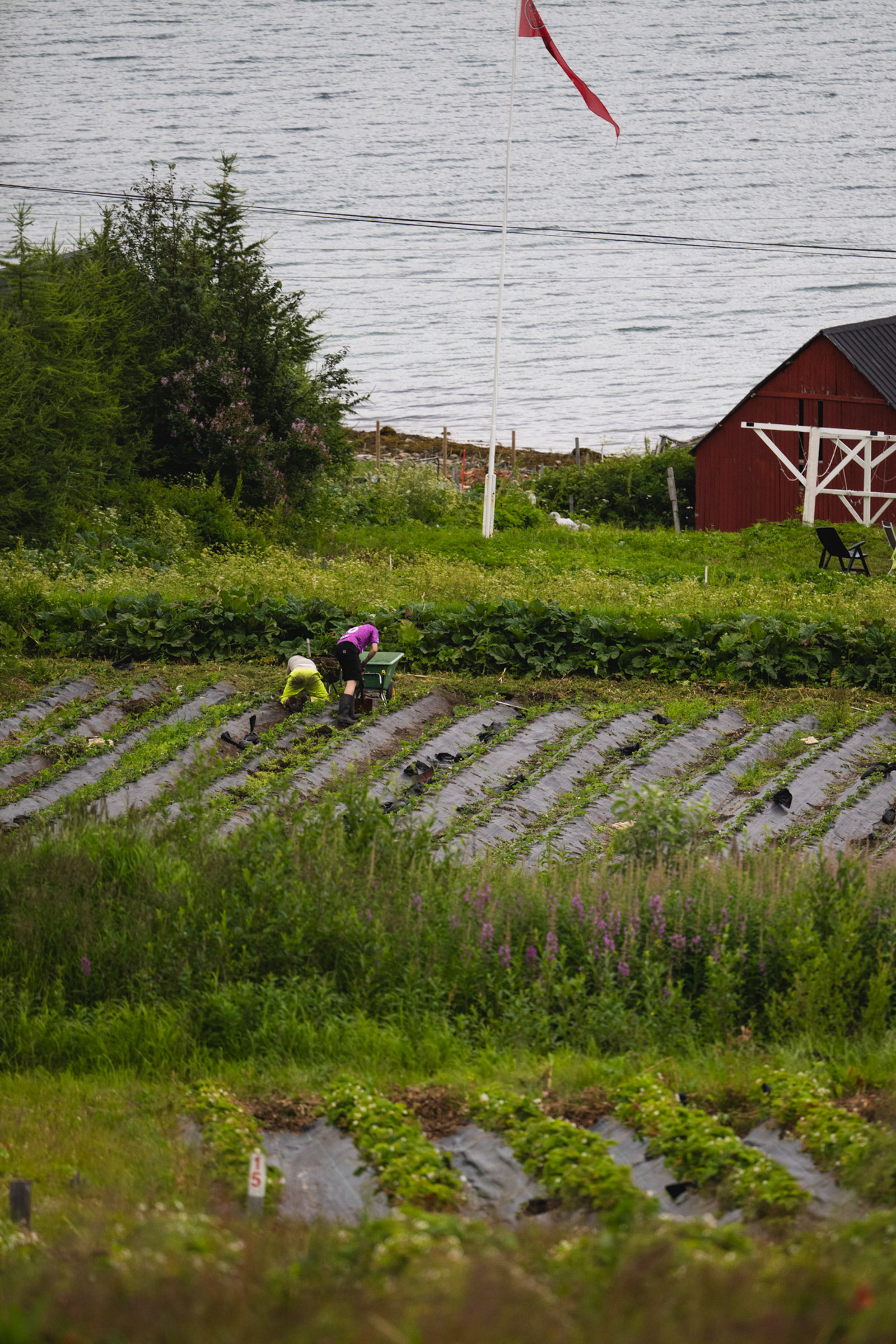
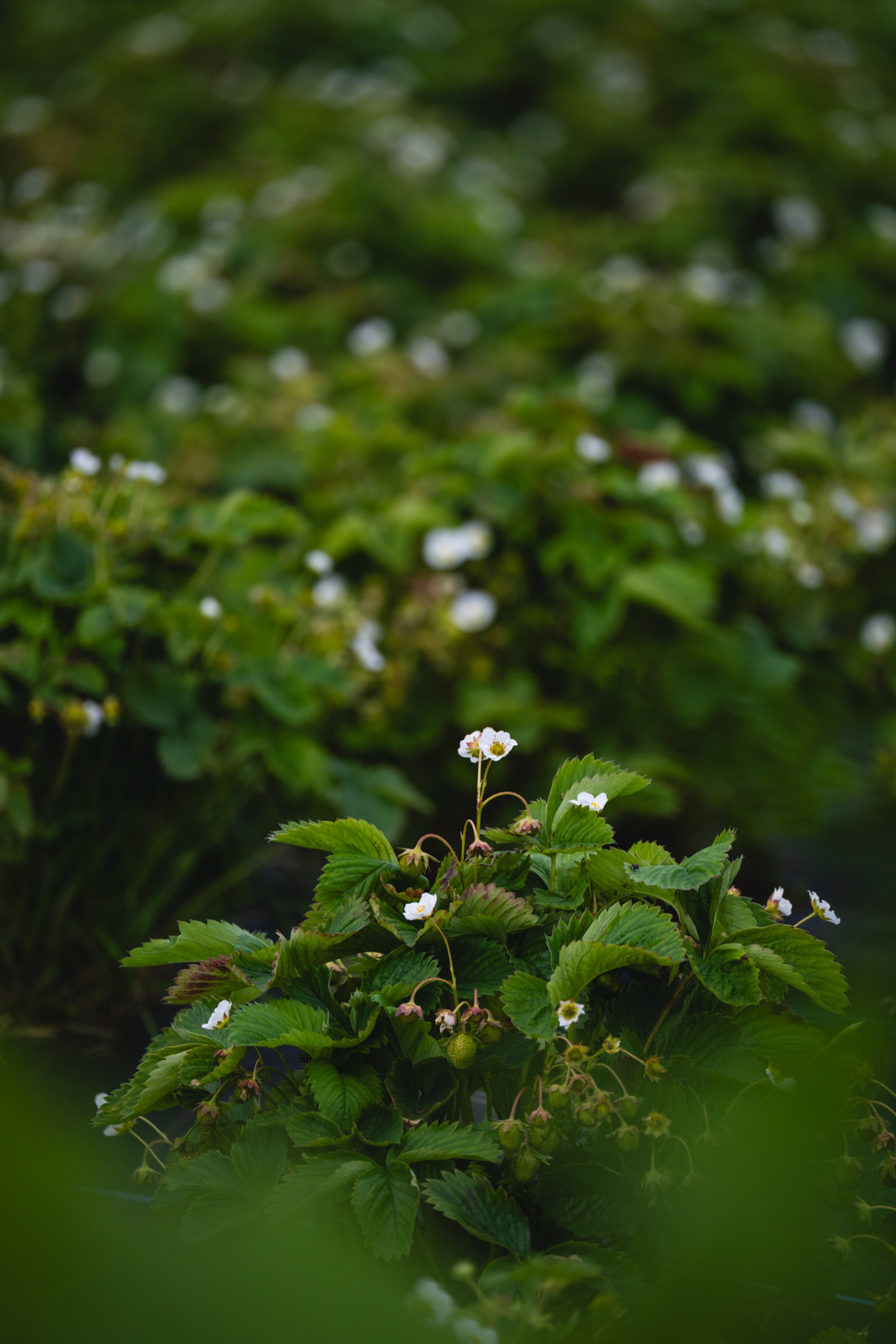
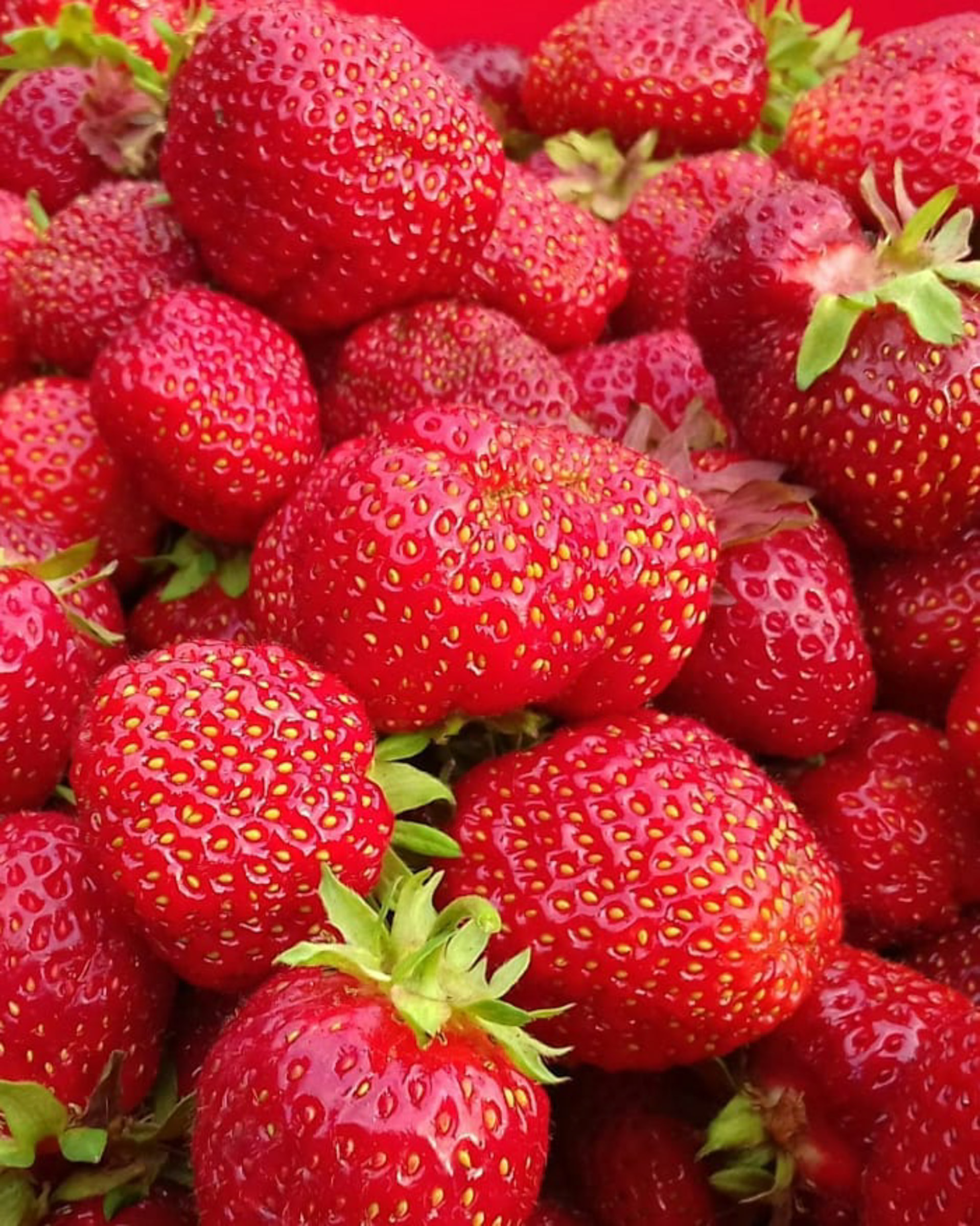
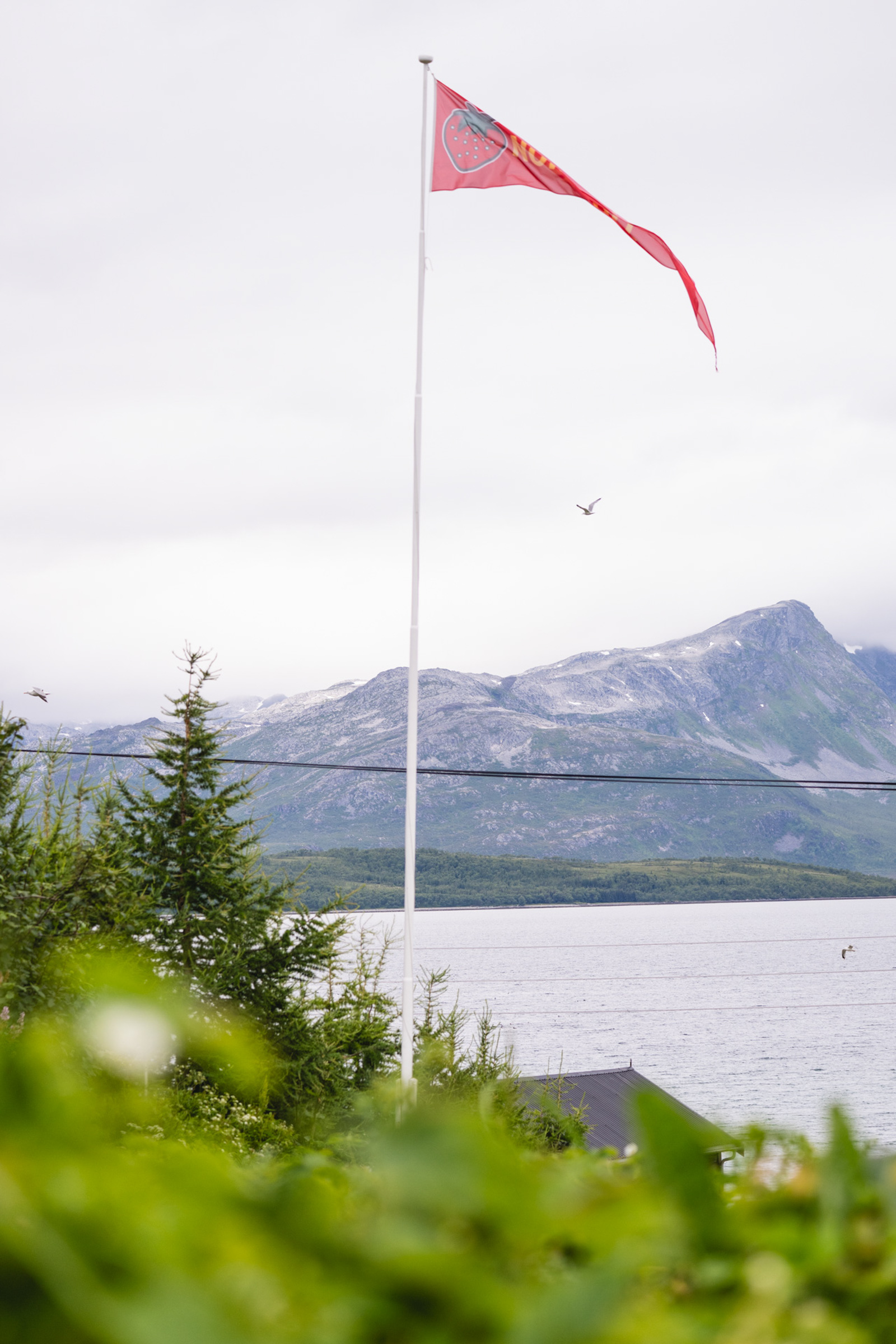
About two sentences after «hello there” – we were led into the nearest strawberry field. “This is the Zephyr variety” Roger Lockertsen – the owner of the organic farm Nordvoll økologiske gård – said. Two sentences on, we could set our teeth into a sweet, juicy and very ripe strawberry. Roger didn’t linger on formalities – instead he whisked us off into the next field, the one with the variety called “Polka”.
We were already tasting, comparing and forming opinions. The strawberries were intense, ripe, juicy, sweet, fragrant and wonderfully complex – with the kind of flavour I remember from childhood, before strawberry farming became mechanised and big business.
Sweet as sugar, sweet as honey
“Zephyr is as sweet as sugar, while Polka is as sweet as honey,” Roger explained. “At Smak, Tromsø’s flagship restaurant, they serve both varieties and invite diners to decide which one they prefer.”
Zephyr has long been a favourite in Northern Norway, thanks to its ability to cope with unpredictable weather. Polka, however, is less forgiving. “Last autumn it rained for eleven consecutive days,” Roger said with a shrug and a smile. “We lost 500 kilos of Polka.”
Are Northern Strawberries the best in the world?
We North Norwegians are a bit big on bold claims. “Best in the world” rolls easily off the tongue. But when it comes to strawberries, we may actually have a point. The cool temperatures – well below +15C on average – slow the ripening process.
At the same time, there is daylight night and day, meaning the photosynthesis process runs day and night, accumulating sugar, natural acids and volatile aroma compounds – that lovely smell. In the big growing areas of strawberries down south in Norway, the season last for three weeks – at Nordvoll they harvest the berries from mid July to the first frost.
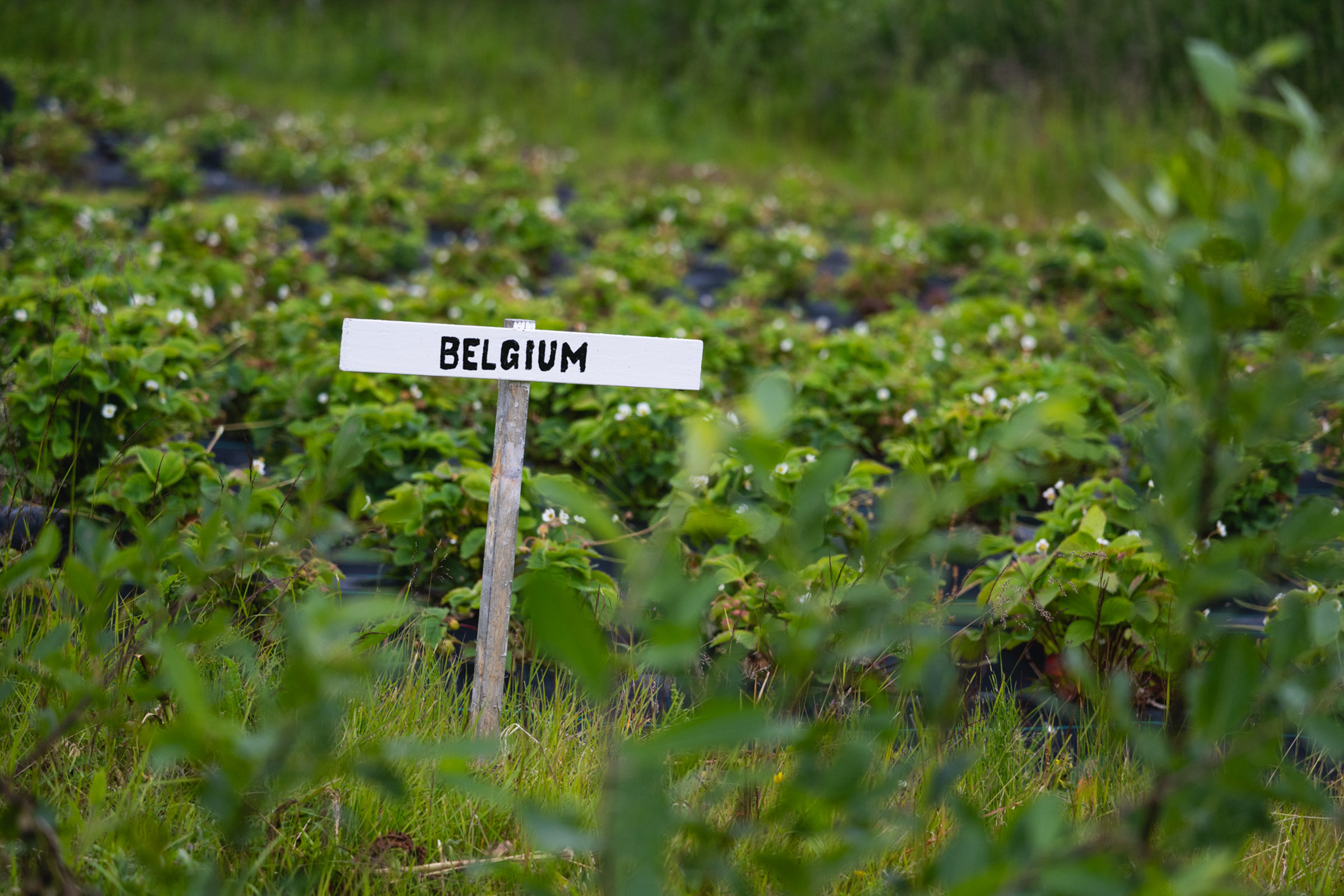
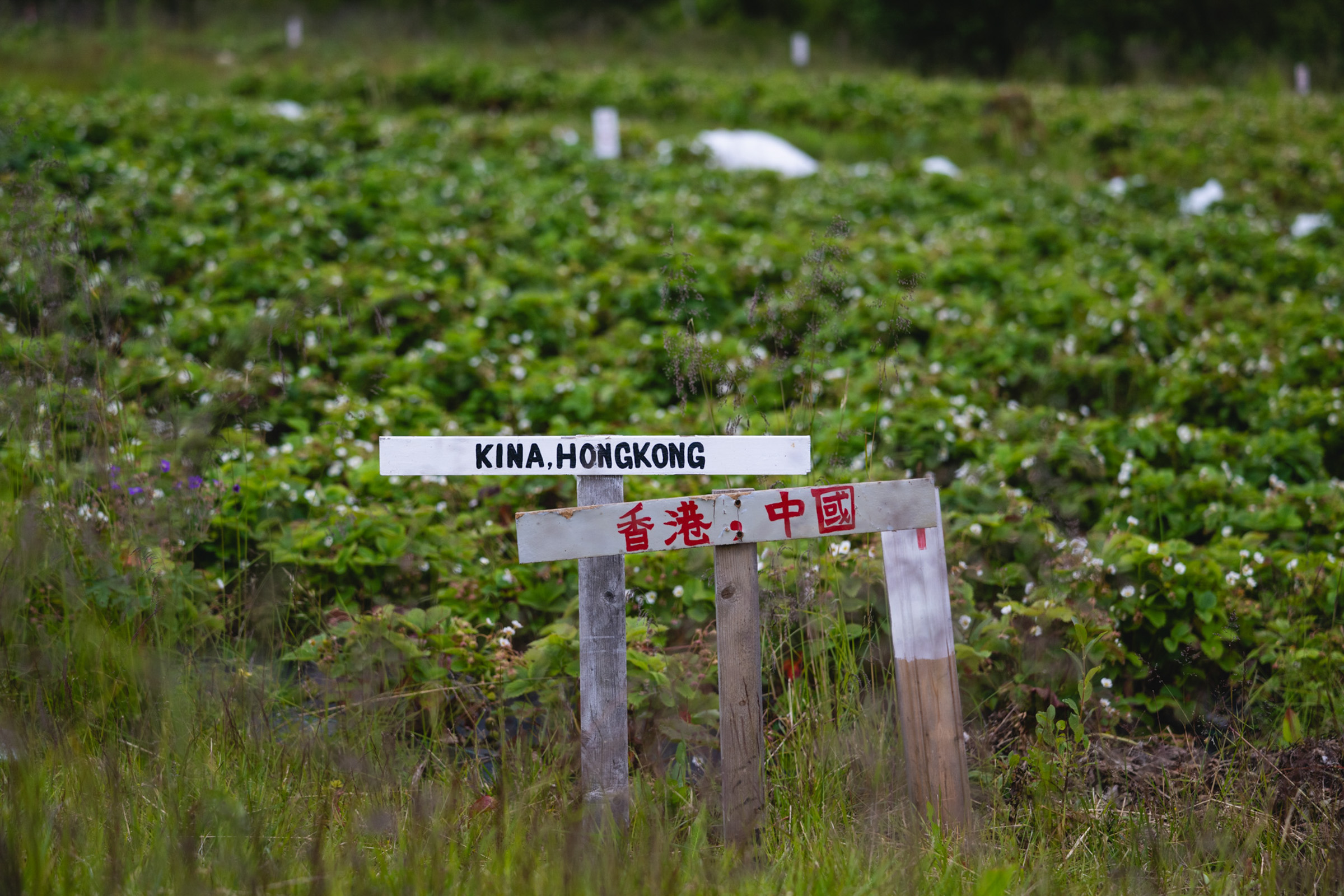
Japan and Deutschland, Italy and the Vatican are all represented
As we climbed the hill, we came to a freshly planted field where tiny strawberry plants were just emerging through the plastic mulch. “Valentine Marco from the École d’Ingénieurs de Toulouse was determined to finish planting this field before flying home for the weekend,” Roger said.
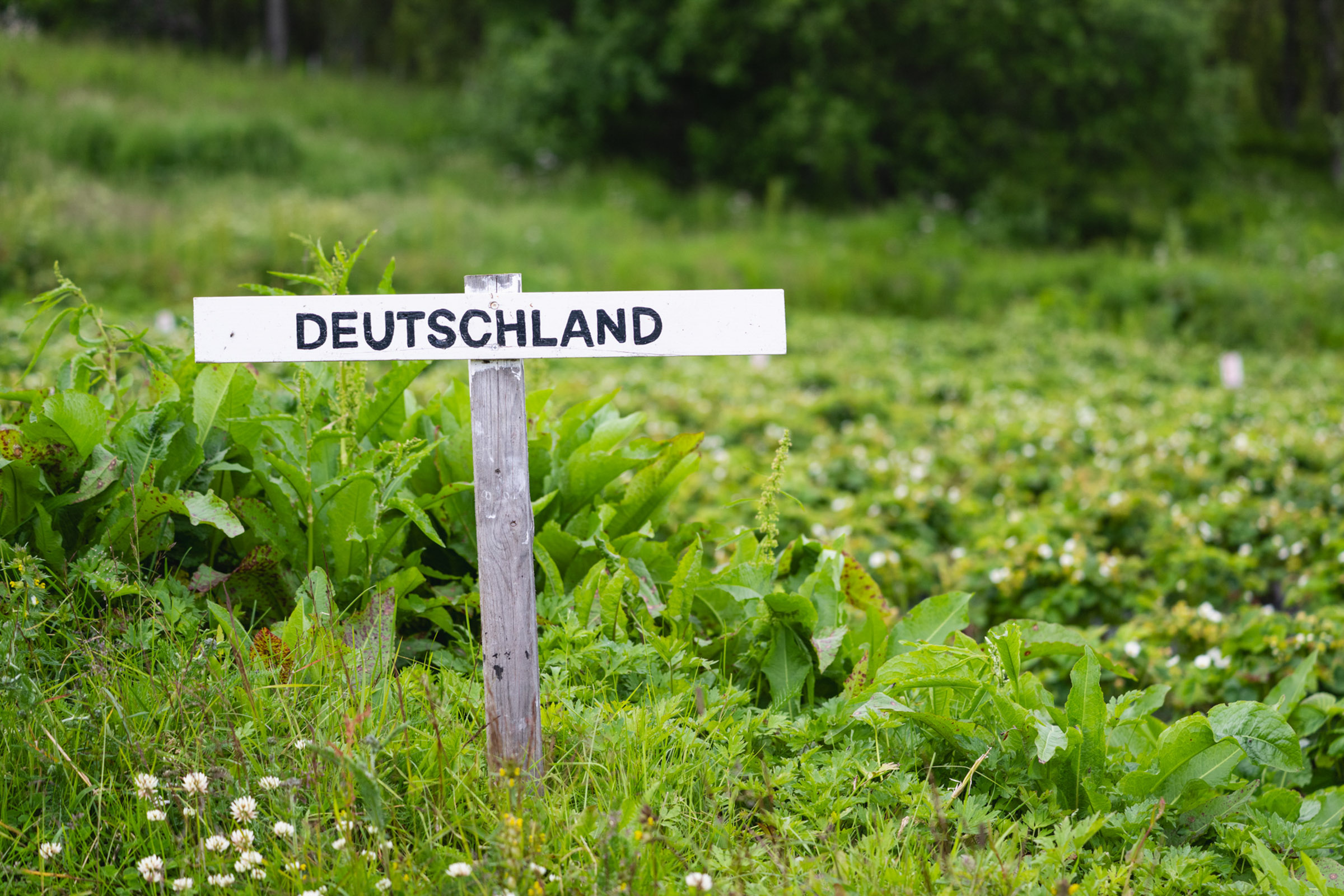
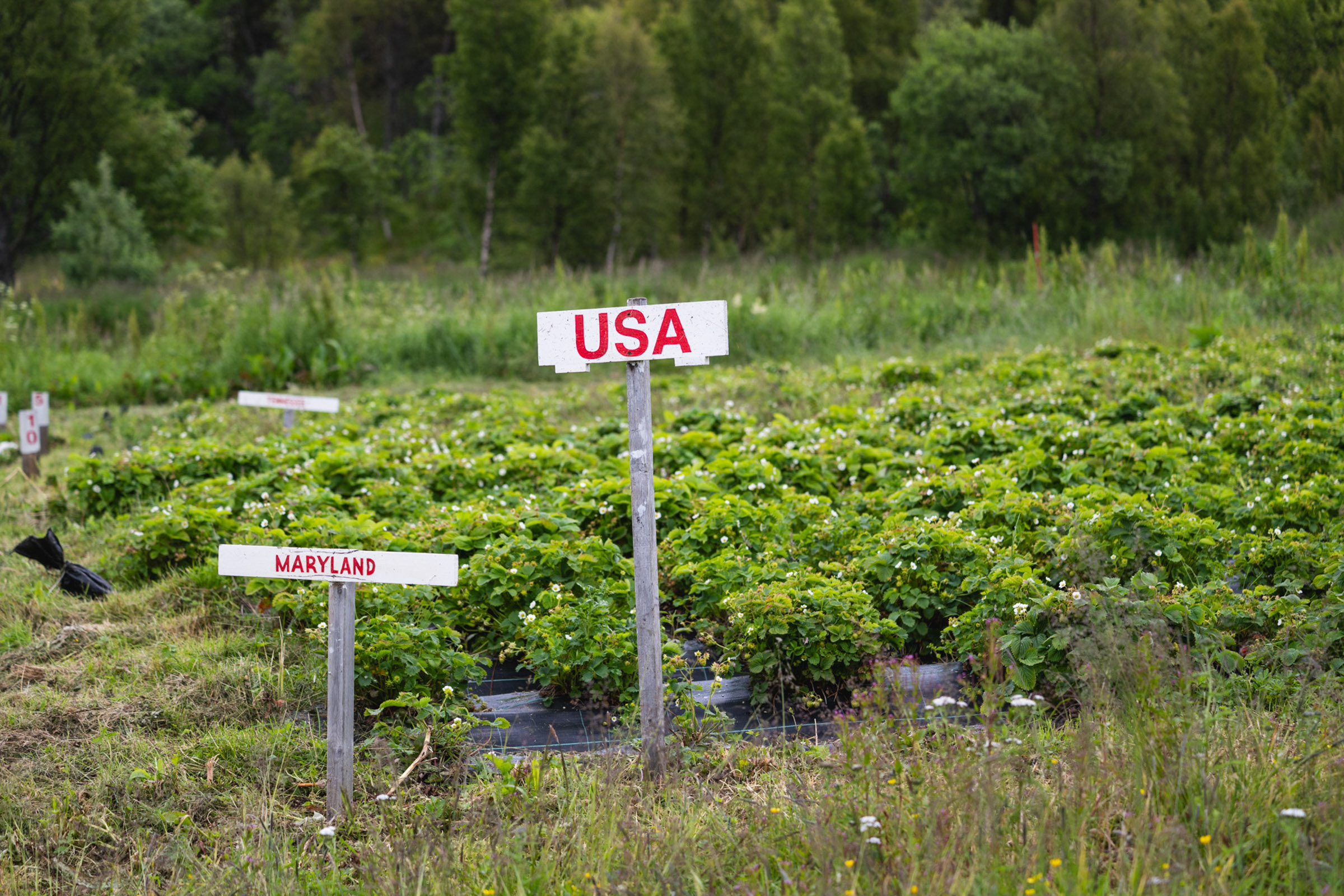
The names of the fields told their own story. We passed Deutschland, Italia and the newly named Città del Vaticano, along with signs in Japanese. Older plots carried the names of American states, and China was represented as well.
Students and learning by doing
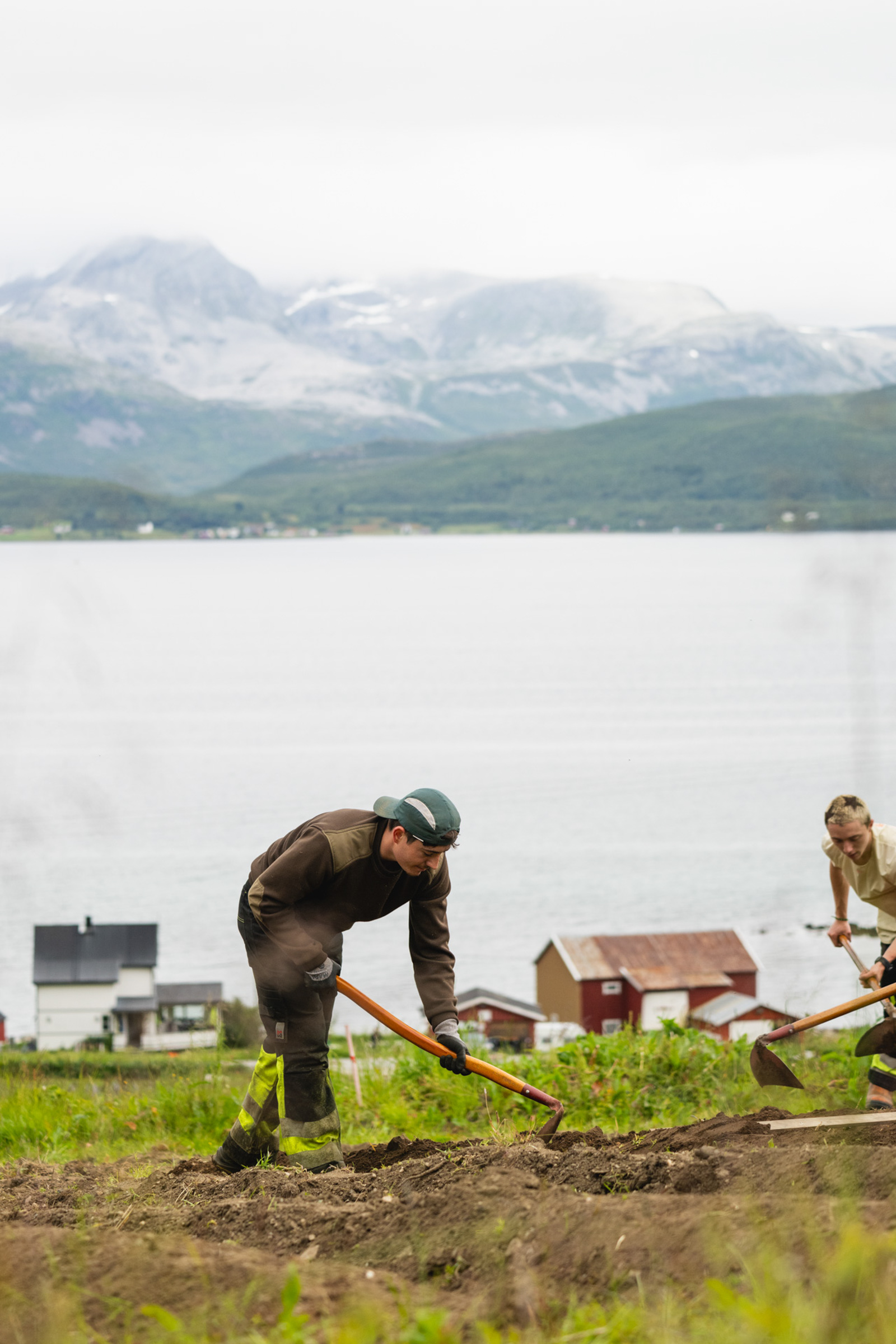
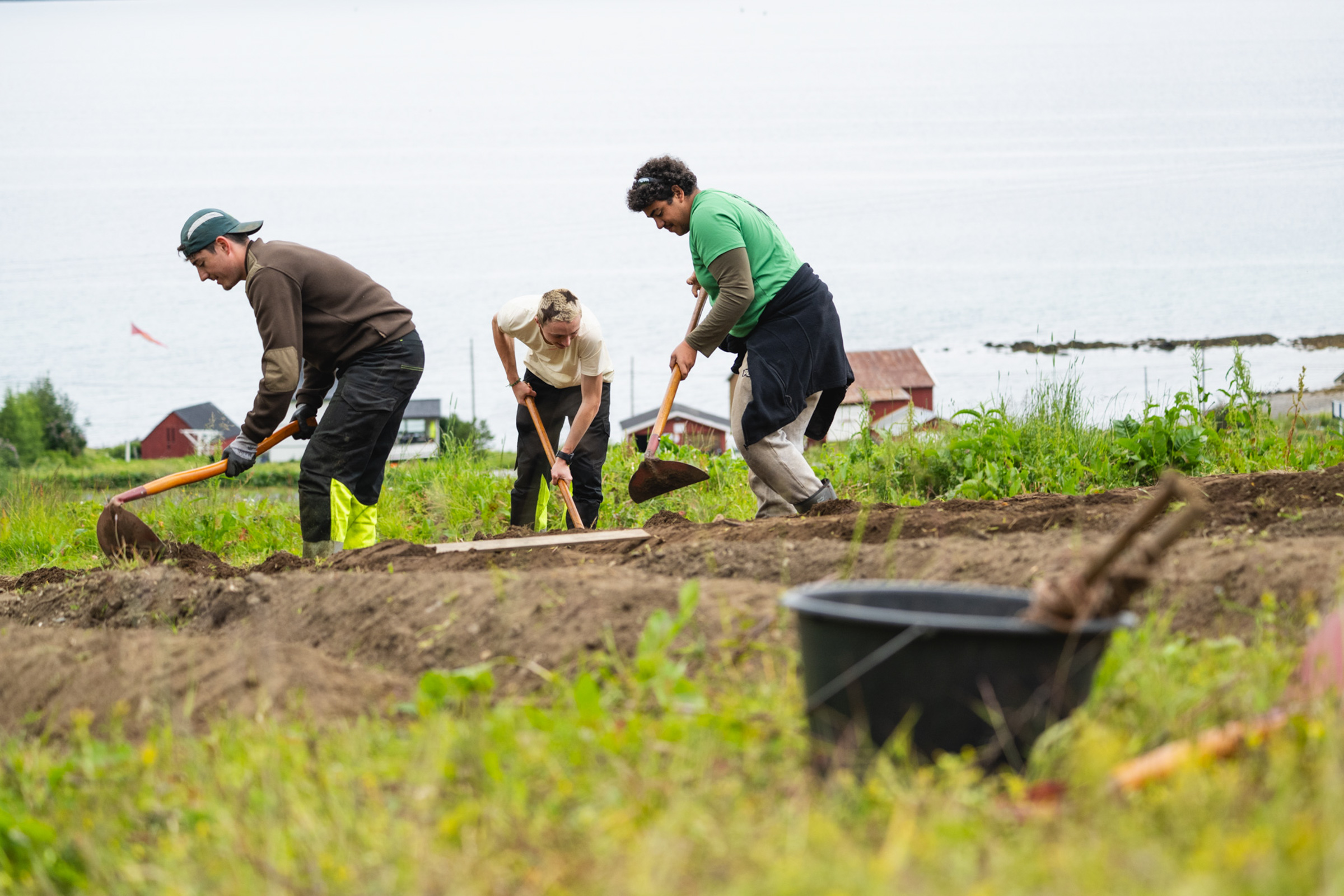
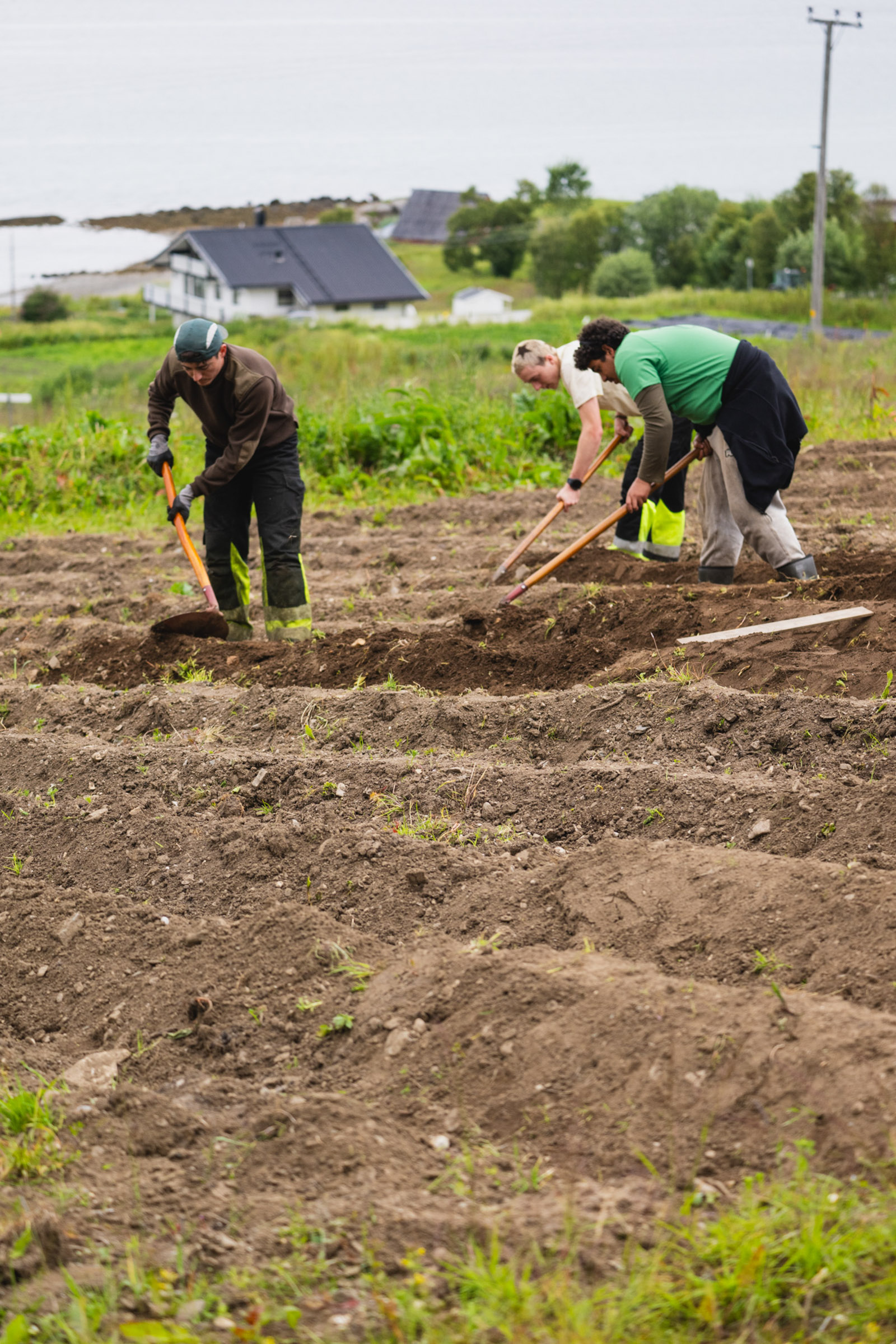
Students from European universities come here on work placements, leaving their mark on the fields. As we continued uphill, the French speaking interns emerged after their.lunch and siesta – a decidedly un-Norwegian arrangement – and began the afternoon shift. There were smiles all round, and French conversation drifted across the field.
Ecological farming gives the old flavour
Conventional strawberry growers often cultivate their plants on raised benches in so-called tabletop systems. Instead of soil, the plants grow in a medium commonly made from coconut coir, while polytunnels help speed up the ripening process. The plants are often replaced after only one or two seasons.
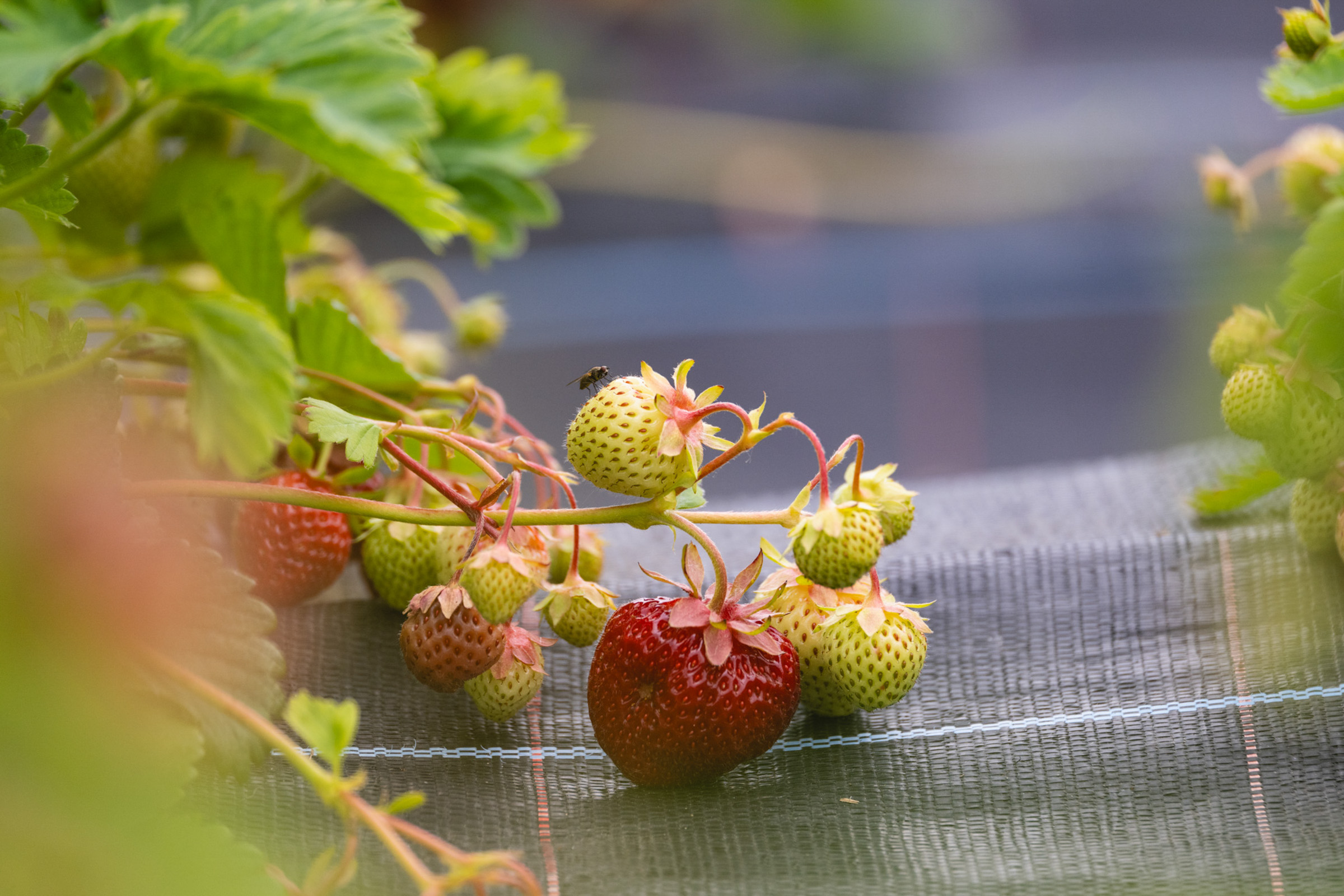
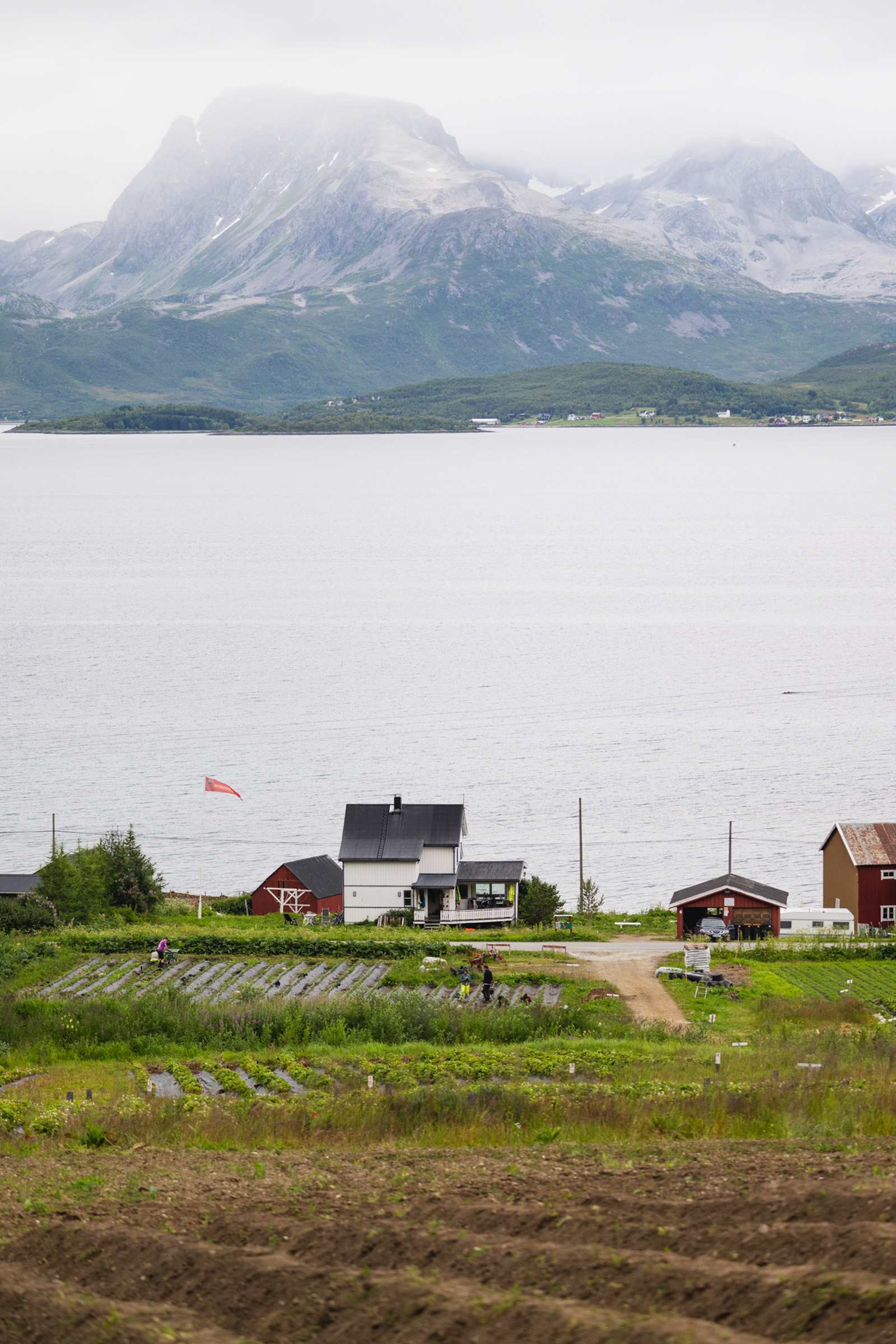
At Nordvoll Organic Farm, the strawberries are planted directly in the ground. A plastic membrane covers the soil, while the plants grow on long, raised ridges with furrows around 25 centimetres deep running alongside them. As the berries ripen, they hang down along the sides of the ridges and are kept clean and dry above the furrows. Some of Nordvoll’s strawberry fields have been producing berries for more than ten years.
Raspberries crown the farm
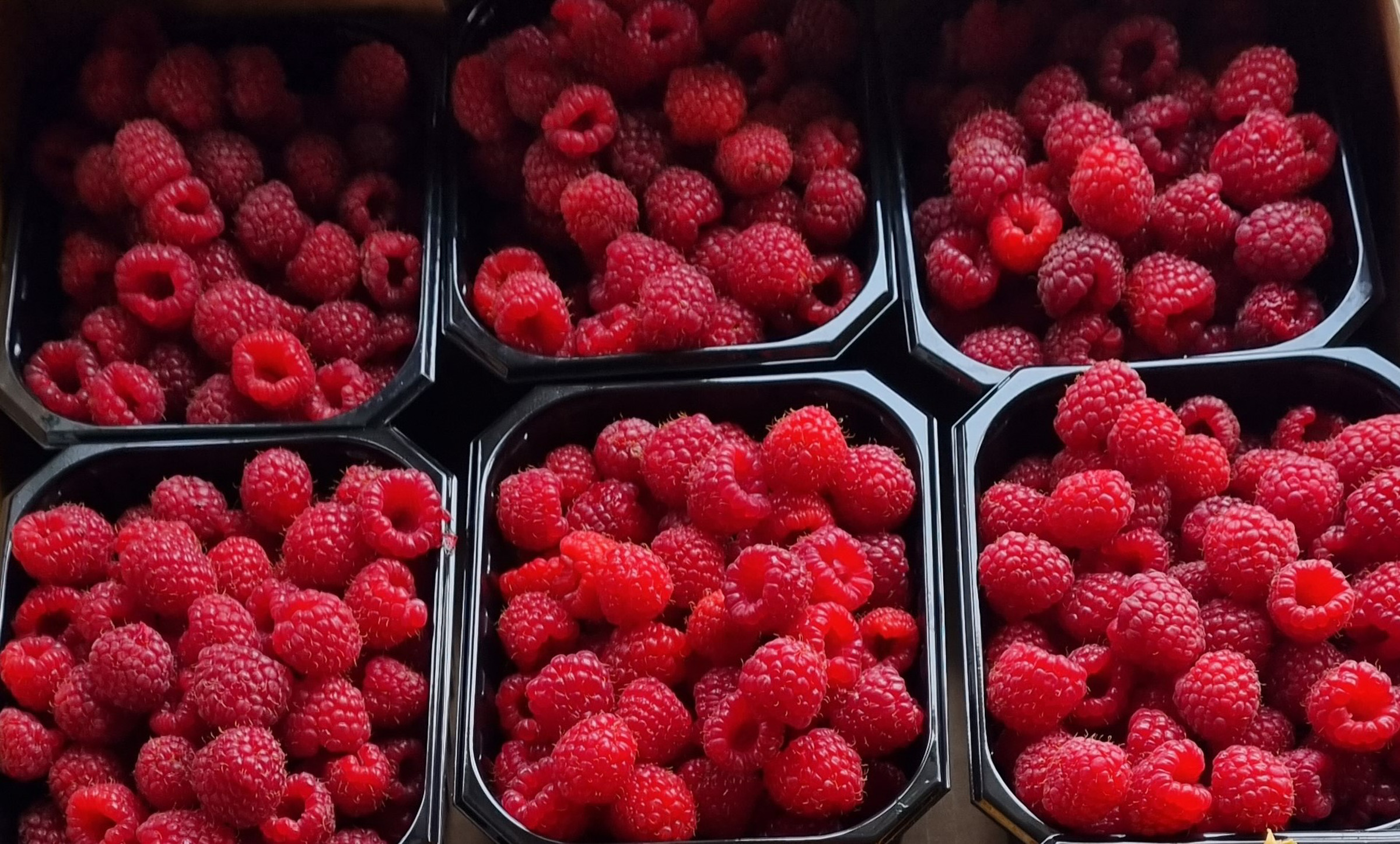
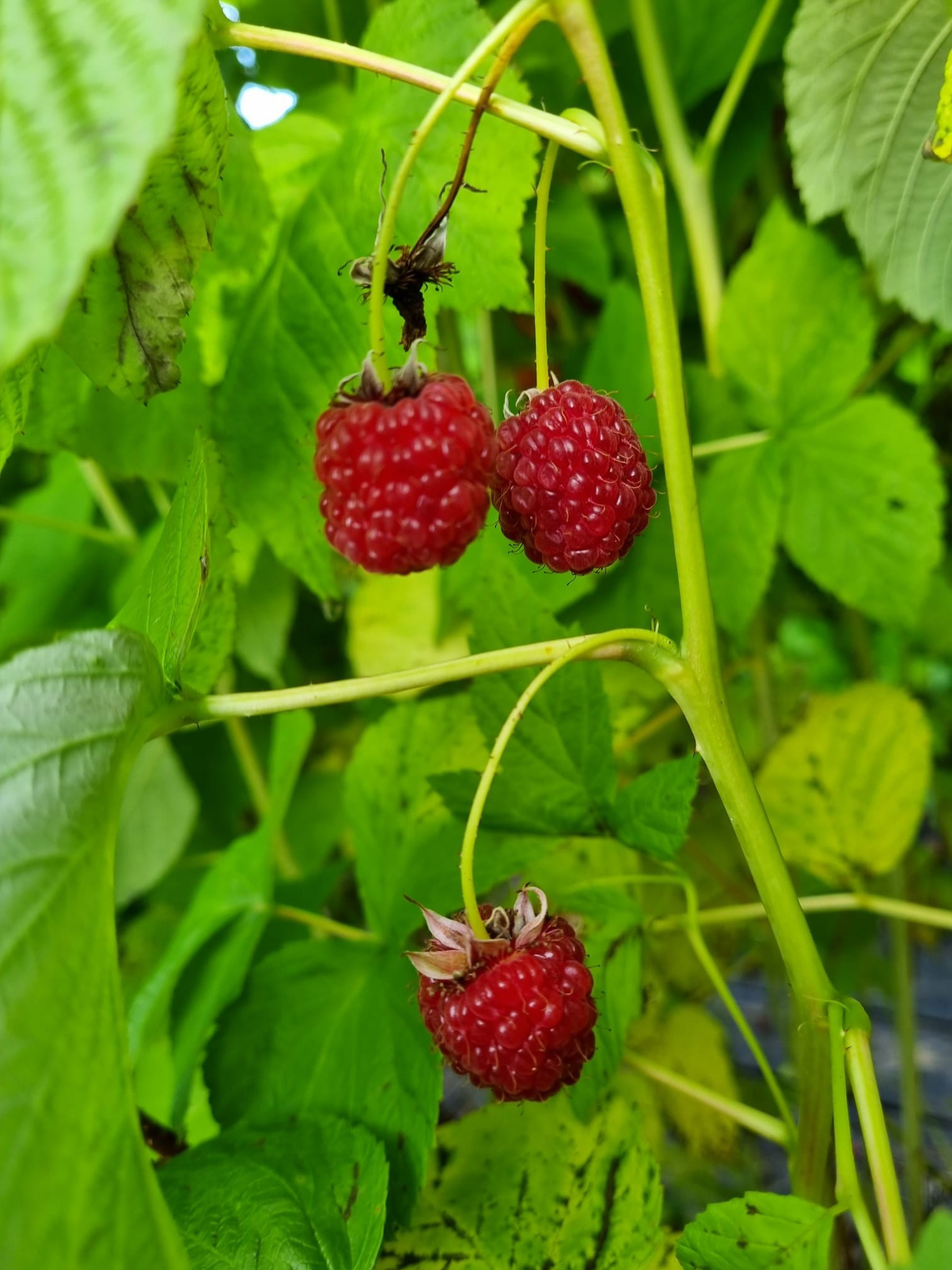
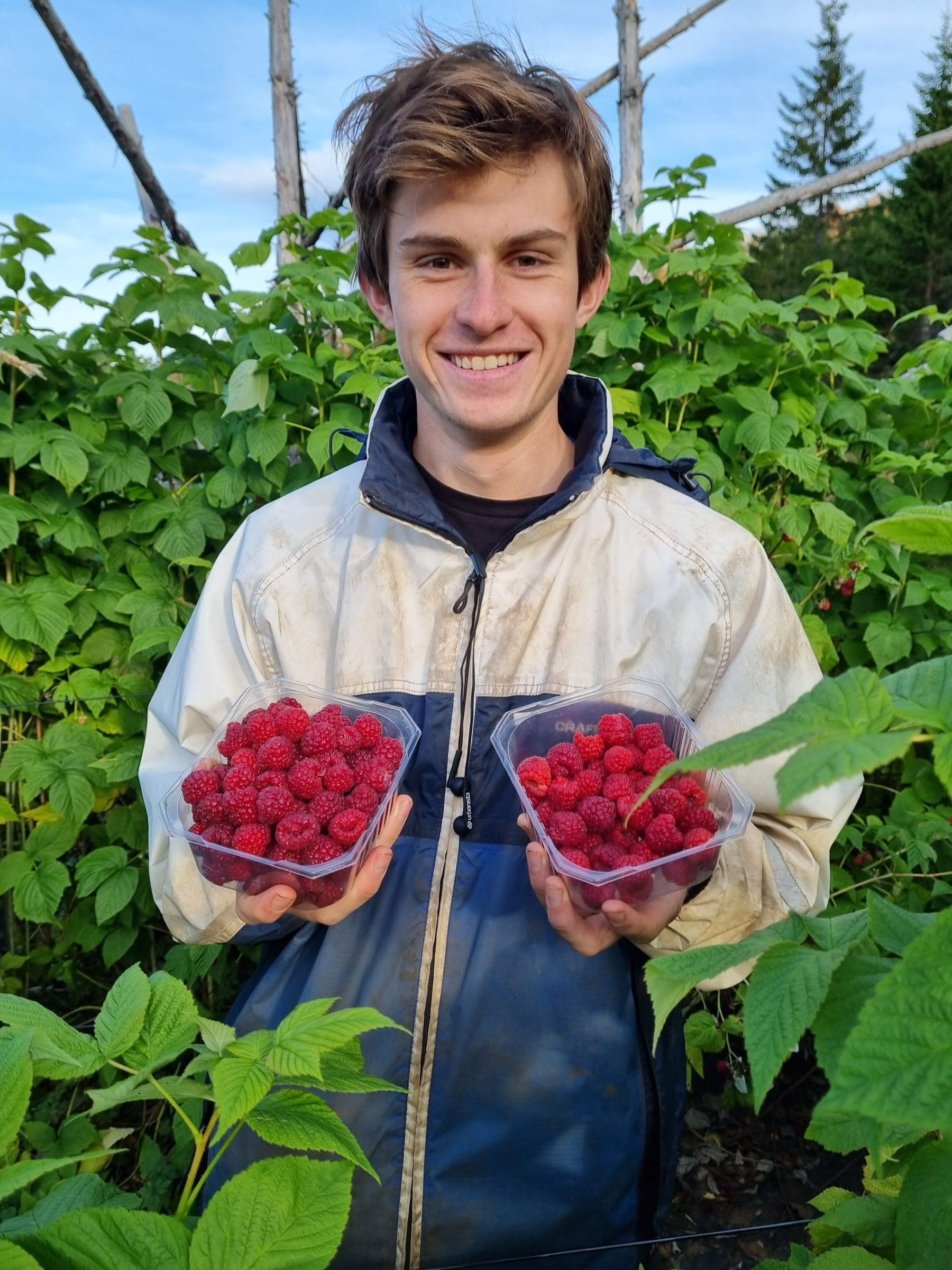
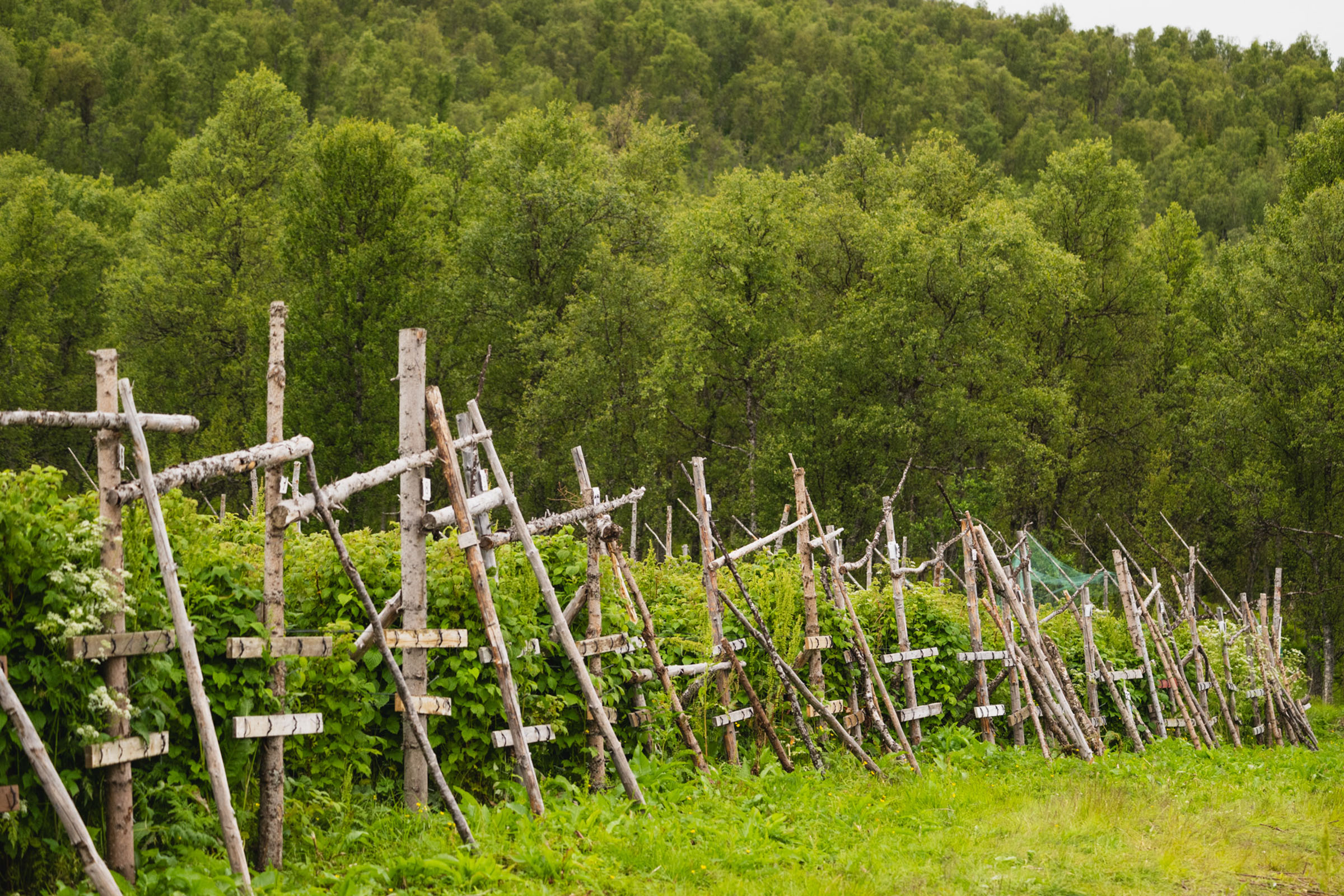
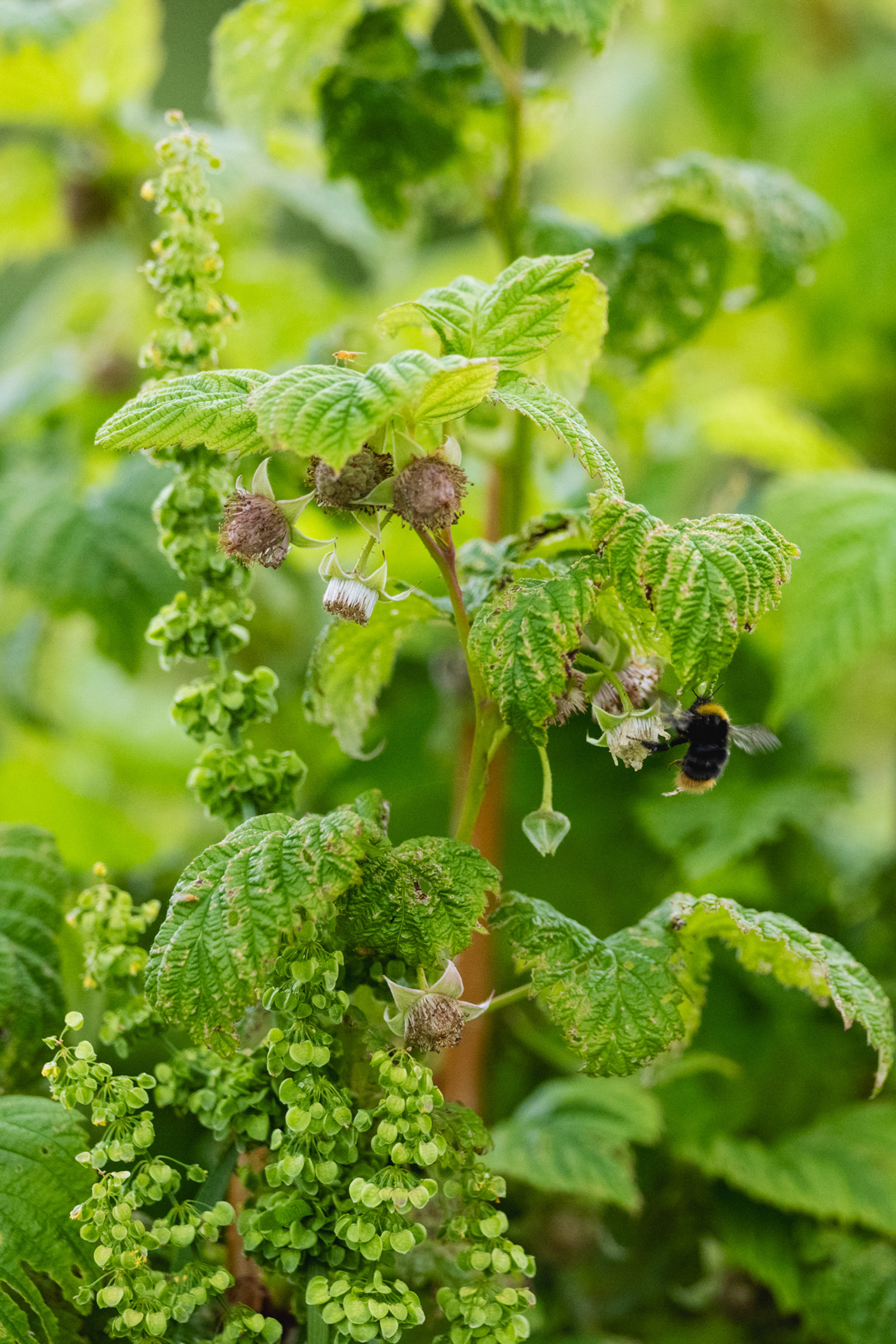
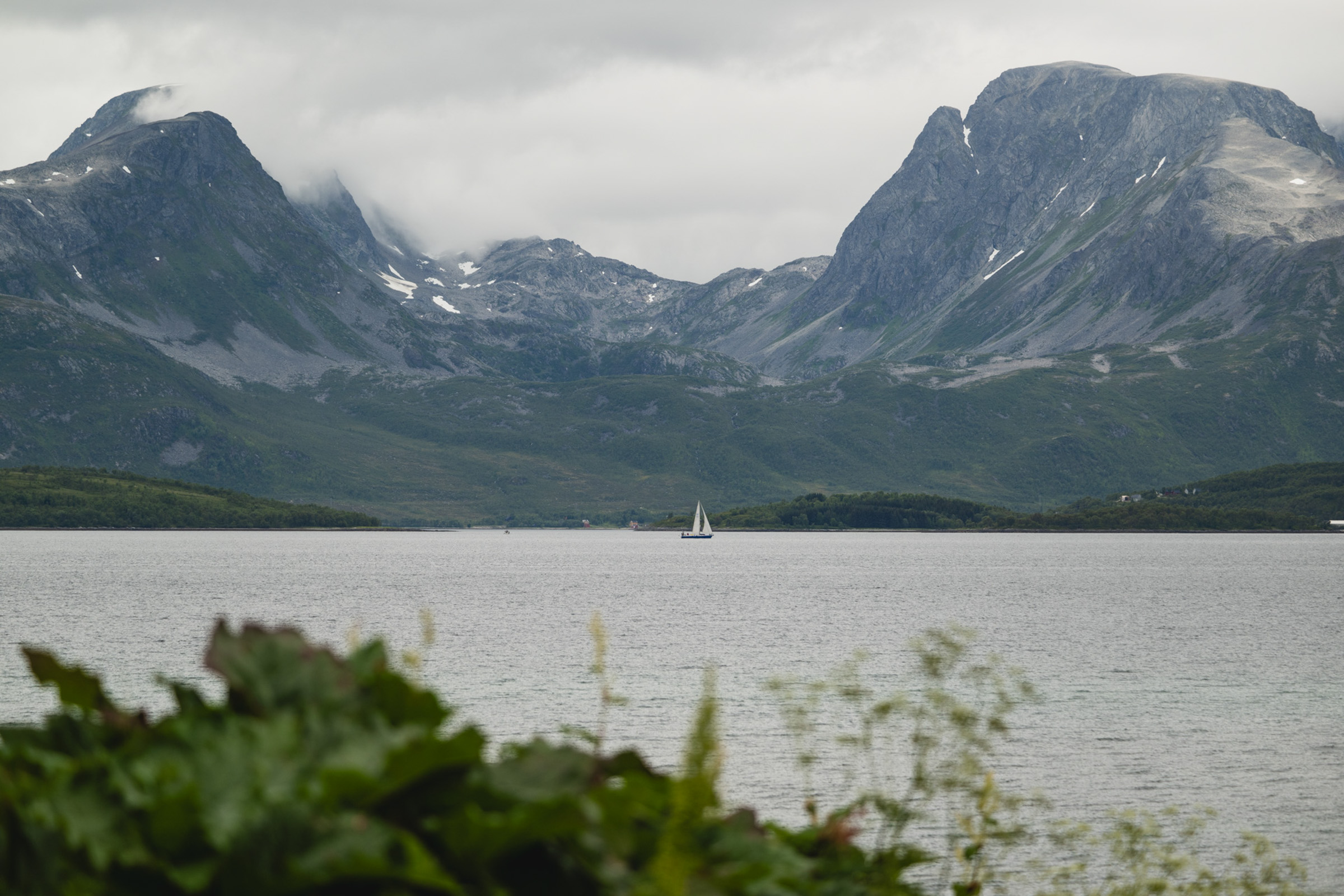
Beyond Città del Vaticano, with sweeping views towards the jagged mountains of Reinøya and sheltered by a dense belt of planted spruce, we reached the raspberry fields. Tall, slender canes stretched away in neat rows as bumblebees hummed from flower to flower. It was one of the farm’s lushest corners, with a richness of green more reminiscent of gardens much further south than Tromsø.
A race against the first frost
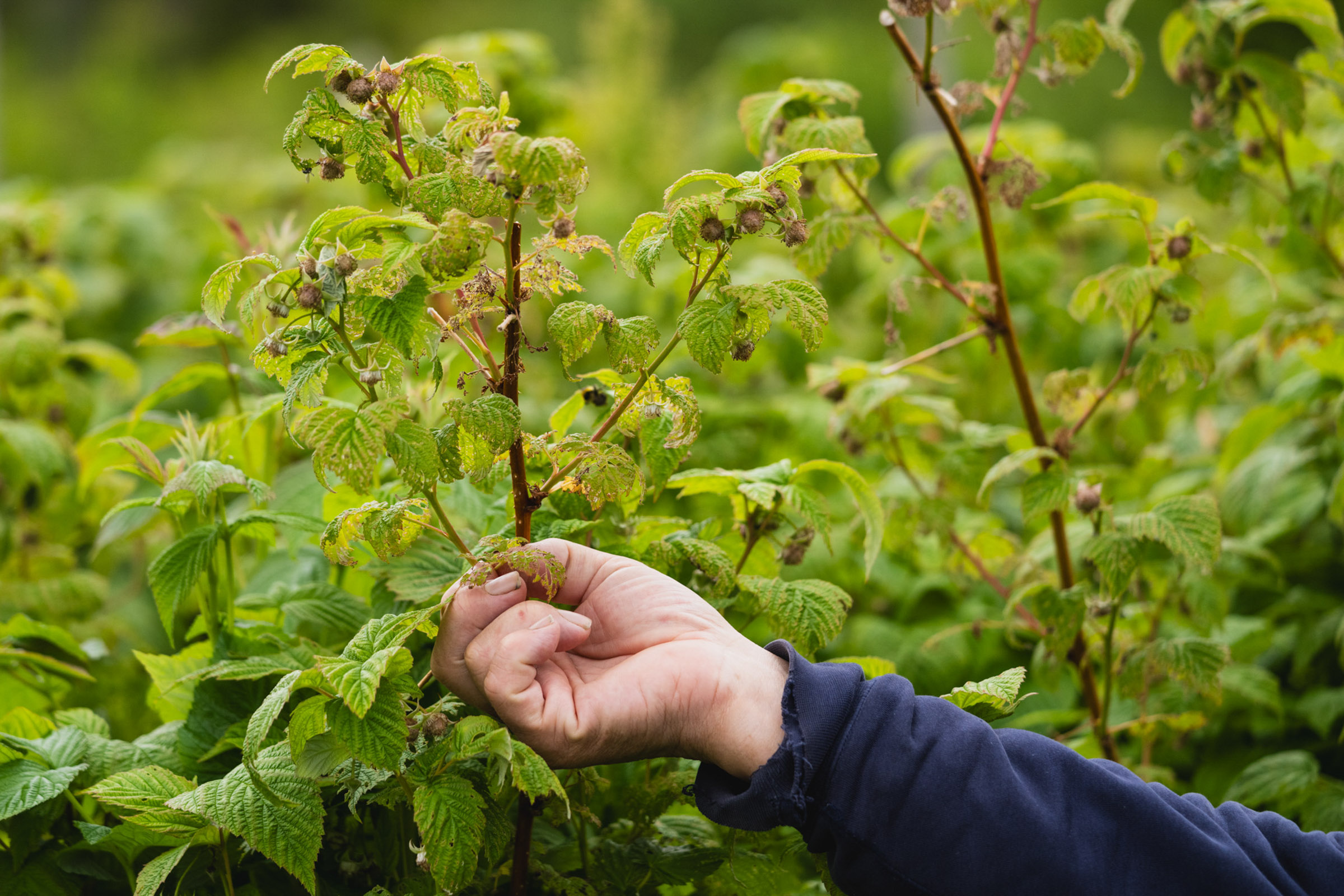
The raspberry leaves were full of holes. This spring, caterpillars had feasted on the foliage. “You can read the newspaper through the leaves,” Roger laughed. Fortunately, the caterpillars had finished feeding before the bushes came into flower, leaving the crop unharmed.
In most years, the raspberries ripen in early September, making the harvest a race against the first autumn frost. This year, however, an unusually warm spring has put the season ahead of schedule.
Currants and rhubarb in smaller quantities
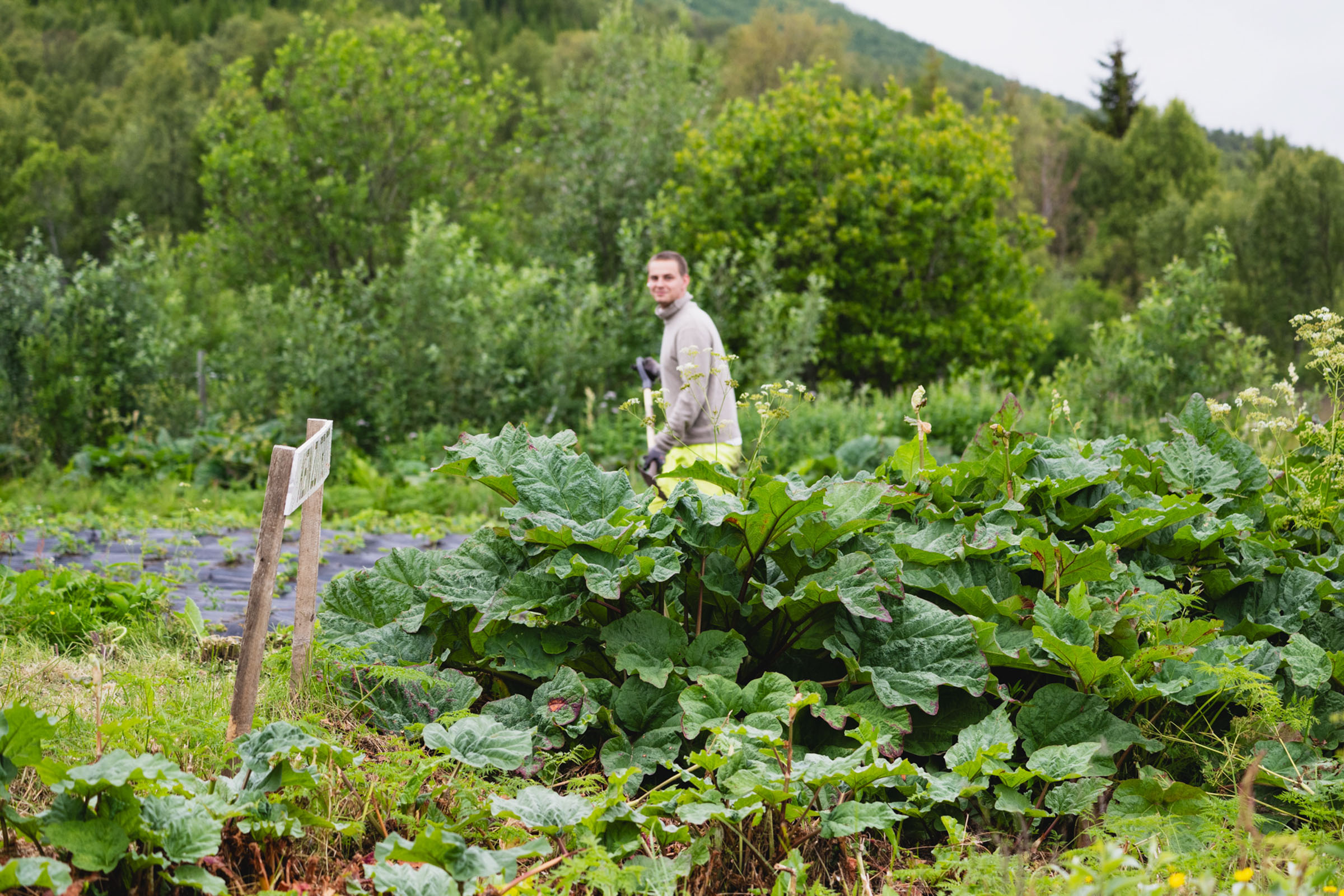
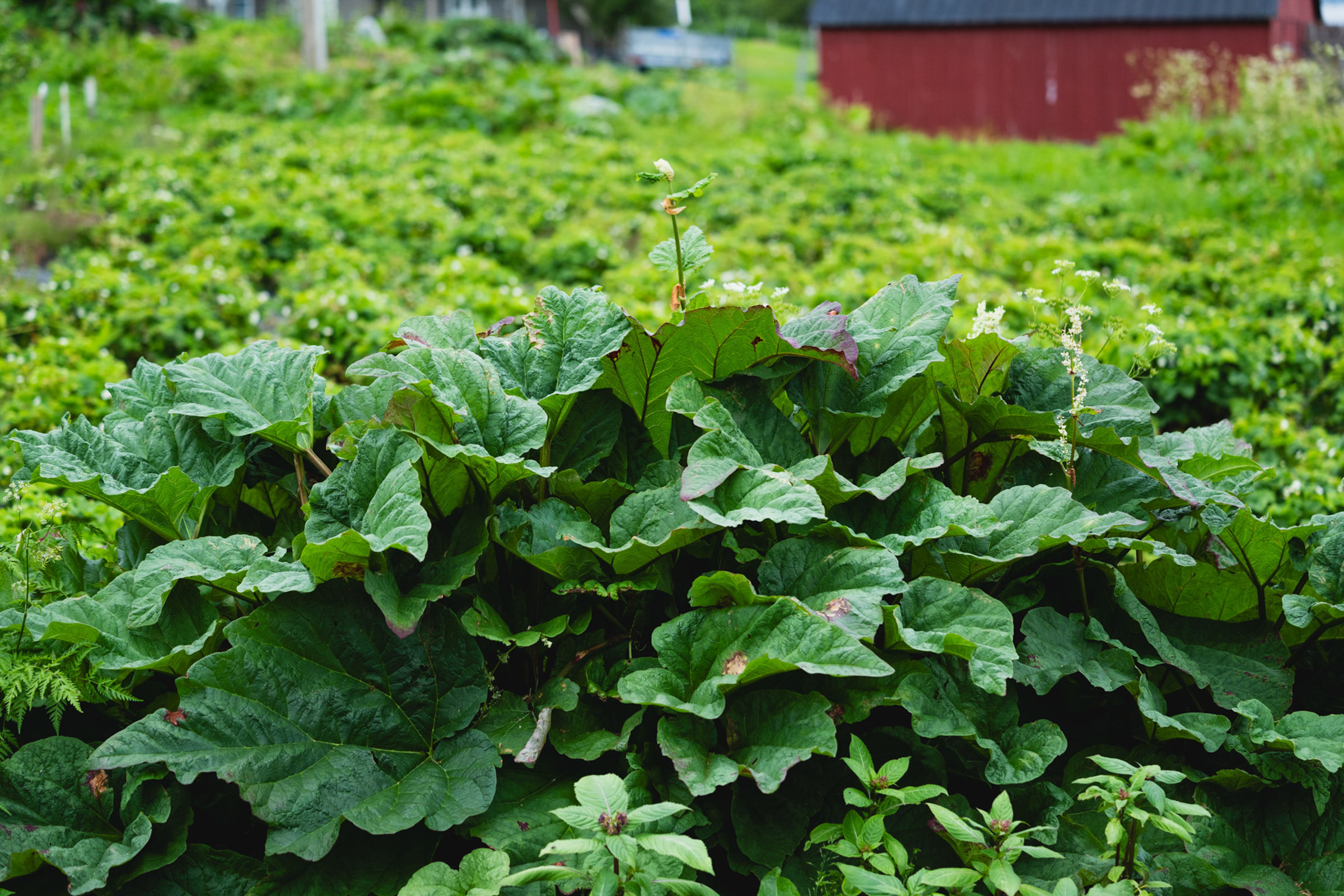
The large rhubarb leaves first caught our eye. They were originally planted as a windbreak around the strawberry fields, but the rhubarb soon found another purpose. In early summer, when the stalks are at their most tender, small quantities are supplied to local restaurants.
Roger is also experimenting with redcurrants and blackcurrants. Finding suitable varieties, however, has proved difficult. The cultivars he is looking for are mainly grown in Finland and Russia and are not easy to source.
The farm also grows small quantities of radishes, dill, parsley and romaine lettuce.
Potatoes wait for August
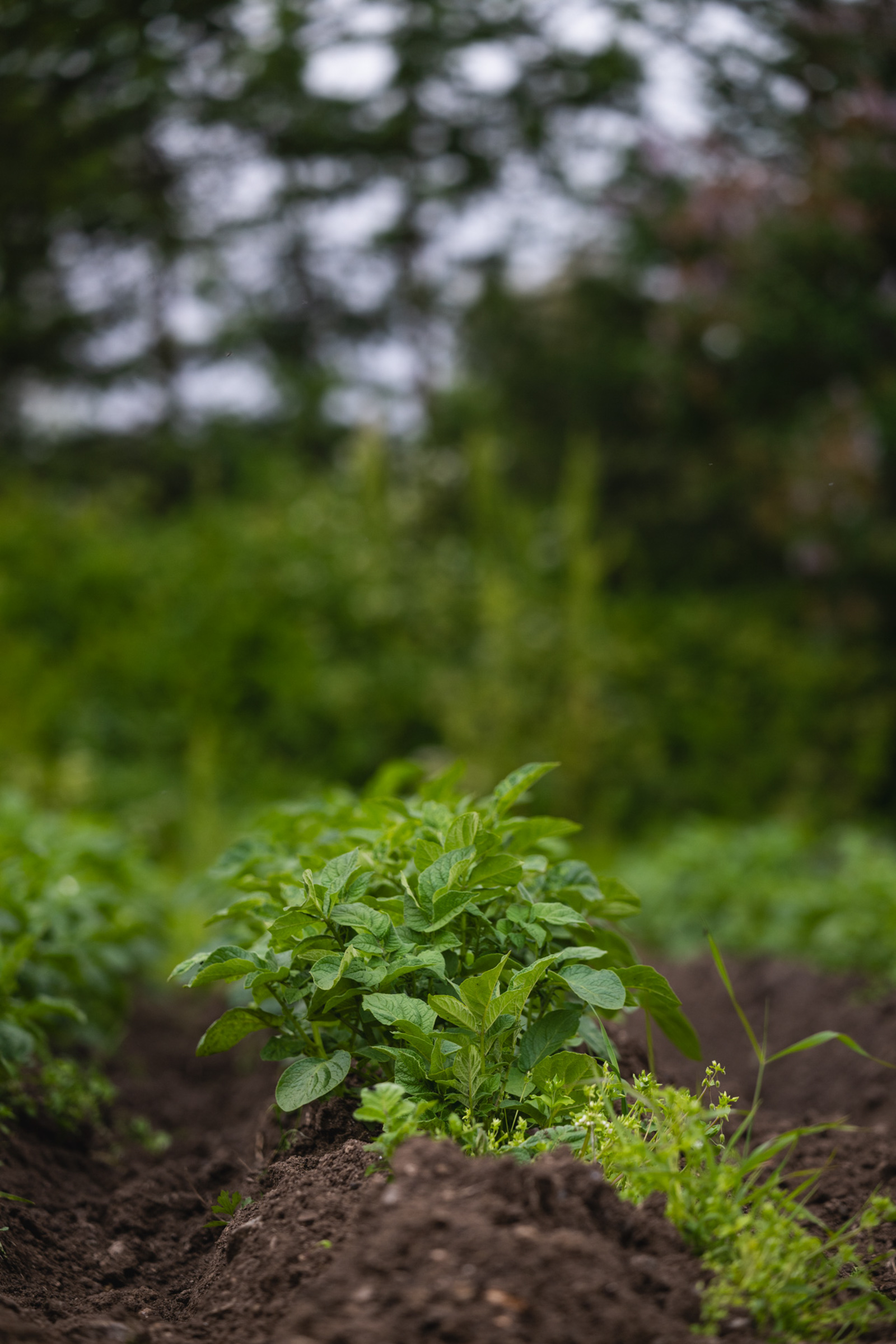
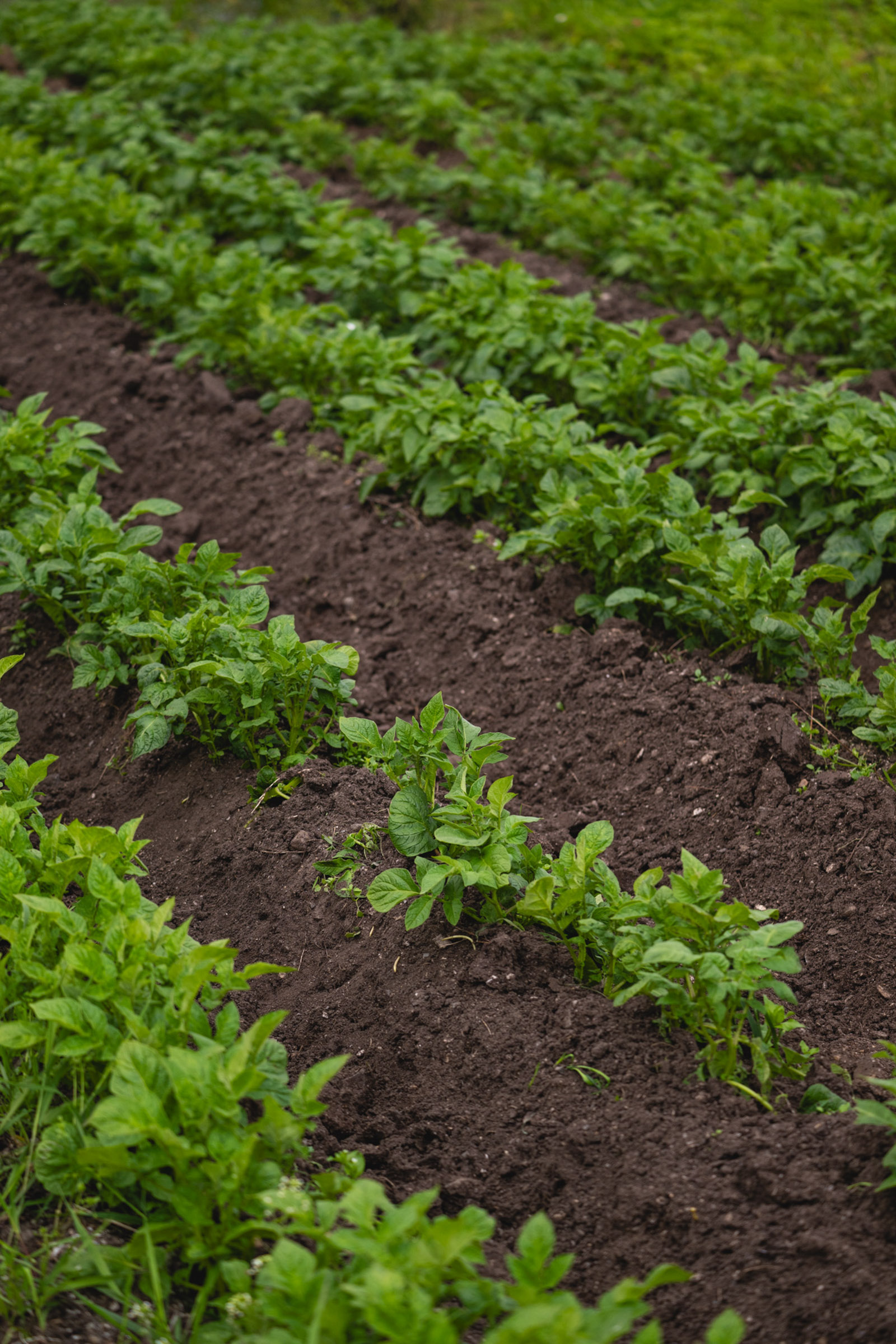
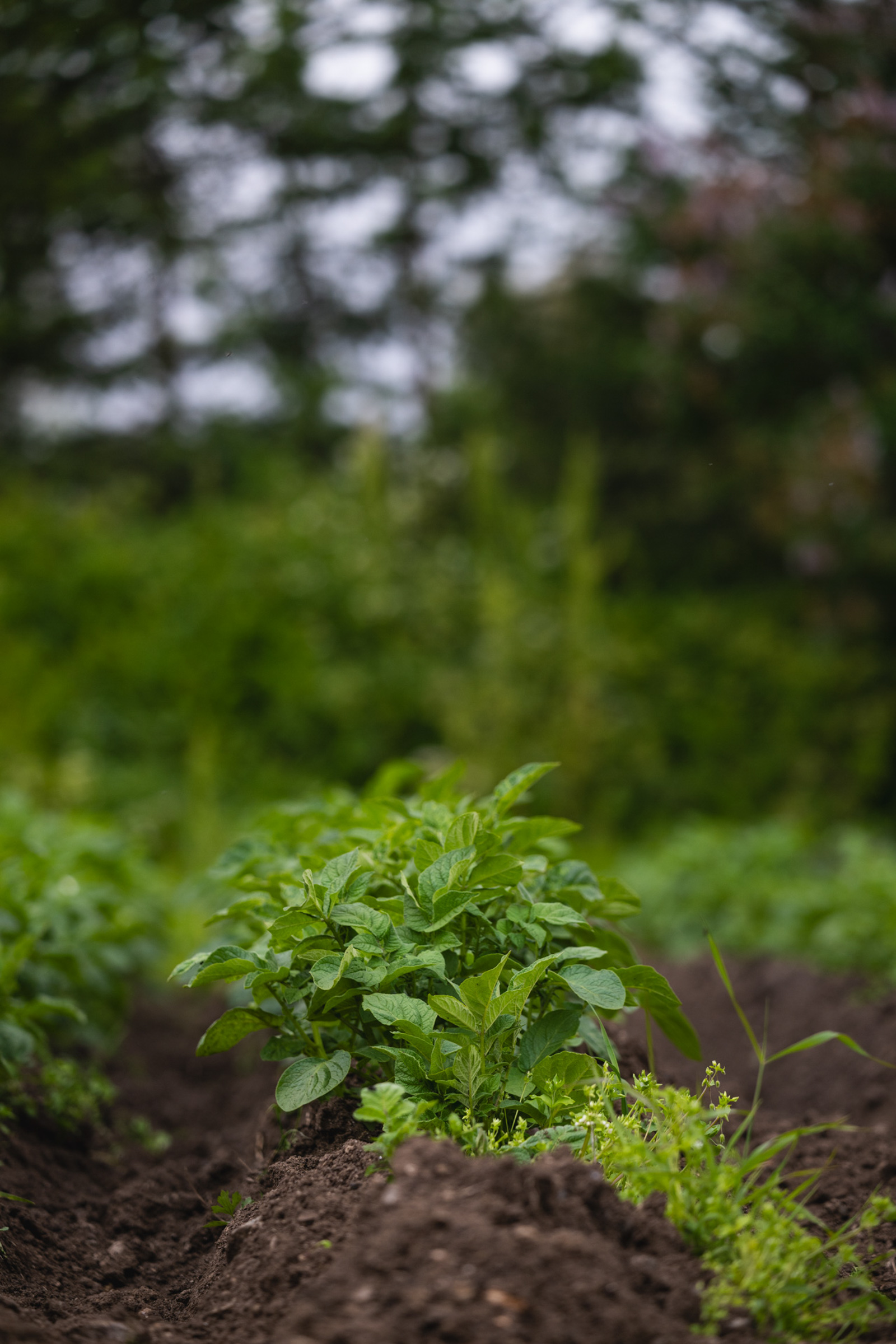
The potato, originally from the Andes, has an uneasy relationship with the Midnight Sun. Northern potato growers have long observed that the tubers put on most of their bulk only after the nights begin to darken in August. That leaves just a few precious weeks before the first autumn frost kills off the haulm. The reward, however, is potatoes with an exceptionally rich flavour.
Northern favourites
Roger grows several potato varieties, including two Northern Norwegian favourites: the delicate, almond-shaped mandelpotet and gulløye, a heritage variety from Troms. Its name – “golden eye” – refers to its yellow flesh and deep-set eyes. A red-skinned form, rød gulløye, is particularly popular in the lapskaus stew, as it stays firm during cooking. For mashed potatoes, Roger prefers the variety Troll.
Even prestige potatoes have to prove themselves
In southeastern Norway, ringerikspotet enjoys an almost legendary reputation and is often regarded as one of the country’s finest potatoes. Roger spent several years learning how to grow it successfully in the far north. The harvests eventually turned out well, but the local verdict was rather less enthusiastic. However, this self-important southern snob never quite won over the locals, and Roger eventually decided to call it a day.
Sweet carrots by the sea
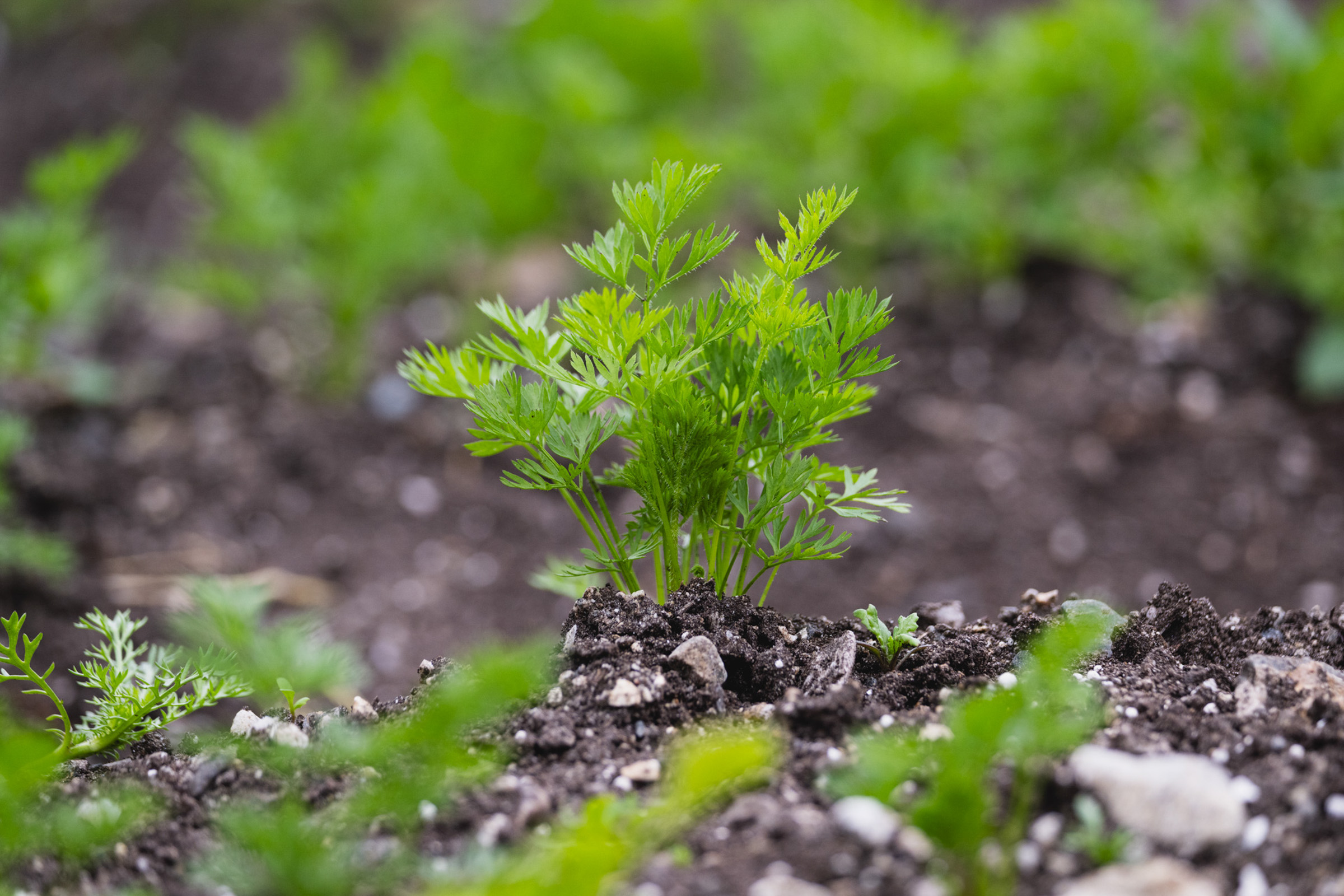
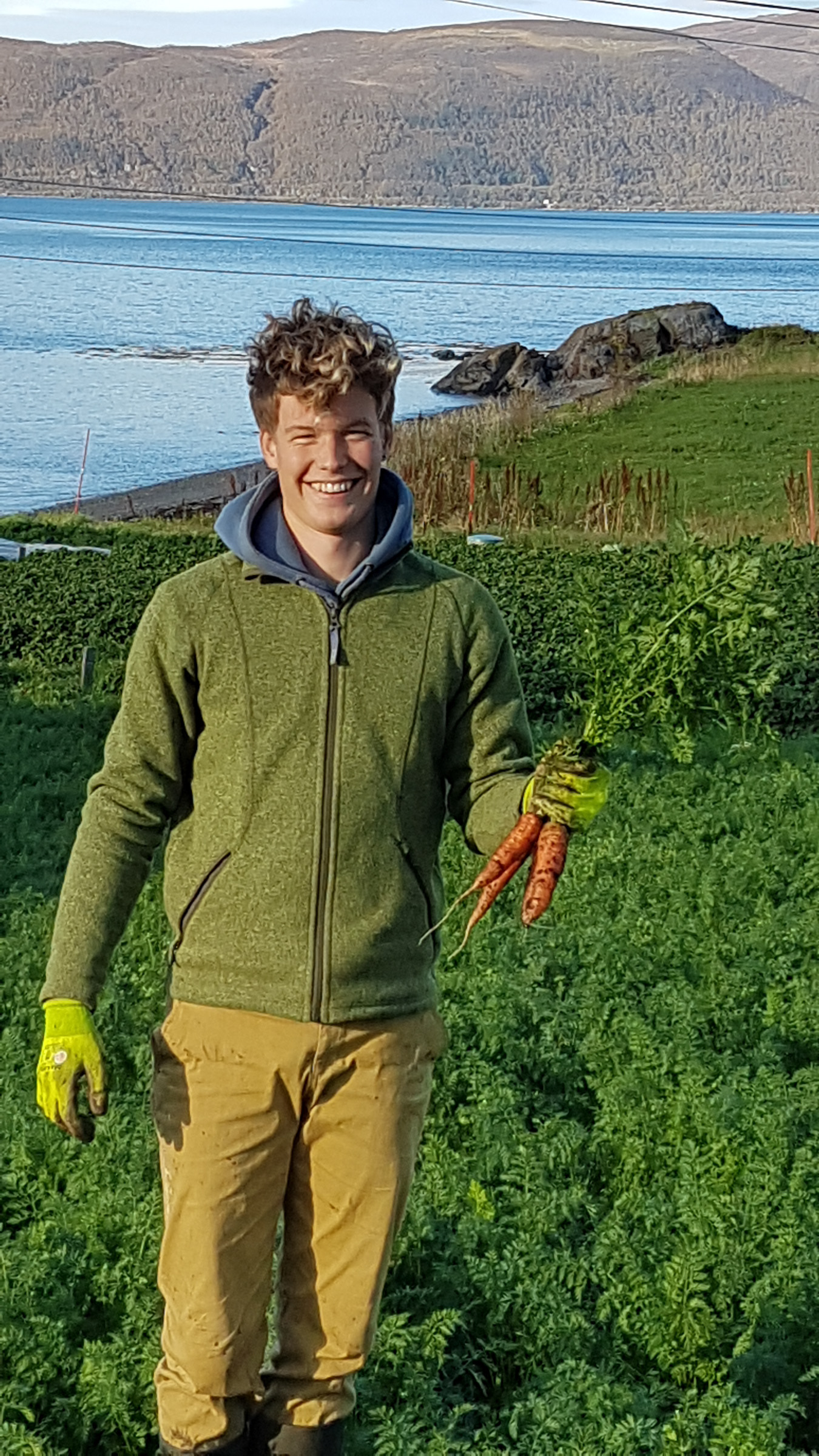
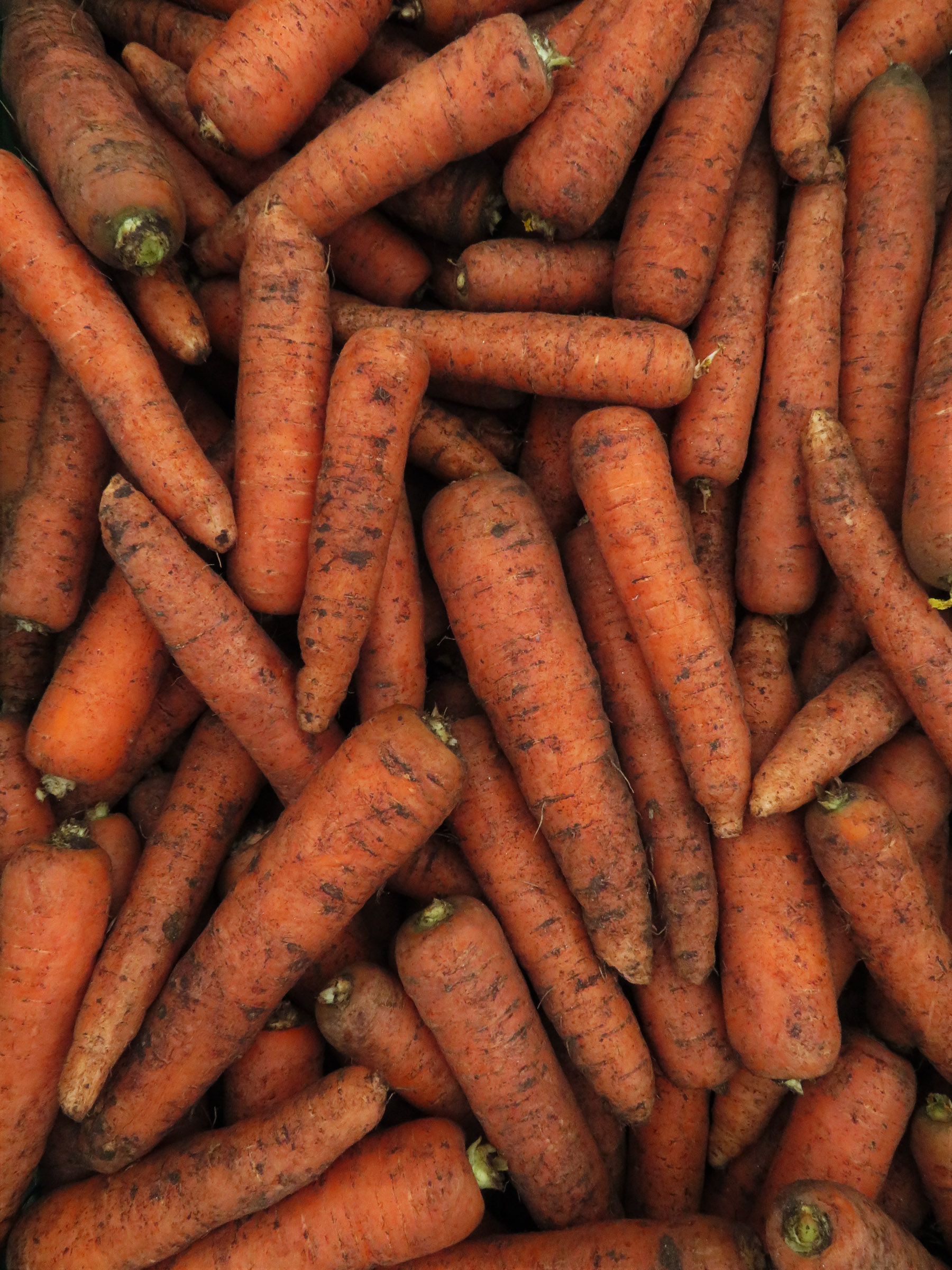
The carrot field lies closest to the shoreline. At Nordvoll, they are sown directly into the field and left to grow close together, producing slender, delicate baby carrots.
Just as with the strawberries, the long, bright summer days allow the plants to photosynthesise almost around the clock, helping the carrots build up their natural sugars. And because they are grown organically, their flavour remains remarkably clean and fresh, without the bitter notes that can sometimes develop in carrots.
Seaweed wrack is the little secret
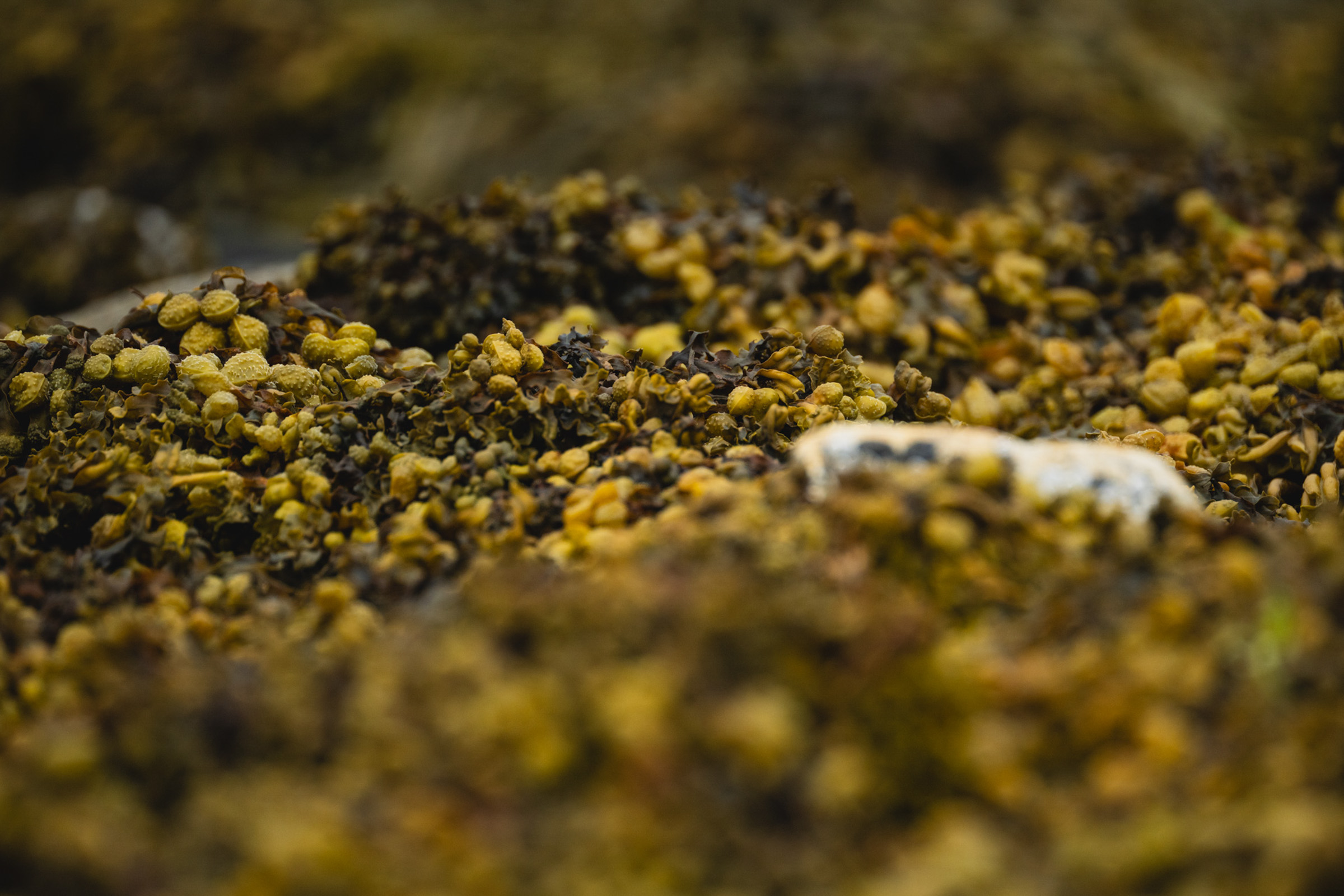
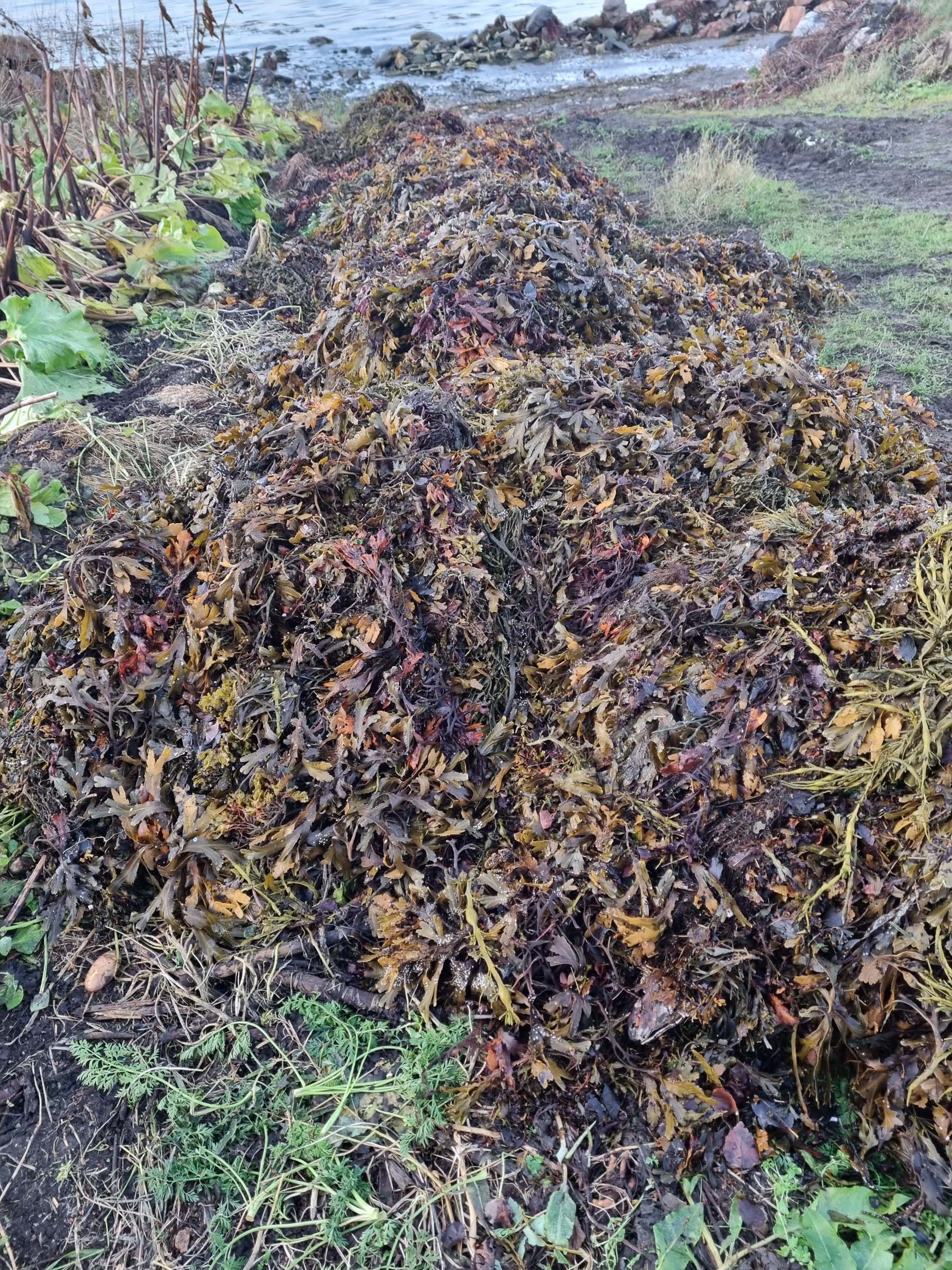
Roger now grows less potatoes and more strawberries than before. He usually grows potatoes over a period of around five years. Then the nutrients potatoes need are exhausted from the ground. However, strawberries rely on other nutrients – and the ground is now ready for strawberries. Helped with compost, a bit of horse manure from the neighbours and seaweed, the ground gets full of natural nutrients.
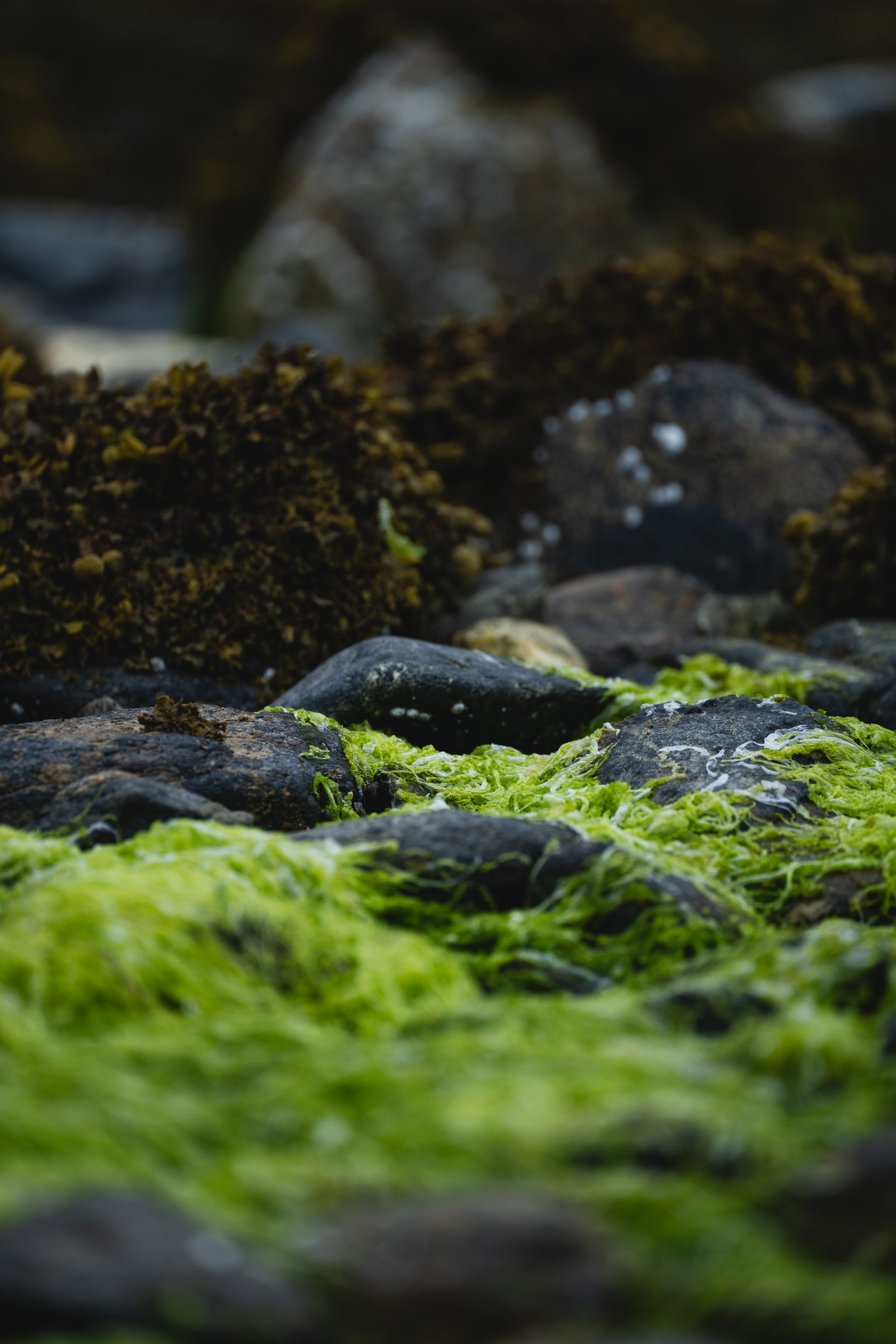
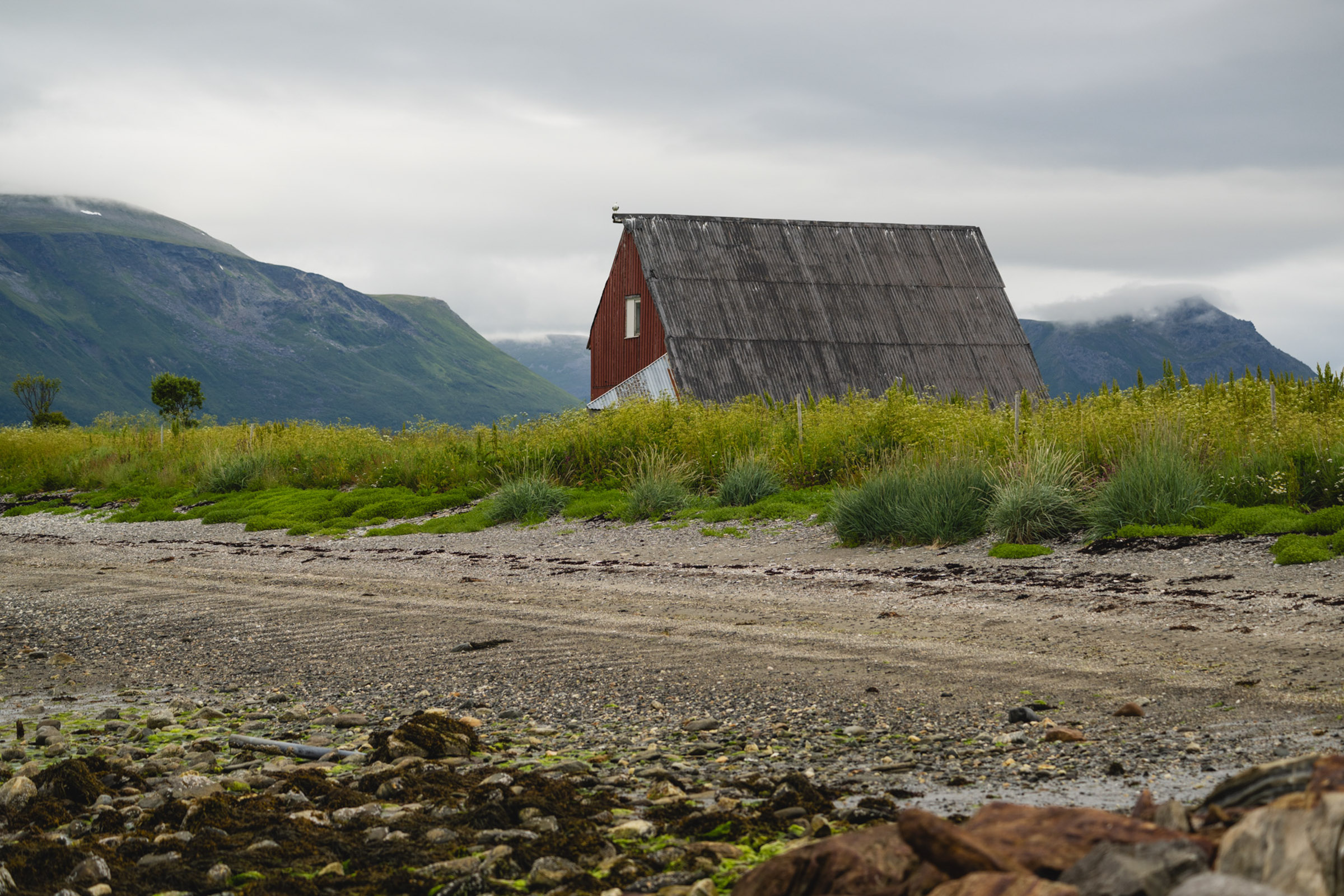
The seaweed is cut off from its roots by violent winter storms and get washed up on the beach below Nordvoll Organic Farm. Rain and snow wash out the salt, but the rich nutrients stay behind. Some people cut live seaweed, but Roger prefers to use seaweed wrack for the sake of the environment.
Seaweed wrack is the little secret
Roger now grows fewer potatoes and more strawberries than before. Potatoes are usually grown on the same field for about five years before the soil needs a change. Strawberries have different nutritional needs, making them an ideal next crop. Compost, a little horse manure from neighbouring farms and seaweed help replenish the soil naturally.
The seaweed is winter wrack – torn loose by storms and washed ashore on the beach below Nordvoll Organic Farm. Rain and melting snow wash away the salt, while the nutrients remain. Rather than harvesting living seaweed, Roger prefers to use what nature has already delivered.

Sea sandwort is a forager’s favourite
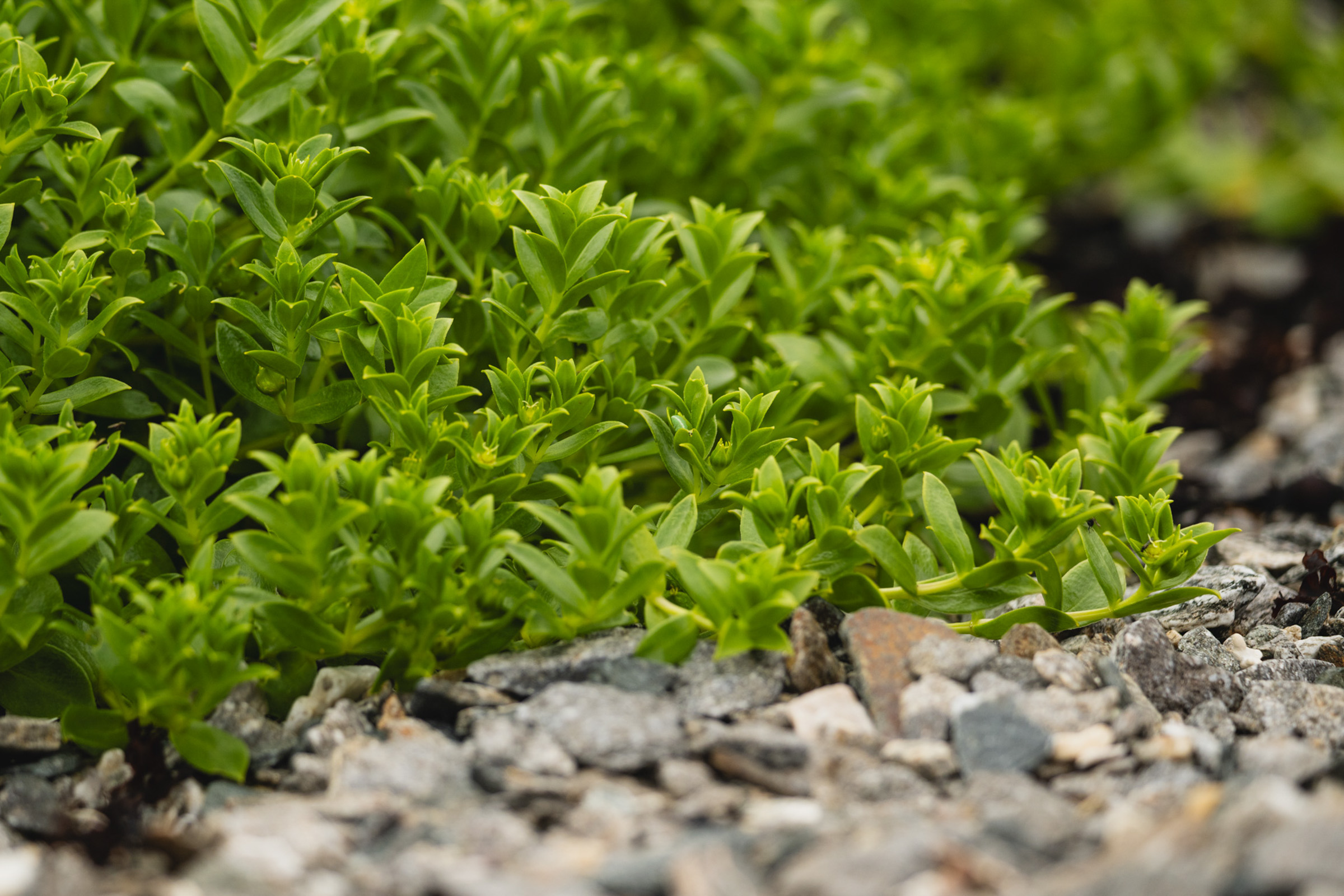
Beyond the compost heaps, we made our way down to the beach, where sea sandwort (Honckenya peploides) formed dense green clumps above the high-tide line. Roger occasionally harvests it for restaurants in Tromsø. I picked a leaf myself – surprisingly sweet at first, followed by a gentle hint of salt.
The Midnight Sun can be confusing
At Nordvoll, experimenting with new crops, varieties and growing methods is simply part of the job. Not every idea succeeds. Spinach, for example, struggles with the Midnight Sun. Instead of producing tender leaves, it quickly bolts, sending up a flowering stalk. “We tried sowing it in August,” Roger says. “But then the season is simply too short.”
Some herbs, such as thyme and rosemary, never really thrive in Tromsø’s cool summers. The little yellow Målselv turnip, on the other hand, feels perfectly at home. Brassicas are another story. Cabbage, cauliflower and kale are all highly attractive to insects, and keeping them healthy often means spraying them. True to his organic philosophy, Roger has decided to give the entire cabbage family a miss – at least for now.
Frequently asked questions about fruit and vegetables in Northern Norway
The cool climate slows ripening, giving berries more time to develop sugars, natural acids and aroma compounds. During the Midnight Sun, photosynthesis continues for almost 24 hours a day.
Buy in season and, if possible, directly from local farms or farm shops. Northern produce is often harvested ripe and sold within hours, giving it more flavour than produce transported over long distances.
Potatoes, carrots, turnips, rhubarb and many herbs thrive in the cool climate. Some berries, especially strawberries and raspberries, also develop exceptional flavour.
Some crops simply prefer warmer conditions, while others struggle with the extremely long summer days or with insect pests that are difficult to control organically.
Arctic farmers work with a short but intense growing season. Long daylight hours, cool temperatures and careful soil management often produce crops with particularly concentrated flavours.
Some farmers use seaweed washed ashore after winter storms as a natural soil conditioner. It returns minerals and organic matter to the soil without harvesting living seaweed.
Many vegetables sold in Northern Norway are grown elsewhere in Norway or imported from abroad. Local farms are often small, and much of their produce is sold directly from the farm or supplied to restaurants that specialise in seasonal local ingredients.
The best place is often a good local restaurant. Many of the region’s chefs work closely with nearby farmers and adapt their menus to whatever is harvested that week. During the season, farm shops and farmers’ markets are also excellent places to buy local produce.