
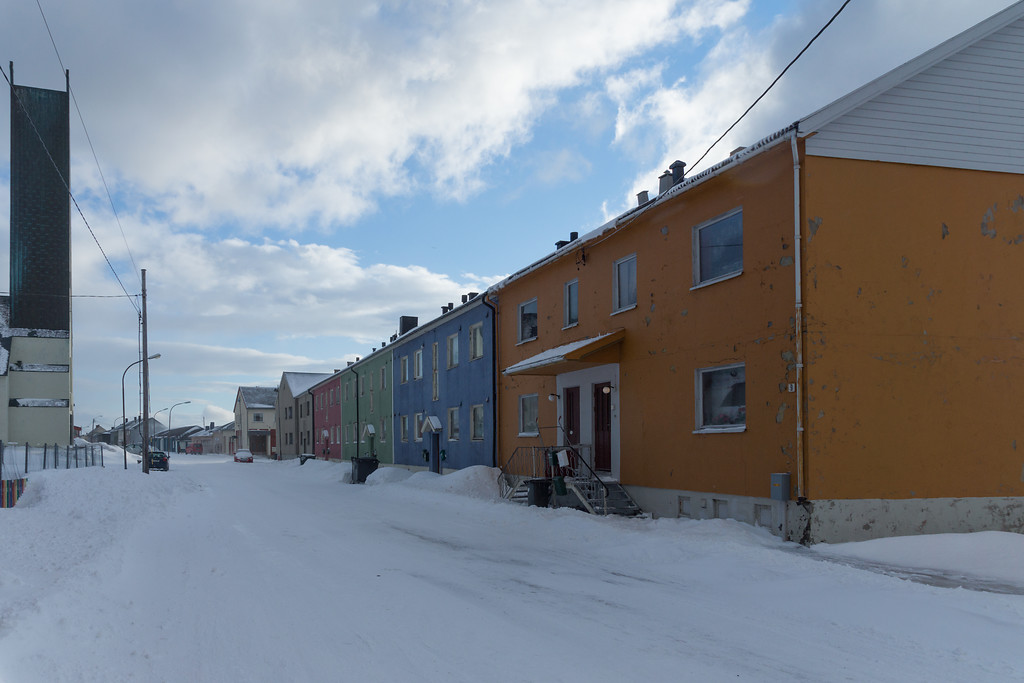
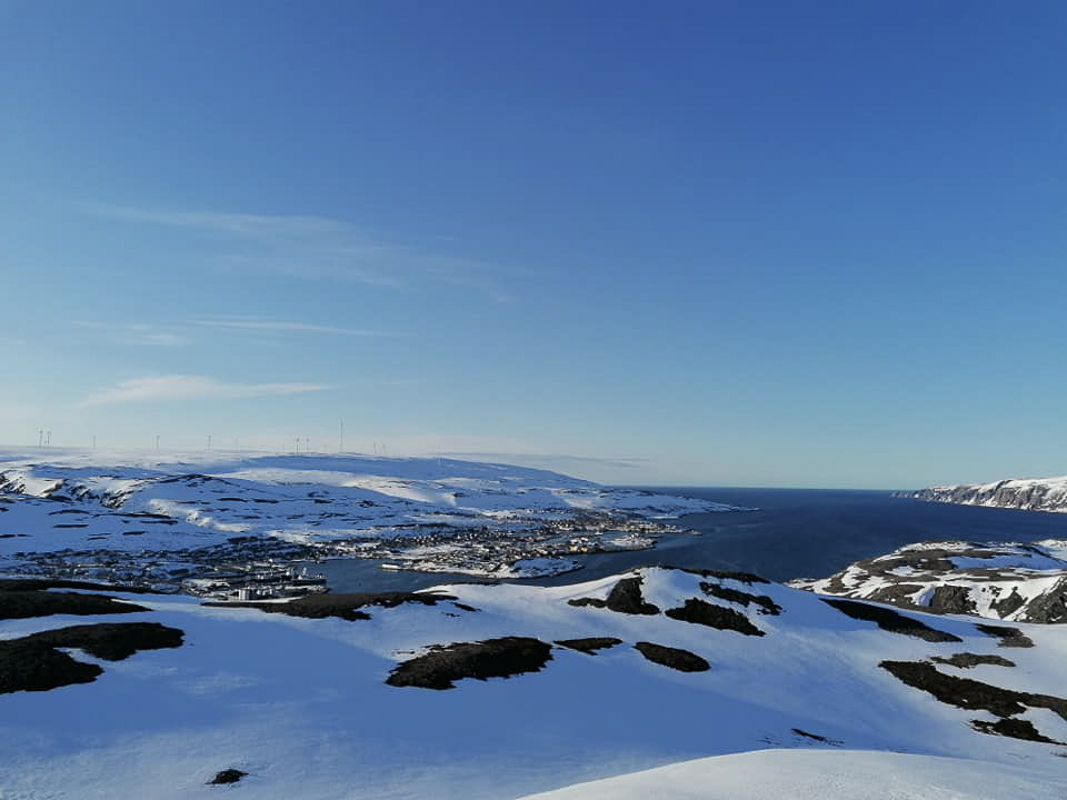
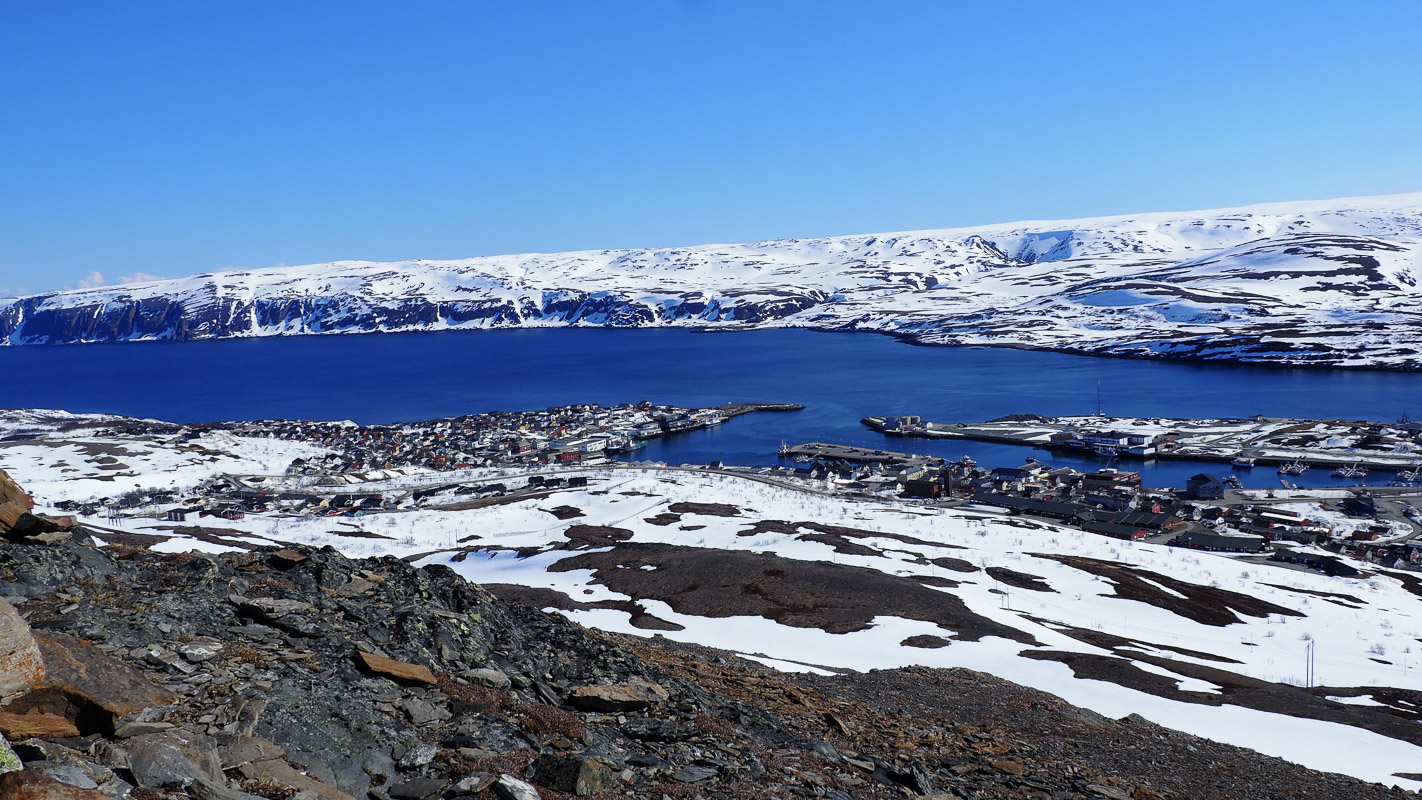
The land between Finland, Russia and the Barents Sea, the far northeast of the country, is a different Norway altogether; high horizons, vast emptiness with small and tightly clustered settlements interspersed . In winter, the strong colours of the village houses pop against the white snow. At night, the Northern Lights have an endless sky to dance on. You’re far away from it all and see things few others have experienced. But how do you get around?




Driving in this area is a breeze for anyone used to winter, snow, ice and narrow roads. However, if you have never driven on an icy road, never shovelled out a car from the snow in the morning or never scraped the ice off the windscreen, driving up here might not be your cup of tea – even if it’s a thermos cup.
The alternative is obvious – there is a network of buses serving all the settlements in a coherent and reliable system, flexible when the weather acts up. Propeller planes and the classical coastal voyage Hurtigruten invite you to choose between scenic shortcuts and hours of old-school travel – both full of character. Here we tell you how.
You most likely arrive in Kirkenes by plane, given the direct connections to Oslo and Helsinki. Some travellers also choose to arrive with the Hurtigruten/Havila, and then spend some days in the area. Kirkenes is known for its snow hotel, and has many activities like snowmobiling, dogsledding and king crab fishing, and you can easily fill days with activities and good food. But beyond, there is plenty to discover – either just around Kirkenes, around the Varangerfjord and further afield. We’ve also included overland connections to the rest of Norway and to Finland.
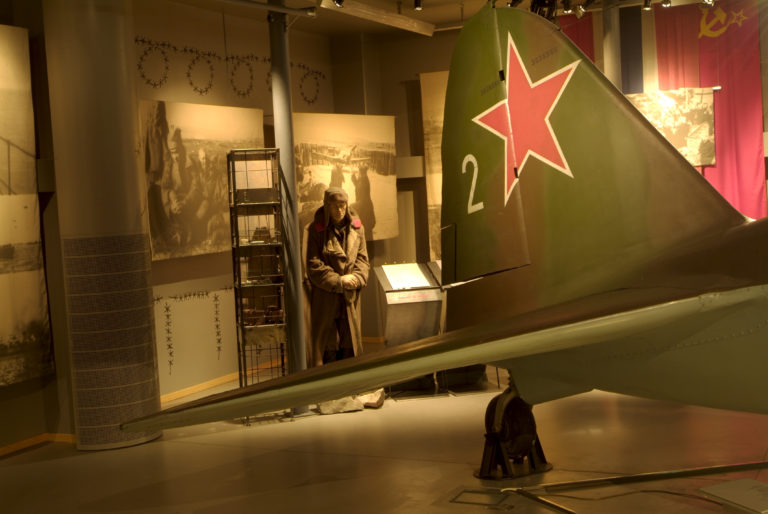

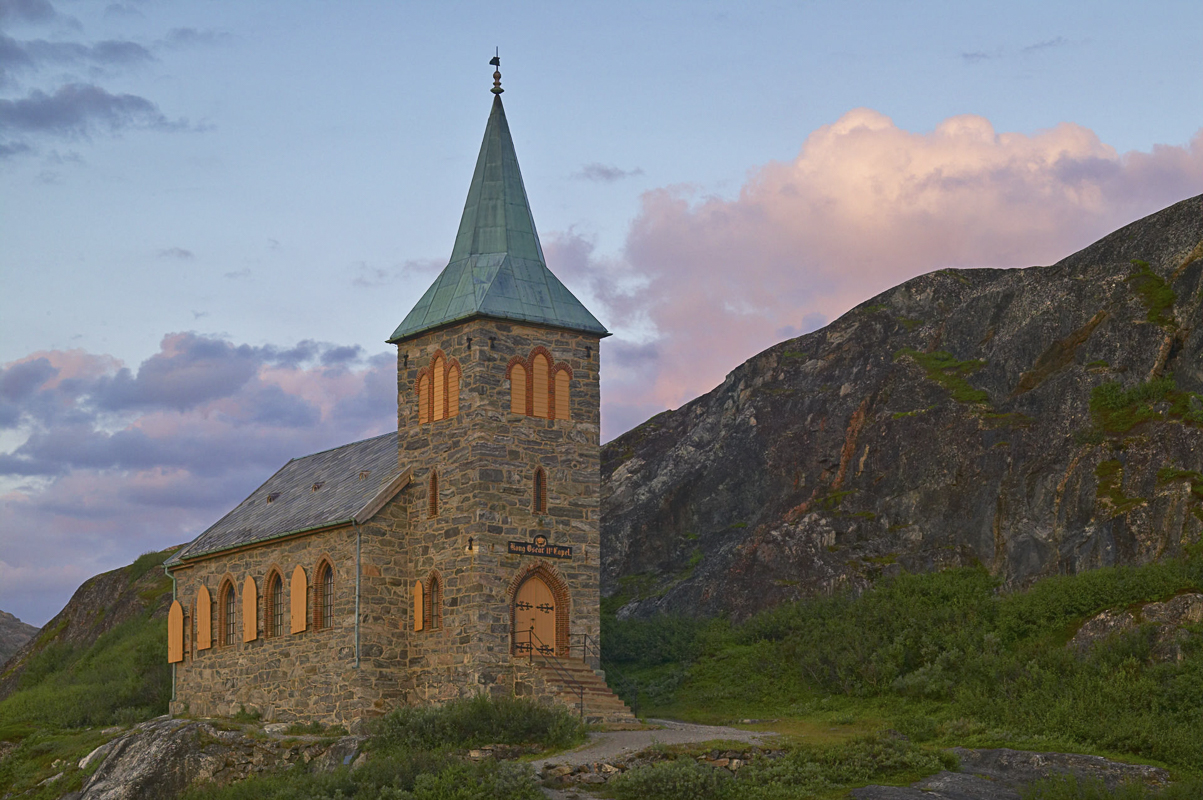
Around Kirkenes
Home to nearly 8000 people, Kirkenes is the liveliest location in the far east. It also has a host of activities on offer.
To Neiden: For visits to the Ä’vv Skolt Sami museum, there are 4 connections a day, Monday to Friday. The Museum is closed in the weekend and on Mondays. If you dress warmly, you can walk down to the waterfall and on to the Skolt village with the tiny 16th century chapel.
Into the Pasvikdalen Valley: the 272 runs to Pasvik school, stopping at Svanvik, everything done in an hour. Connections are Monday to Friday, 2-3 times a day. If you have booked accommodation further up (south) in the valley, there is a bus in the afternoon taking you there, and an early morning bus going to Pasvik school.
Around the Varangerfjord
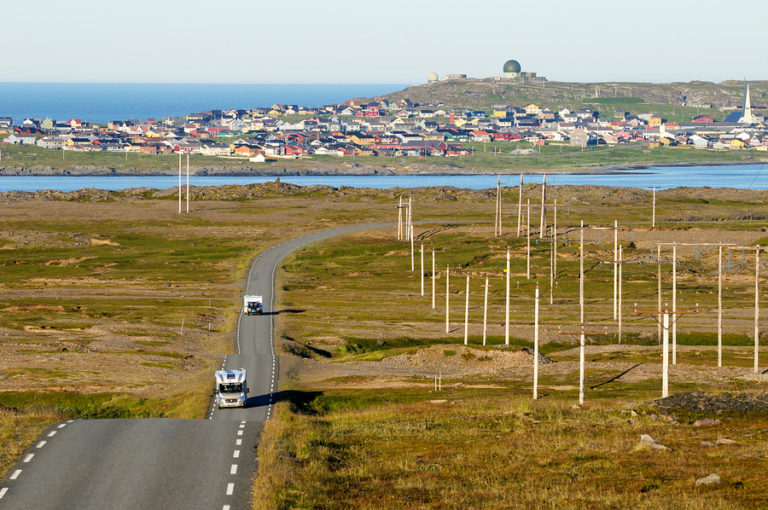
The far north is a region of vast distances. However, the Varangerfjord has many historical, picturesque communities and towns along its shores that are conveniently close to each other. You can easily spend a week in winter, fill it with museums and cultural things, good food – from king crab to Thai food -, and relaxation in some of the resort-like places to stay. Buses are also rather frequent around the fjord. Ship journeys and plane hops can be planned in.


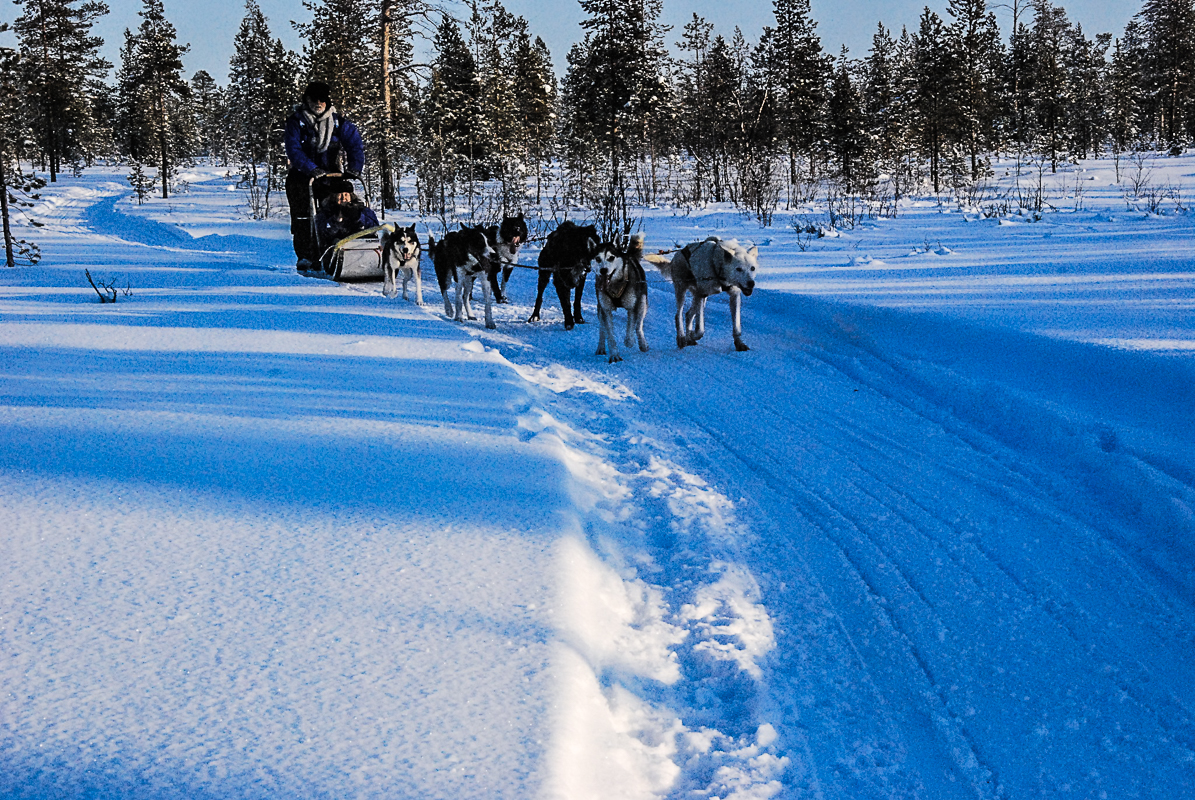
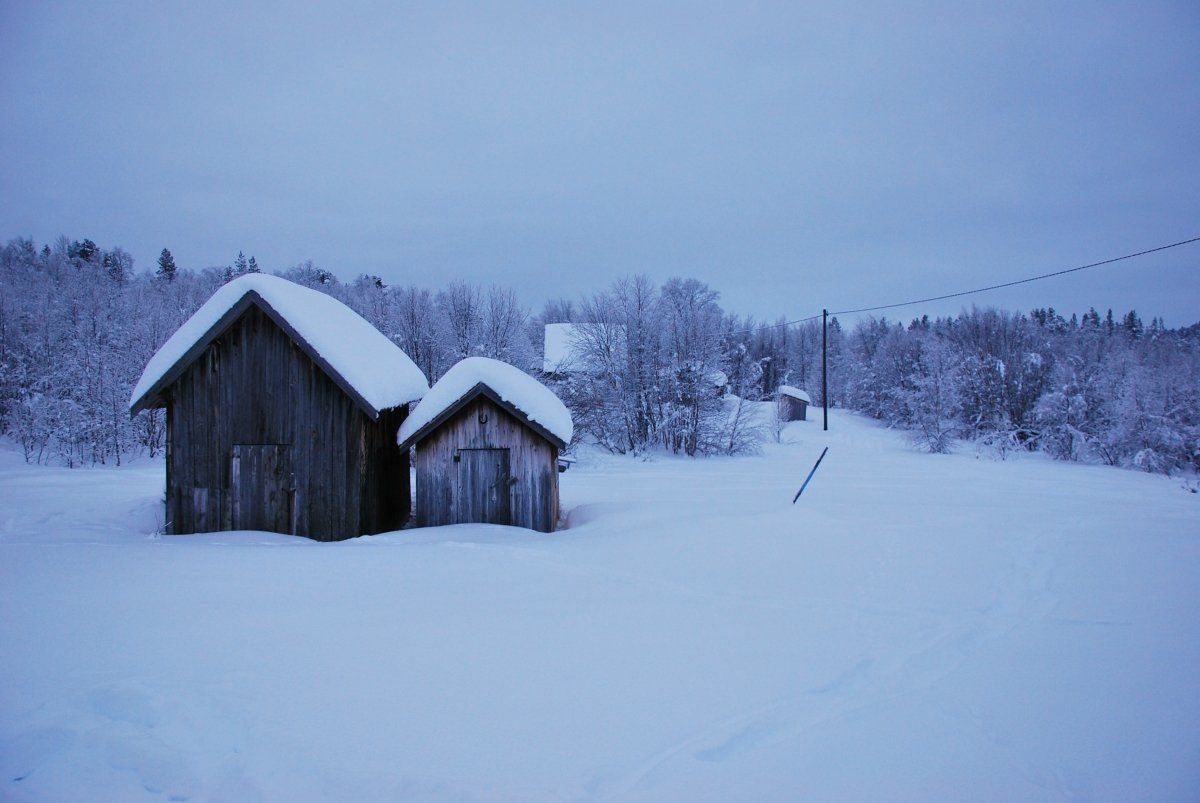

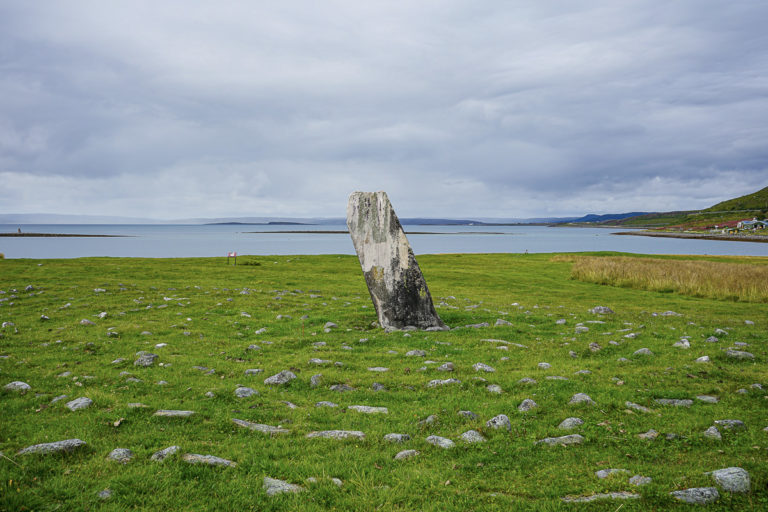
Bus 150 runs between Kirkenes, Varangerbotn, Vardø and Vadsø
A major bus route runs from Kirkenes to Kirkenes Airport and on to places like Neiden, Varangerbotn, Vadsø and Vardø. It runs every day except Saturday, 4 times a day on workdays and twice a day on Sunday. It takes 2 hours to Varangerbotn, 3+ to Vadsø and 4.5 hours to Vardø.
The detour to Bugøynes
FLEX 832 is a minibus running to Bugøynes if prebooked (see FLEX further down). It runs Monday, Wednesday and Friday, twice a day. This means you either visit this very picturesque place as a daytrip between Kirkenes and Vadsø or stay two or three nights there. Careful planning is called for.
Take the Hurtigruten between ports
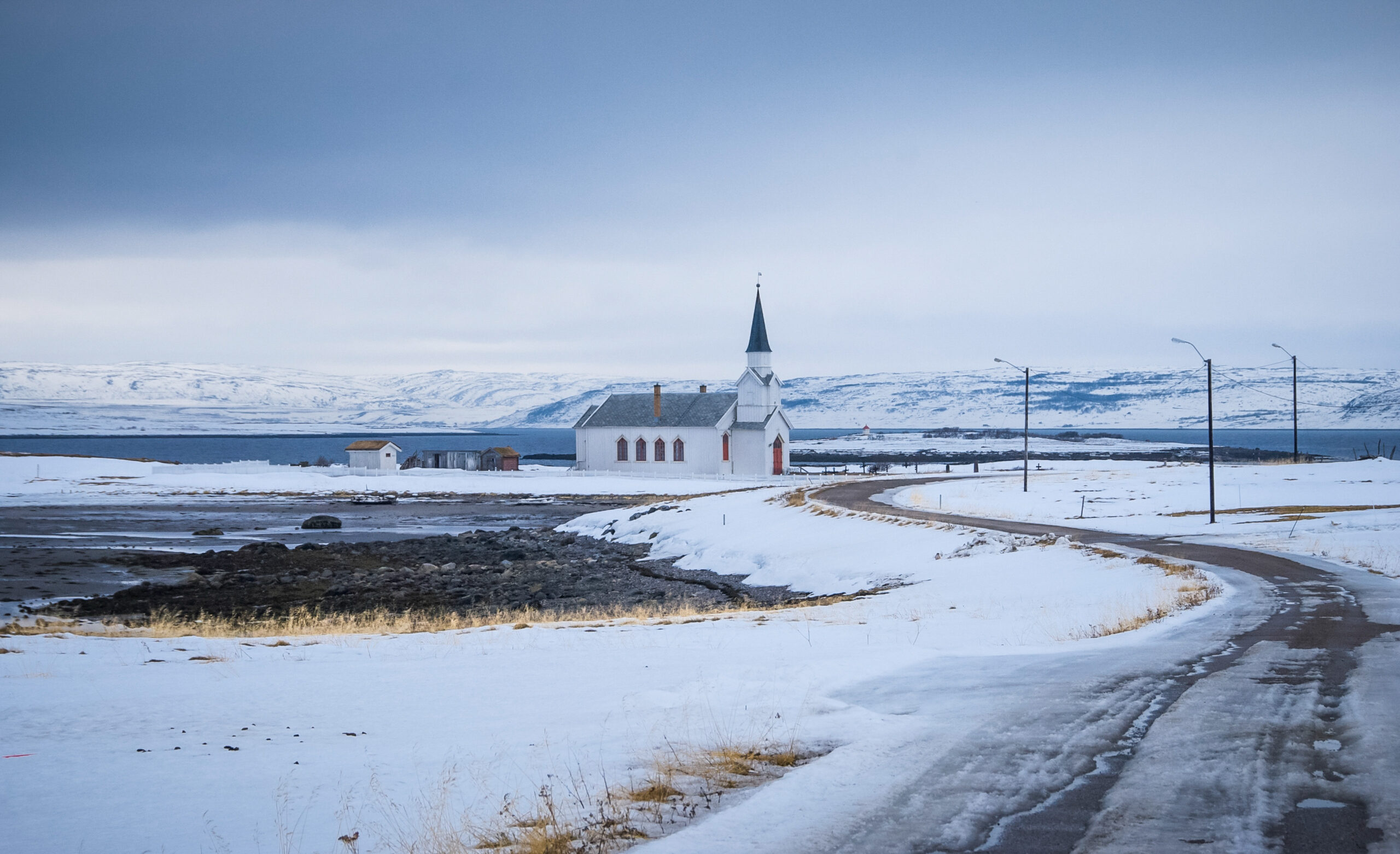
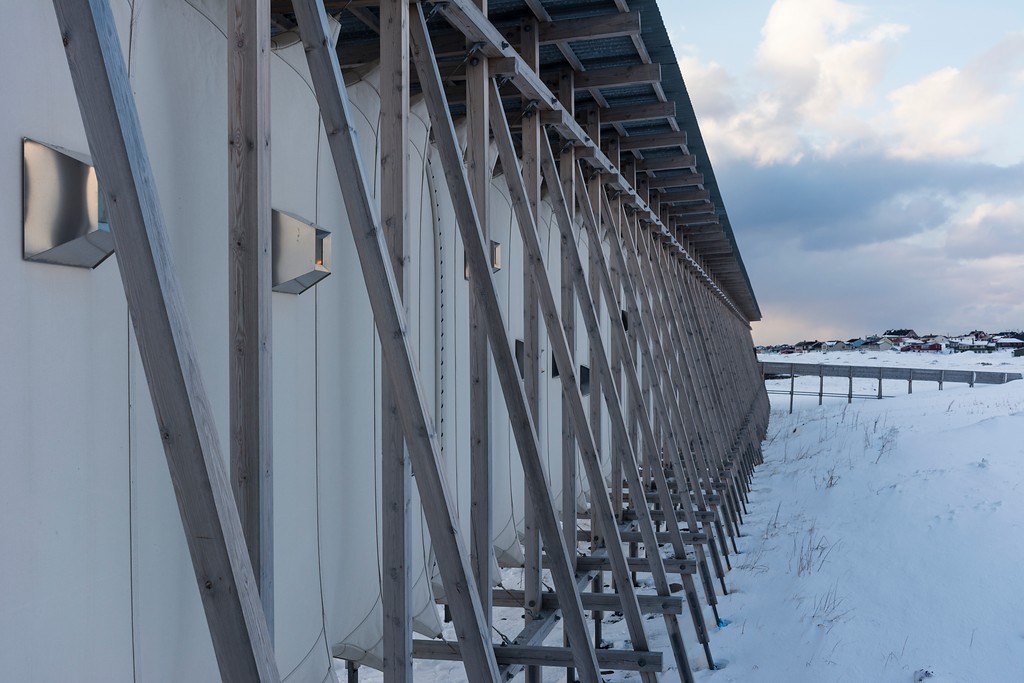
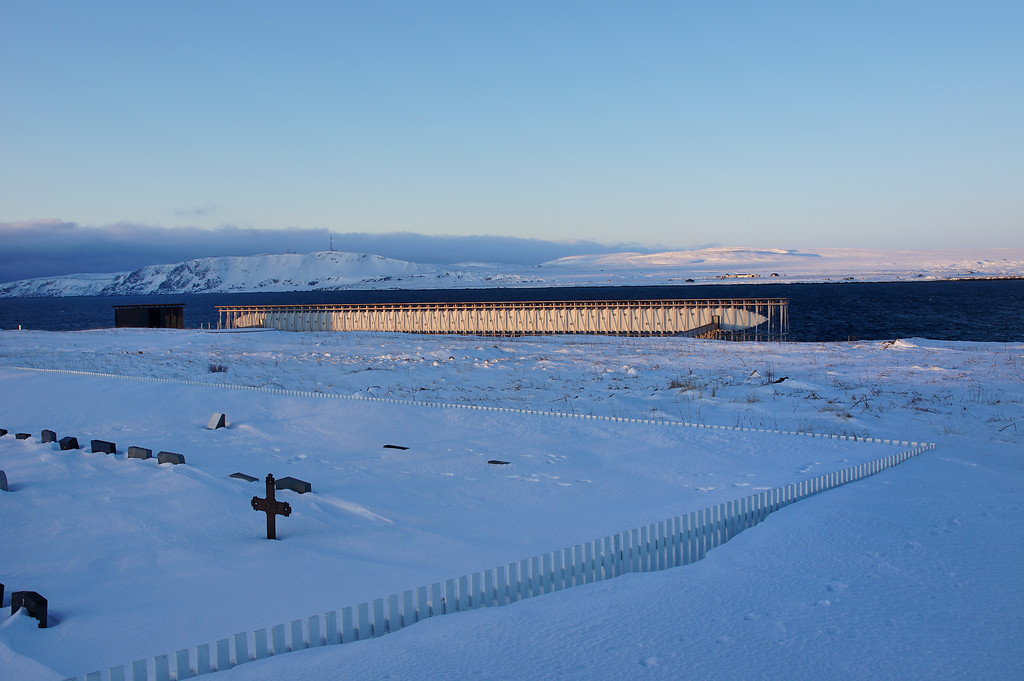
Hurtigruten, now known as Kystruten (Coastal Route) is operated by two different companies, Hurtigruten and Havila, depending on the day. The most convenient is the day sailing from Kirkenes around noon time, calling at Vardø around mid-afternoon. From Vadsø, you can sail to Kirkenes early in the morning – absolutely feasible if your accommodation is close to the dock in Vadsø.
Take a quick hop by air
The propeller aircraft of the airline Widerøe fly from Kirkenes to Vadsø and Vardø, providing a shortcut that also works as a spectacular air sightseeing. If the weather is co-operative. Early bookers often have access to cheaper tickets.
To Tana, Berlevåg, Båtsfjord and Nordkyn
A bit further away from Kirkenes, a bit more time involved. But then you reach places that see very far off the beaten track. Which to some of us is why we travel.
Tana: The little centre, complete with a hotel and places to eat beyond the striking bridge crossing Norway’s second longest river Tana/Deatnu/Tenojoki. There are 4 connections a day from Varangerbotn (2 on Sundays, none on Saturday, line 274) and connections to Vadsø (275).
Berlevåg and Båtsfjord
The Hurtigruten/Havila sails from Kirkenes around noon and reaches Berlevåg around midnight. It also leaves in the evening from Berlevåg and midnight from Båtsfjord, and sails overnight to Kirkenes, arriving in the morning. There are also flights from Kirkenes to both places.
Public bus involves prebooking FLEX minibuses – check the 830 (Båtsfjord) and 831 (Berlevåg). If organised ahead, you can make a nice round trip involving the Hurtigruten/Havila and a FLEX minibus. Read more about FLEX buses further down.

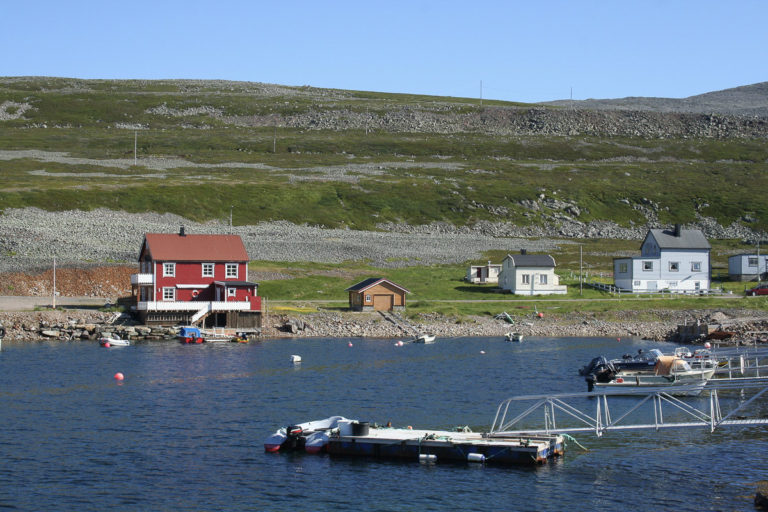
The Nordkyn peninsula:
Definitely off the beaten track, the peninsula of Nordkyn (often spelled Nordkinn) is for the advanced traveller.
Hurtigruten/Havila sails from Kirkenes daily and calls at Mehamn and Kjøllefjord in the middle of the night. The return journey can be more convenient, sailing from Kjøllefjord and Mehamn in the evening.
Overland, there is a connection every day except Saturday, the 150 from Kirkenes, the 130 from Varangerbotn. At the Ifjord junction, you change to a FLEX811 (prebooking needed – see explanation in the faq) to Kjøllefjord, with the FLEX816 branchung to Mehamn.

Travelling to the West of Finnmark and Tromsø
From Kirkenes, Vardø and Vadsø, you can travel to Varangerbotn terminal with the 150 and get onboard the 120 to Karasjok and Alta and the 130 to Lakselv and Hammerfest (about 9 hours)
Hammerfest: Bus 130 takes you across the Ifjordfjellet mountain passage on to Lakselv and Olderfjord and on to Hammerfest every day except Saturday. If you change in Olderfjord, you can take the 110 to Honningsvåg. You will not be able to go to the North Cape the same day, though.
Alta: Bus 120 takes you across the Finnmarkvidda plain through Karasjok in 6.5 hours. There is one bus a day except Saturday. From Alta, there is a daily bus to Tromsø, taking 7 hours, meaning you spend the night in Alta.
With the Hurtigruten/Havila: The Coastal Route sails every day from Kirkenes around noon, then gets to Honningsvåg (close to the North Cape) in the early morning and to Hammerfest around noon the next day – before reaching Tromsø at midnight. Depending on the day, it is operated by Havila or Hurtigruten ASA. Prebooking is essential if you want a cabin.
By plane: Hammerfest, Honningsvåg, Alta and Hasvik all have airports. Book early



To Finland and Russia:
Finland, a Nordic neighbour and an EU/EEA and Schengen country, has more or less the same entry formalities as Norway. If your passport is from outside the EU/EEA/Schengen area, double check. From Kirkenes and Varangerbotn, there is no direct bus connection to Inari and Rovaniemi, two major hubs in the north of Finland. Instead, you need to stay the night in either Karasjok (Norway) or Utsjoki (Finland).
The most used connection is the daily bus from Karasjok. You can take the 150/120 combination to Karasjok in the morning, look at the sights (there are several) in Karasjok, stay the night and then take the early morning bus from Karasjok to Inari and Rovaniemi in Finland.
You can also get off the same bus in Roavvegieddi – just opposite the Finnish village of Utsjoki and cross the border walking. However, by then the morning bus to Inari and Rovaniemi has left. Utsjoki has a museum, activities and places to stay, and is a Finnish alternative to Karasjok.

To Russia:
Because of the Russian Federation’s attack on Ukraine in early 2022, the Norwegian/Russian border now sees very few crossings, although not completely closed. For most travellers, this is not a practical option at present.
General information
This is a general overview. Travellers are responsible for planning their journey and verifying all details before travelling.
Public transport in Finnmark is largely operated by a single company – Snelandia – run by the county. You can find an overview of bus timetables and routes on their website, as well as a travel planner for detailed journeys. FLEX buses (prebooked minibuses) must be booked in advance – call +47 75 77 18 88 (Snelandia’s customer centre).
The Coastal Route, often referred to as Hurtigruten, runs daily throughout the year. It is operated by two companies, Hurtigruten and Havila, depending on the day. Check their respective websites for schedules and bookings, and keep in mind that some sailings may be cancelled in winter due to maintenance.
For longer distances, Widerøe operates a network of small propeller aircraft connecting towns such as Kirkenes KKN, Vadsø VDS, Vardø VAW, Båtsfjord BJF, Berlevåg BVG, Mehamn MEH, Honningsvåg HVG, Hammerfest HFT, Alta ALF, Hasvik HAA and Tromsø TOS. Booking early often gives access to better prices.
Travel into Finland is possible via Karasjok (Norway) or Utsjoki (Finland), with bus connections operated by Eskelisen Lapin Linjat. Journeys usually require an overnight stay before continuing to destinations such as Inari and Rovaniemi.
Finally, note that public holidays – including Christmas Day, Boxing Day, Maundy Thursday, Good Friday and Easter Monday – often mean reduced or cancelled services, so plan accordingly.

Public transport out of Kirkenes – all you need to know
Yes – and often more comfortably than you might think. A network of buses connects even small settlements, while coastal ships and short flights provide scenic alternatives. With a bit of planning, you can get almost anywhere.
It can be. If you are used to snow, ice and narrow roads, driving is manageable. If not, winter driving may be more challenging than expected – and public transport can be a better option.
Main routes run several times a day. Smaller places are served by fewer departures or flexible (prebooked) minibuses, so planning ahead is essential. Keep in mind that there might be no buses on Saturdays, and Sunday departures are usually later.
A FLEX bus is a prebooked minibus serving routes with few passengers. Instead of running empty, it only operates when someone has booked a seat.
You need to book in advance – at least four hours before departure from the first stop on the route. Even if you are only travelling part of the journey, the same rule applies. For early morning departures, booking must be made before 21:00 the day before.
To book, call +47 75 77 18 88. The automated voice is in Norwegian, but if you wait to speak to a person, they will assist you in English.
Yes. Bus 150 connects Kirkenes with Varangerbotn, Vadsø and Vardø several times a day. You can also combine the journey with a coastal ship or a short flight.
For buses on main routes, booking is usually not required. However, FLEX minibuses to places like Bugøynes, Berlevåg and Båtsfjord must be prebooked.
Yes. The coastal ships connect several ports in the region and work well together with buses and flights. They can be used both for longer journeys and short scenic stretches.
Absolutely. Small propeller planes connect towns like Kirkenes, Vadsø and Vardø. These flights are not only practical, but also offer spectacular views – weather permitting.
Tourist travel across the border is currently very limited. For most travellers, this is not a practical option at present.
Yes, but not directly. You will need to travel via Karasjok or Utsjoki, usually with an overnight stay, before continuing to Inari or Rovaniemi.
These areas require more planning. Expect a mix of buses, prebooked minibuses and possibly coastal ships. For many travellers, this is part of the experience.