
I remember from my childhood when fresh fish was still sold from a pontoon dock off Tromsø’s main square. In early summer, my mother would buy wild salmon – the smallest fish was the cheapest. She poached it and served it with potatoes and cucumbers in vinegar. In winter came cod, liver and roe as the great seasonal fishery got under way. The boats were wooden, the fishermen weather-beaten, and the catch changed with the seasons.
That old fish market has disappeared. Today, the story of the Arctic year is told indoors instead. At Kystens Mathus in Tromsø, the seafood counter changes with the seasons just as faithfully as the sea itself. This big, colourful fish counter tempts locals and visitors alike to see what the season has to offer. Bright and immaculately fresh, the counter is full of colour. Even if you have no intention of buying anything, it is worth a look.
Where the seasons are on display
We asked Lasse Wangberg – the manager of both the fish counter and the adjacent restaurants – to take us through a fish counter year.
For locals, it is where today’s dinner begins. Visitors come to discover fish they have never seen before, taste seasonal specialities or simply see what is in season. Their tasting platter includes whatever is available in the season – and in the busiest winter season every seat is taken at lunchtime. “We simply include the fish we’ve got in” Lasse says. Many people, locals and visitors alike, just pass by and see what is on offer. Many leave with something they hadn’t planned to buy.
Locals buy fresh fish for today’s dinner or shop for a Saturday dinner party, often asking for advice on how to cook mussels or what sauce to serve the Greenland halibut with. Visitors with cooking facilities do the same. Others buy traditional preserved fish to take home. Small jars of pickled herring or caviar make fabulous gifts – surely, we’ve all got enough fridge magnets by now? Or simply spend a few minutes looking around before heading to one of Tromsø’s seafood restaurants. You’ll soon see what is in season. Skirri is just next door.
Every season has its favourites
The seafood counter never looks quite the same throughout the year. Migrating fish stocks, spawning seasons, fish quotas – or even Christmas traditions or summer habits of the Tromsøites influence what is there.
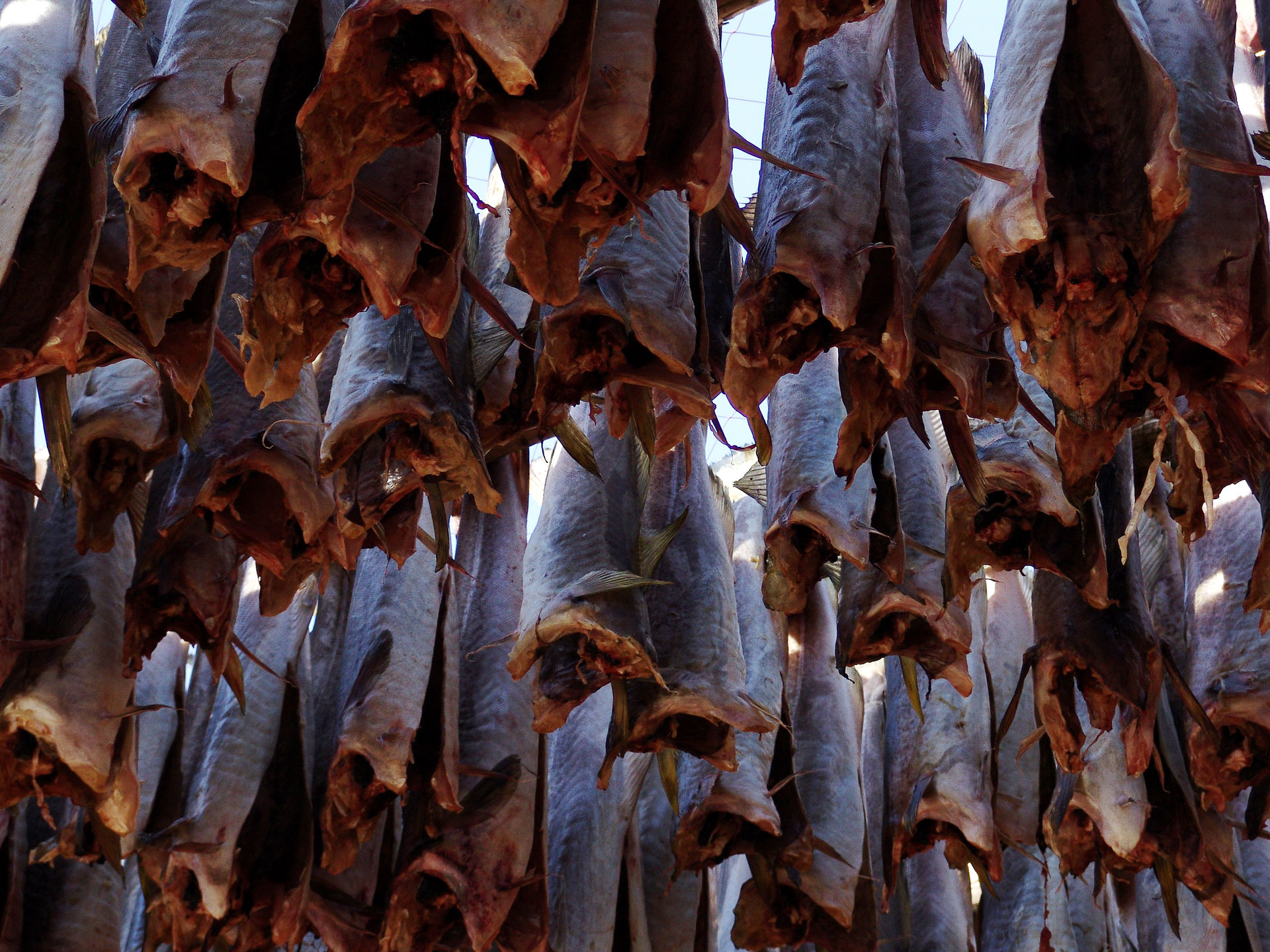
Winter belongs to skrei, the migratory Arctic cod that returns from the Barents Sea to spawn along the Norwegian coast. This is also the short period when several traditional products are made. Boknafisk – cod that is partially air-dried – is traditionally prepared during the skrei season.
The same applies to smoked cod roe, another northern speciality that depends on the winter cod fishery. If you serve a whole, smoked cod roe as a starter at your dinner party – add some sour cream and finely chopped onion – the guests will empty everything out of the roe skin with a spoon in no time. “We smoke the cod roe in season,” says Lasse. “Once we’ve sold it all, that’s it until the next winter fishery.”
As spring arrives, fresh herring makes a brief appearance. Summer brings excellent saithe, a fish that generations of Northern Norwegians have grown up eating but which many visitors overlook. Autumn, meanwhile, marks the beginning of the lutefisk season, when stockfish soaked in lye-flavoured water returns to the table in one of Norway’s most traditional winter dishes. Herring returns in autumn too – both fresh or cured in many ways.
There is always something to look forward to next season.



Cold water makes a difference
The Arctic seasons influence more than just fish. Many shellfish are at their best during the colder months, when the icy water helps produce firmer textures and cleaner flavours. Prawns are particularly good in winter, while sea urchins also reach their peak before the spawning season.
The seafood counter reflects these natural rhythms. Rather than offering the same products every day of the year, it changes with the sea.
“Cockles and scallops are still a hard sell up here,” says Lasse Wangberg. “People in Northern Norway aren’t used to eating them.” Perhaps visitors will be the ones to change that.
More than stockfish and clipfish
Many visitors arrive already knowing two Norwegian fish products: stockfish and clipfish. But that is only the beginning of the story.
But everyday food traditions are just as interesting. Fish cakes remain a lunchtime favourite, often made from saithe or haddock using recipes that have hardly changed for generations. ” “We often see people on their way to the gym stop by for a couple of fish cakes first.,” says Lasse Wangberg. “They get plenty of protein and very few carbohydrates.”
Fish gratin is another classic comfort food, traditionally served just as many Northern Norwegians remember it from childhood, with a lot of fish, béchamel and macaroni. Creative chefs at Kystens mathus tried to add vegetables to the traditional fiskegrateng. “The regulars were horrified,” laughs Lasse Wangberg. “We quickly went back to the original recipe.” The vegetables can stay on the side of the plate instead.
Some delicacies require a little courage
Sometimes, things in a Northern Norwegian seafood counter defy what many people would consider food. Maybe we also got fussier and pickier with increased wealth? The counter at Kystens mathus – although colourful and appealing – holds a few surprises.
Cod tongues are perhaps the best example. Despite the dramatic name, they are surprisingly mild and tender, and many locals look forward to them every winter.
Fish cheeks are another favourite among seafood lovers, prized for their delicate texture. Sea urchin roe has become increasingly popular in recent years and is now sought after by chefs for its rich, buttery flavour.
Depending on the season, you may also come across whale meat, wolffish, Greenland halibut or even chimaera, a deep-sea species with an unusual appearance.
You certainly do not have to try everything—but if you enjoy discovering local food, this is a good place to be adventurous.

Ask what is in season
Everyone has to start somewhere. Before confidently ordering boknafisk in a tiny fishing village or discussing cod tongues with the waiter, spend a few minutes at a seafood counter. Ask questions, taste something new, and you’ll understand Northern Norway a little better.

Good to know about fish in Arctic Norway
There is no single best season. The seafood changes throughout the year. Winter is famous for skrei, cod liver and roe, spring brings fresh herring, summer is an excellent time for saithe and salmon, while autumn marks the return of traditional dishes such as lutefisk. Every season has its own specialities.
The easiest way is simply to ask. Fishmongers and restaurant staff are usually happy to recommend what is at its best that day. Seasonal seafood often offers the best flavour and the freshest catch.
Many species migrate, spawn or are caught only during certain fisheries. Fishing quotas also influence what is available. Traditional products such as boknafisk and smoked cod roe can only be made during the winter skrei season.
Many visitors start with cod, salmon or king crab. If you would like to discover more local flavours, try saithe, cod tongues, fish cakes, boknafisk or Greenland halibut. Most fish counters and seafood restaurants are happy to explain unfamiliar dishes.
Not necessarily. Luxury items such as king crab and fresh scallops can be costly, but many everyday favourites are surprisingly affordable. Fish cakes, fresh saithe and seasonal catches often offer excellent value.
Cold water slows growth and often produces firmer flesh and clean, delicate flavours. Many shellfish are considered at their best during the colder months, and many chefs prefer winter seafood for its quality.
Unlike many parts of Europe, Northern Norwegian restaurants often adapt their menus to the seasons. Fish migrate, fisheries open and close, and local ingredients come and go. If a favourite dish is unavailable, it usually means something even fresher has taken its place.